I would argue that it helps me when performing maintenance to see and correct where types may have changed. Not always, and sometimes it is busy work I agree, but overall I prefer it.
Yeah I generally avoid using 'var' to elide method return types for that reason. In my early phase of var enthusiasm I even had it result in a bug that would have been caught if the type had been made explicit.
I do still really like it in the `var list = new ArrayList<String>()` case though.
I agree, and I'm not sure how something like 'var accounts = calculateAccounts(something)' can be thought of as better in a code review setting. I suspect using "var" or equivalent will be considered a problem by most companies within the next few years.
Those writing in python and javascript don't honestly know any better. They grew in a world without unit testing or without products that need to grow into gigantic systems maintained over the next decades.
This reminds me of a developer writing in jRuby because "it was better". While he was in the company he'd still give support to his own works, after leaving nobody else wanted to pickup those "better" things and would prefer to write workarounds to the tool, it effectively became a black box that few could improve and even worse to test. As result, those portions had to be rewritten in proper Java so that we'd be able to deeply measure/test and improve.
There’s nuance in programming. Both of these statements can be true. Var reduces boiler plate when you’re duplicating information in both the lvalue and rvalue.
I’m in agreement that when the information isn’t in the rvalue that you shouldn’t use var.
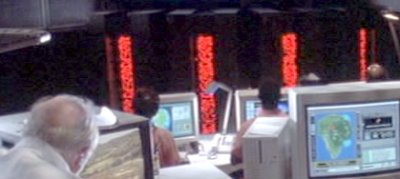
Side note, the Connection Machine is pretty much the coolest looking computer ever: https://www.computerhistory.org/revolution/story/73 It looks exactly to me what a powerful and slightly scary computer from an 80's movie looks like.
I mentioned this last time around [1], Tamiko Thiel worked with Feynman and Hillis at thinking machines and is responsible, amongst many other things, for how cool the CM-1 and CM-2 looked.
And it was designed after the T-shirt that feynman wears on one of his most known pictures [0]. BTW: there we still have a nonfunctional CM which we equipped with LEDs to put fun games on it at the CS faculty in Karlsruhe [1]
The blinken lights panel on the original machine was functional, each small cluster of processors controlled one LED and there was a microcode instruction for latching the LEDs.
We found this museum completely by accident on a visit to the US, and it is a delight. When I saw the Connection Machine all lit up, I squealed :)
It seems like the reason it's on like that is because it used to belong to the NSA so they took all the insides out and destroyed them when the machine was donated. The blinkenlights are driven by Raspberry Pis or something similar.
I can understand the frustration from a climate change perspective, but you still get the benefits of cleaner air locally, increasing energy independence and freedom from commodity cost fluctuations.
It's an interesting trade off between swapping station cost and time to charge. I suspect charge times will decrease enough that it's not worth all the physical investment in swapping, it may already not be.
Swapping for regular cars is a dead end I think. But for trucks and such I imagine it makes a lot more sense. Much longer charging times vs a quick swap. Much easier to put battery in an easy-to-swap location. Fewer swapping stations needed before it makes sense to utilize it for transportation companies, ie team up with a company that has a few fixed large-volume routes to get going.
My understanding is that this the vulnerability only allows memory access to related Safari/Webkit processes (specifically those sites that were opened with a window.open call). So passwords stored in a separate password manager app are inaccessible unless that app autofills the password into the compromised Safari window/process.
It's hard not to think that both Honda and Toyota are just trying to convince EV buyers to delay their purchase since something "much better" is about to be released, or at least until they have time to release competitive EVs. Both companies are in the press talking about huge improvements possible with their solid state batteries, with no current production to speak of.
It should be considered a failure of our profession that after all these years the number 1 issue is still out of bounds write, a memory safety issue. In any true engineering profession a failure of this sort would be unacceptable, but in ours it's tolerated and explained away as a necessary byproduct of certain tools. How much personal information has been compromised due to these low standards? How many people put at risk? It's shameful.


Realtime database Authentication File storage Admin dashboard