Before Outlook there were many, many options, which is kind of the point. You might be intrigued by something like All-In-1 https://en.wikipedia.org/wiki/ALL-IN-1
My own first email client was VMS Mail at uni in 1988, then pine when I started to use SunOS and Solaris every day for work. Lotus Notes was very big for a while too before the web killed it off.
> Lotus Notes was very big for a while too before the web killed it off.
I think the architecture of Notes/Domino was technically very interesting - a rapid application development environment incorporating a replicated document-oriented database, cross-platform GUI forms designer, and scripting language.
And then that environment was used to build an email and calendaring application. Some customers bought it just for email and calendar, and ignored its potential as a platform for custom applications. Others used its application development features heavily.
But I think part of its decline was that its potential as an application development environment/platform never received enough emphasis from IBM. IBM bought it for the email and calendaring - their mainframe-based groupware line (OfficeVision, PROFS, DISOSS, SNADS, etc) was really showing its age, and buying Lotus was their answer to that business problem. And that’s how they positioned it in the market, and that became the focus of their R&D investment.
I remember people used to complain about how the Notes email UI was confusing - due to its cross-platform heritage, it didn’t use the same keyboard shortcuts as Microsoft apps, for example. (Something I believe they improved in newer versions.) Yet underneath that email client lay something powerful that its competitors (primarily Exchange and GroupWise) completely lacked
I wonder what might have been, if IBM had positioned it more heavily as a platform for applications rather than just email+calendar - or if it had ended up with someone other than IBM? IBM didn’t really need an application platform because they already owned plenty (WebSphere, CICS, IMS, TPF, AS/400, VisualAge, Informix-4GL, Rational, SAA ADCycle, Cross System Product, UniData/UniVerse, EGL, PowerHouse 4GL, etc). Maybe it would have gone better with a company for whom it was their sole or primary application platform instead of just one among many?
I’ve heard some suggestions that now HCL has bought it, they have a renewed interest in using it as an application platform compared to what IBM had. Even if that’s true, probably too late to make much of a difference-there are so many other options nowadays, arguably better.
What you've said is pretty much what I always say about Notes, it was much more than Outlook and when Outlook took over I often wondered what folks did for all the things that Notes did that weren't just email and calendar. I wonder what is comparable now in the ability for someone not very technical to be able to knock up, say a simple change approval system? It sometimes seems with the loss of such things as Notes, Foxpro and Hypercard that it has become less easy for non-dev folks to create simple apps rather than more easy.
> I think the architecture of Notes/Domino was technically very interesting - a rapid application development environment incorporating a replicated document-oriented database, cross-platform GUI forms designer, and scripting language.
And so ahead of its time I understand it's been used to kill patents, as a demonstration of prior art.
I think I read an article once about a patent case that featured someone tracking down a still-shrink wrapped copy of Lotus notes, then having a developer use it to demonstrate it had the features that had been erroneously been patented by someone later.
Notes was pretty horrible for creating all sorts of legacy technical debt. Some handy Joe would create some database that would worm itself into critical business processes but be completely unmaintained.
Of course this could be solved by policies but I've seen this happen in many organizations.
It was also incredibly buggy. I'd be looking at a Java error dump several times a week. Especially once they integrated sametime into notes.
> Notes was pretty horrible for creating all sorts of legacy technical debt. Some handy Joe would create some database that would worm itself into critical business processes but be completely unmaintained.
And is the "better" alternative is to avoid that "legacy technical debt" by forcing that "handy Joe" to keep doing things by hand, by denying him the tools to solve his problem? Because if you don't have the connections to get budget to pay a professional developer, you shouldn't be able to solve your problem with software?
IMHO, it's better to think of those kinds of "handy Joe" apps as prototypes.
The problem is they often don't get beyond the protoype stage, the 'developer' leaves the company and whole business processes end up depending on something that is no longer maintained.
In our place it took a huge effort to move away from notes. Literally thousands of 'important' databases in the system over the years. Some were converted to web using low-code tech, some were simply archived or exported. But it was a huge mess.
I'm not against prototyping or efficiency at all. But the reality is that Notes had become a really stale platform, and even a prototype should have a continuous maintainer.
In the end we just had too many users using things that nobody knew anything about. This was really a huge risk.
> Because if you don't have the connections to get budget to pay a professional developer, you shouldn't be able to solve your problem with software?
This is a good point though, and we've now kept a whole team of low-code devs that take on things just like this for new projects that could offer efficiency, but they do it in a proper way with documentation and maintenance.
I hated using Lotus Notes for emailing and calendering! But, when someone showed me the application develoopment aspects, it was then i came to the conclusion that it was an amazing app-building platform, and a mediocre email/calendar app!
So much this, I don't understand why cloud providers don't offer an easy way to view this sort of thing as really it should all be in the logging anyway.
The execution of rulesets needs to be performed synchronously and as fast as possible, since requests are blocked until they pass the permission checks; but it doesn't need any sort of replication since each request is validated independently.
Request logging can be performed asynchronously and has much more relaxed latency requirements, but data needs to be aggregated and replicated for durability.
The extremely different requirements pretty much guarantee that these will be two completely separate systems; by Conway's Law, this means two completely separate teams. In practice, logging is more aimed at business analytics and billing.
You're right that the information should be available, and there's no technical reason why it can't be made available, but there are technical reasons which influence the social reasons why it's not available.
It seems like AWS isn't good with cross cutting concerns. Eg instead of Cloudformation being part of a service during development, that they could even use during testing the service, every team creates a custom api and cf is an afterthought. It wouldn't surprise me if every service is also evaluating against iam policies independently as well.
That reminds me of the latter stages of Sun Microsystems, where it seemed like multiple teams were developing competing solutions for system management and patching. Seems a wasteful model and not one that is servicing customers.
Much of the services were built well before clod formation... Or cloud formation became popular... Or before everyone was willing to make the trade-off that features come later because they had to have cloud formation. Like any other best practice you invent along the way. I'll bet there's something about your 1/3/5/10/15 year old that isn't up to current snuff.
People forget, AWS is massive and taking care of edge case after edge case while being in a bullet point war with other cloud providers.
Even new features sometimes don’t get CloudFormation support for quite a while (sometimes longer than third-party support like Terraform). I keep wondering why they didn’t want it for their own integration testing.
AWS had the policy simulator for IAM policies but it hasn't been kept up to date wrt new features (like SCP)... Maybe they'll have something similar for this.
Rick Beato musing on a Billy Corgan comment on how AI is going to replace musicians. Will we be just be left with a front person to present the music, whose vocals are auto tuned?
I sometimes have 3 - 1 at the normal time, interrupted by needing a pee (Age/male/kidney disease), then a second interrupted by the elder of my two dogs needing a pee and a third short one until work time. Not ideal!
Apart from the US, where else has middle schools? Here in Scotland there is (Optionally) nursery, primary school (5-12) and then secondary school (12-16/18), no middle.
In France we have them. There's "école primaire" from 6 to 10 (5 years), "collège" from 11 to 14 (4 years) and "lycée" from 15 to 17 (3 years).
Anecdotally, most people I spoke to felt that middle school years were the hardest: figuring themselves out, low popularity but high-stakes social games. High school was somewhat easier, people have found their cliques and the pressure from the harder work and longer hours left less time to play social games.
Off-topic but I have to get it off my chest: the years from middle school onwards have the dumbest names in France. They're named by counting backwards to the end of high school. So you start at "sixième" (sixth), go up to "cinquième" (fifth)... all the way to "première" (first), which is the before-last year! The last year is, of course, "terminale" (last, as in 'last in a series'). I'd love to convert to a sane naming scheme.
That's similar to the ranking of cadets in US service academies. Think of it not as progressing through grades, but rising through ranks: 4th class, 3rd, 2nd, and finally 1st class.
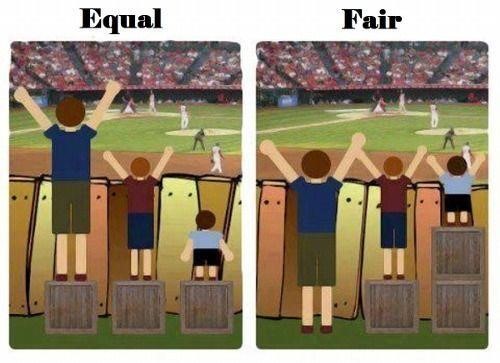
In Germany it's worse. We don't have a distinct middle school as such, but we have three parallel tiers after four years of elementary school. One is only until grade 9, one until grade 10, the third is up to 13 years.
I'm leaving out a lot of details here, but basically students have to choose one track after elementary school. And upgrading is hard, especially because the lower tracks are "optimized for slower learners". Side-Note: As you might have guessed, the track selection has become more and more based on ethnicity.
Studies have shown that such a tracked system is worse in every imaginable way. But it is extremely attractive to conservative academics.
After a long discussion with little alternatives, my little cousin went to a Realschule mit Förderstufe. The problem with the school has less to do with ethnicity as i can see it but the fact that large parts of her class dont speak German good enough to be educated in it. And that they are not grouped up by language to help them catch up in their first language. Pair that with the "slower learner" approach and all of those kids are simply left behind. I dont think its an issue of racism but simply abandoning anyone who, for what ever reason, cant hold the pace. Simply no parent wants their kid to be in such a class with two multilingual teachers to at least partially cover multiple languages to try to communicate with the kids in their class. They have to deal with the consequences of not thought trough political maneuvers. And the kids who suffer from that are generally those that already live in precarious situations. Painting it as a problem of racism, misses the point entirely from what i have seen and I think framing it this way is deeply counterproductive when it comes to these fundamental issues of our education system.
It's not so much intentionally racist as it is classist.
When I was ready for secondary education, it was clear to me that Gymnasium or ("at least") Gesamtschule was where you went if you were later going to study in a university, Realschule was for trades and Hauptschule was for "stupid" (or "troubled") kids. Needless to say, it was clear to me that I had to go to Gymnasium and then university because both of my parents had attended university.
Of course those were unfair generalisations but when I was in university I met many people who retained exactly the same perception of those differences.
I think it only got worse. What you describe was also point of view when i had to decide between Realschule and Gymnasium. Its not so easy to justify sending your kid to a Realschule anymore. Most people are aware that its likely a dead end for their kid. On the other hand, Gymnasium got also a lot more stressful for kids with the change from G9 to G8 (reduction from 13 years school in total to 12). Either way, i can just feel extremely lucky that i didnt have to go through that. I doubt it would have turned as good as it did for me today.
You are kidding yourself if you think that system isn't also driven by racism. A few decades ago it was virtually impossible for Turkish children to attend Gymnasium, regardless of the grades.
It is hard to quantify, but the attitudes of teachers, in elementary school and beyond, does shape this process. If they don't believe those children can catch up, they won't...
The point is that the division pre-dates the racist impact it has now. Racism and classism go hand in hand in this case the same way they do in many others.
I don't think the multi-tiered system would be salvageable even if there was no racism involved. Whether you doom children to economic failure based on their ethnicity (or lack of fluency in German, which is often abused as a shorthand for "low intelligence") or because of their social status (manifesting in various ways that ultimately lead to "poor performance") doesn't make this system any fairer.
I didn't say it's necessarily racism, just that the division is increasingly determined by ethnicity. Just as black children in the US often can't attend the better schools because they live in different areas.
However, this is indeed structural discrimination, because those children don't get neither the resources nor the opportunity to catch up.
I dont think the comparison with the black population of the US is warranted. I might be lucky enough that i didnt get into contact with what you describe, but the main problem as I see it, is different to the US the difference in first language. The problem in my cousins class isnt that she is the only one with a German last name, but that she is the only native speaker. You dont have a level field if you dont speak the language to a useable degree and if your language level is below A2, you dont have much chances for playing along in the first place. I am not going to disagree, that dumping kids with lacking German knowledge into the Realschule is horrible, but i dont think thats racism. Differently put, you are not going to end up in Realschule because you are the son or daughter of a Turkish migrant, you end up there because your German is lacking due to it not being your first language. Thats not fair either, but there is a difference between being discriminated for your language skills and your ethnicity.
Your language skills are a function of your ethnicity, and so the "language skills" are easily substituted for racial stereotypes. Also, children at that age are naturally less skilled at any language. But in non-native speakers, due to the clear accent, it's blamed on the different ethnicity and quite often on a perceived lack of effort.
Children can reach A2 proficiency in a couple of months, given proper instruction. Who is supposed to give that to them but the teachers in a school?
Do you think your cousin is somehow more entitled to the help of those teachers than the immigrants? Would you prefer those children be deported into a country where they have to fear for their lives and their future? Would you approve the use of force and violence against the children to bring them there (because otherwise they won't go)?
The schools with the highest proportion of non-native speakers will often have the worst teachers. Often because they don't have the choice of the best applicants. And other resources seem to be lacking, on top of higher needs.
I think your critique is one of the reasons why the system is as it is.
>Your language skills are a function of your ethnicity, and so the "language skills" are easily substituted for racial stereotypes.
Just no. This is nonsense, every last word. The language you speak is an essential prerequisite to get a degree in that language. I cant get an Japanese degree without speaking Japanese. You cant have a German school degree without speaking the language. There is also a clear distinction between not speaking the language and having an accent. An accent doesnt matter to communicate and understand new information. I am stating here, that you are unlikely to get a passing grade on your German literary analysis in grade 5 if you dont speak the language. If you are speaking on an A2 proficiency, you are unlikely to pass the bar for the German course for native speakers in an Gymnasium. Not a radical concept. The question should be how we can teach those kids the language if they want a German school degree. The way we are currently doing it, hoping they will just catch up to the normal curriculum is absurd. Realschule isnt meant for people who dont speak the language, its for those that cant keep pace with the tempo in a Gymnasium. Its not a language school, the teachers arent competent enough for this. That if you dont speak the language, you have higher chances to learn the stuff if its tought slower is a side effect. If you dont speak the language, its still torture at a slower pace.
>Do you think your cousin is somehow more entitled to the help of those teachers than the immigrants? Would you prefer those children be deported into a country where they have to fear for their lives and their future? Would you approve the use of force and violence against the children to bring them there (because otherwise they won't go)?
Do you eat kids? If not, why do do you disagree with me? Are you evil by any chance? Excuse the exaggeration, but it seems to be necessary. Your post has nothing to do with a a civil discussion on the topic. I said nothing of the sort and I am implying nothing of the sorts.
I am making a very simple point. Every kid in a class is entitled to be tought and learn what the curriculum has planed for that year. For that a certain bar has to be met from them. They have to have passing grades and in return, the school as to provide them with the information that they should know. That is how the school system is supposed to work. One approach which works for every kid due to standardized requirements and learning. If you are the only person speaking German in a German class on a native level, or hey lets say on a level above B2, what are your guesses how far the teacher will get with the planed material. If they have two teachers there speaking multiple languages to communicate even on a basic level with their students? You cant teach B2 or C1 material to people who havent reached A2 yet, its nonsense and a product of seeing critique of the language level as racist. Realschule isnt there to teach kids an A2 level of German. Its not even meant to teach German as a second language. Thats additional effort that someone has to be planed for and financed.
Our system just isnt designed for the case, that a kid not speaking German has compulsory education German, As i see it, the current system is just a "fuck it" because noone can be bothered to change the system. We have a certain time budget for certain tasks and we cant just add other tasks, kids are overwhelmed as they are. IF people want to get a degree in German and dont speak the language, we should give them every additional help to learn the language so that they can partake in the education in German. In addition to their degree, otherwise you are just cannibalizing the time they should use to learn something else. The curriculum of a Realschule doesnt have that additional needed time planed anywhere. This might take them longer, as the curriculum gets added another course, or even a completely separate curriculum to learn at least enough German to communicate in that language before trying to learn other basics in a language you dont speak. But all of that is skipping the question IF they should try to get a German Realschulabschluss? Do they plan on staying in Germany using their degree? If not, and for example they are refugees who wont be allowed to stay here, putting them a year into a normal school is just nonsense, cruel and useless. Its not benefiting them in any way to learn German, they are going to get deported if you and I like it or not and German isnt that usefull of a skill. That is what is going to happen unless you topple the government overnight and implement a new refugee policy. Its also not a crazy scenario, exactly this is happening every day and it has for decades. I had a kid from Afghanistan in my class in elementary school who spoke zero German and was deported after a year after he learned the basics to understand what the teacher was talking about. I think it would make more sense if we allowed for basic education in either their native language or something more acceptable universally like English. Because all the while they are trying to learn German, they are missing the content they should learn at their age.
We dont invest in 13 years of school just to pass the time till kids grew up, there is a rather compact curriculum for every year. It needs so much time to teach the content. It doesnt have enough time allocated for kids to achieve this in a second language they dont speak yet. You will have to prolong that time for people who cant speak German yet and this is going to cost time.
None of that is a problem, we just have to do it. Closing our eyes from reality and sticking to ideal plans of how it should be doesnt help if we dont give practical plans on how to improve the situation
>Do they plan on staying in Germany using their degree?
Ah - you betray yourself here. I thought you said it was just that they didn't speak the language, not that they were foreigners in a precarious situation, to be undeserving of a certain education.
I guess I'm lucky that I live in the U.S. where we've had to deal with integration of various peoples from the start and have made peace with the fact that policies that end up excluding a certain group can indeed be called racist if the effect is so. Despite its contrition over the past perhaps Germany still has some growing to do.
I would recommend reading again what i wrote, its not that i view anyone as undeserving but that a German crashcouse doesnt benefit you if you are back in Afghanistan in a year. German is not a valuable skill. Speaking English or you know, Pashto, is.
The system simply assumes people will be staying, reality looks different. If entering the German school system is something you want to do, the current system is still nonsense. It assumes people will be able to learn a second language overnight and comprehend the course material in a language they dont speak in the same time as people whos first language this is. For that more time is simply needed.
You fail to understand that those children are equal in all of their rights to native children. It's not possible for the state to act as if their forced deportation into hopelessness or early death is already predetermined.
There is extreme reluctance to put children into "special schools" or classes. For one thing, they don't exist. For another, such separation is almost impossible without putting those children at a disadvantage, even if there is no intention to somehow keep them away from natives.
And then that's also the connection to the US situation, where they actually had segregated schools and decided that this is impossible.
Tenuous at best. That was a different place and a different time. Different circumstances, different timelines, different politics, and even different differences.
Brown vs Board of Education was decided based on the 14th Amendment to the Constitution, which was specifically enacted after the Civil War to deal with the emancipation of slaves. Meanwhile during that same timeframe (1890s) governments of former confederate states sought to impose segregation laws clearly designed to oppress and disenfranchise blacks. The legal justification for these racially discriminatory laws was the "Separate but Equal" doctrine laid out by Plessy vs Ferguson.
So by the time of Brown v Board you had a substantial black population who spoke English and had been in the US for over a century(The 1790 census reported 17.8% of the US population was enslaved). You had a history of state governments enacting discriminatory laws clearly motivated by racism. You had legally mandated segregation in all aspects of life, not just schools.
It was not a case of sudden mass migration over a span of less than 10 years. And while you did have some ethnic differences, there wasn't a major language barrier. Furthermore, many of what you might call ethnic differences at the time (such as lower literacy levels) were substantially a consequence of slavery and discriminatory laws in the first place.
The connection I was referring to is that we exactly don't want to produce "special" schools.
Also there is a long history of "expecting" lower performance from certain ethnic minorities in Germany, putting them into the "special needs" category extremely easily.
I suspect that parallels to the situation in the US go a lot deeper still. But people aren't paying close enough attention yet and somehow believe that with our constitution discrimination is impossible and so all disadvantages must be the immigrants' fault by default.
You fail to understand that i dont want to infringe on anyones opportunity. I am saying plain and simply, if a kid is staying a year in this country during the asylum process, trying to integrate them into a system that doesnt benefit them in any way, and doing that on the cost of their education, is just not fair towards the children. This is not an abstract concept, like the kid from my elementary class this is happening already all the time. That kid was pressured from his parents to make the best of the school but he, naturally had to learn the language first. No one ever asked of that 8 year old would not be better off today if he had learned Pashto or English in that year. Thats what we currently do to those kids. Its not racism, its just being horrible. We are in my option not providing adequate education with kids stuck in the asylum process. Instead they, and every other kid whos first language isnt German are thrown in a "one system fits all" system that is grinding them down because they are starting at a major deficit due to the language barrier. And that is insane. Switching the language of you education midway through means in reality either delaying the education, (which is not a problem in Germany where you finish by passing the grade, but it is in Afgahnistan where you are expected to work from a certain age) or forcing more content on children then they can handle. I cant repeat it enough, but our school system is designed in a way to teach kids all you can teach them in that timespan. Everything additional, is putting stress on those kids.
>There is extreme reluctance to put children into "special schools" or classes.
Where the difference in view might come from, i do care about the people stuck in that horrible system instead of the way it is framed. I dont know what another perspective then "what aid can we offer the people stuck in that situation" really helps anyone but your ego. How anyone can construct an addition schoolyear to learn the language as racism is really beyond me.
An extra school year to learn a language sounds indeed harmless. But we don't have the schools or the teachers for that. We don't have the legal framework, so all of it would need to be voluntary.
It's completely ridiculous and impractical for the state to teach Pashtu to Afghan children in Germany. For English it is almost as bad. Also, learning German does help you learn English, and exposure to different languages does actually make subsequent language learning easier. Multilingualism is not a zero-sum game.
School education is not like a downloadable Database. If it were, it would be more efficient to teach them all the 13 years of stuff at age 18, because that's when they learn fastest. If it were all about usable knowledge (or skills) we should not teach arts, gymn, philosophy or music. Biology and History would also be on the brink for most children.
But it isn't. And yes, it would be nice to help them more specifically, but that's easier said than done. Since we can't recruit a few thousand non-existing experts on the fly, the existing teachers have to deal with it.
Studies actually have not shown that segregation is bad in every imaginable way. It really depends on what you want to optimize for. Segregation is excellent for letting intelligent kids reach their full potential. It's terribly for helping the children that struggle most.
There were studies made in India that showed otherwise. Without segregation the teachers were teaching to the level of the smartest students in the class, so the slower students were being left behind and became unmotivated. With segregation, the teachers were still teaching to the level of the smarter students in the class, but that level was much closer to the level of the slower students so they could catch up.
Keep in mind the actual reality of the situation might be different in each country, so it's not like one set of studies was necessarily wrong. Maybe teachers in the US teach to the level of the average student, so the results would be different there.
The assumption there is that the ordering of the students by performance is stationary, particularly in the first few years. Regardless of personal situation.
If a child catches a flu at the wrong moment, it will get stuck way below its level for all its career.
Khanacademy data has shown that students in a math class will progress at different speeds at different times and that their "ranking" can invert multiple times over a school year or beyond. It's not exactly the same, but their system makes sure students don't stay stuck.
I found them on a book called "Poor Economics". The authors also teach an online class on development economics where among other things they talk about education in poor countries.
If you have a class full of "good" students, it's a lot easier to work and teach, than with a class where 1/3 is almost illiterate, 1/3 doesn't care at all, and only 1/3 actually wants to learn.
I attended a talk about this topic that used the PISA dataset to show this (well it showed that in countries with segregated schools the performance of students had fatter tails on both sides of the mean iirc). I think the data should be available online somewhere.
Yes. It appears that the more stratified educational systems are, the more variance in outcomes there is. e.g. [1] Which makes intuitive sense. While there's an intellectual argument for everyone benefiting from diversity of a student body, I'm not sure I'd expect to see a benefit in strictly measurable educational outcomes at least.
And it's fairly obvious some of the ways that motivated and high achievement students could benefit from more customized and self-paced study while it's also obvious why a group of students lumped together as low achievers will do less well.
I went to a highscool where there were about 20-30 International Baccalaureate Diploma candidates and about 1200 students in regular, honors, and a handful of AP classes. My junior and senior year I was in all IB classes, but freshman and junior year I had to take a handful of the regular, honors, and an AP class and they were all absurdly slow and easy to be successful in to the point that I would entirely disengage. Had I not been in such a rigorous program I think I would have almost certainly made worse choices in relation to my education and life outside of school.
- 6 years of Gymnasium (where one earns the possibility to go to Uni)
Though it is quite normal to upgrade from Sek to Gymi 2 years in.
The first two options are then followed by an apprenticeship (3-4y) during or after which one can also earn the ability to go to Uni, with some limitations. These limitations can be removed by upgrading that piece of paper, which takes a year.
Complicated and I’m sure I forgot a few things. Point is that there are many paths and upgrading is quite possible.
Also having a large part of the population trained in a trade Is fantastic.
At least they can keep going to school after this system ends.
I know a bunch of people who either did Abitur (the requirement to study at a university) after going to Hauptschule or Realschule, or simply studied without Abitur, because the university simply made a test with them and lookd directly if they're smart enough.
I really liked the tracked system in the Netherlands. I feel like it really let the higher tier learn at a faster rate. Do you have links to the studies?
Finland's got them - you've got 6 years of elementary school (7-12), 3 years of middle school (12-15), and then 3 years of high school, vocational school, or "business" school (15-18). You've also got the mandatory conscription for men, which usually happens after high school.
In the ex Soviet countries its main school 9 yrs that is obligatory, then gymnasium for another 3 years that in theory voluntary but everyone does as it's also necessary for university etc.
Wat? In USSR a middle school was 7 years in 1922-1958 and 8 years since 1958 and that was called an incomplete middle grade. It was mandatory in towns and working camps. The complete grade was always 10 years.
Gymnasiums and lyceums differed from usual schools by having a altered program in some way. There always were schools which provided a complete middle grade.
There was also a specialized middle grade after completing both middle and vocational school and it covered the entrance barrier as well as a free pass of 1-2 years in higher education if it was on the same course.
No it is not. Trade schools are if two kinds. One does not even give the degree necessary for college. Plenty of kids go there. Other has such degree, but it is not gymnasium. Plus most absolvents don't go to college, are limited to easy colleges and have trouble to finish.
You can have a "Realschulabschluss" in Germany after year 10 of school. So primary 1-4 middle school in 5-10 and upper secondary education 11-13. In practice most will however not go directly to one of those middle schools but have their secondary education from grade 5 to 13 in the same school ("Gymnasium"). "Realschule" is as such for people who know in grade 4 that they will not go for a higher education but learn a trade after year 10. However, i should add that the 3 way school System, there is also "Hauptschule" where you leave after grade 9, is deeply broken when it comes to acceptance of these people in the economy.
Yes, it is (or was) Hauptschule, Realschule and Gymnasium, but many states didn't have a Hauptschule or abolished it.
Now, you go to something like the Realschule and leave it after 9 years to get a Hauptschulabschluss (lowest leven of highschool "degree")
Also, while it sounds harsh that kids have to decide if they want to study with 18 when they're just 10 years old, it's possible to keep going to school after the 10 years of Realschule.
The "Förderstufe" was two years of education where I was put into courses of different difficults to see in which system (Hauptschule, Realschule or Gynasium) I would do better, allowing me to decide when I was 12 (normally you had to decide when you were 10)
Also, the "Fachoberschule" was two years I did after Realschule to get access to university.
So I never went to a Gymnasium and still got to study computer science in the end.
Many school districts in the US don't have middle schools. Elementary schools going up to 8th grade are fairly common as are combined Jr/Sr high schools (7-12 grade, occasionally 6-12 grade).
Some areas of the UK have them. (State schools in those areas anyway.) I believe as a deliberately modelled-on-America experiment some time ago that stuck in those locales but didn't expand.
6 years of shōgakkō [lit. "small school"], followed by 3 years of chūgaku [short for chūgakkō, lit. "middle school"], and then 3 years of kōkō [short for kōtōgakkō, lit. "advanced school"]. Years actually reset when you go from one school to another, so for example, nobody says "seventh grade" but rather "middle school first grade" [chūgaku ichi-nensei] (as a side note, I personally find such translations awkward and would always translate chūgaku ichi-nensei as "seventh grade").
Interestingly enough, while chūgaku literally means "middle school", it's more analogous to the American junior high model because it's years 7-9 (but again, nobody calls them that) and not 6-8 (and as such I prefer to translate chūgaku as "junior high school", though part of that is informed by growing up in a part of the US that uses the junior high model so translating it as such has more verisimilitude to me).
In canada, its common in a lot of places, but not universal. When I was growing up, we had K-8 in one school, and then 9-12 as high school, although I think my home town now has a middle school system.
Very much so, the build quality is amazing. I sold my late dad's 1983/4 DX7 MK1 in 2014 to someone who is now a pal - it was gigged for something like 20 year, more than once a week and all it needed was a new battery.
Oh yes, so much agree - almost completely pointless to search for something in a chat and only see the one line that contains the search terms, none of the context chat around it - dumb dumb dumb.
Reminds of all those times we are told that 'customers demanded X', as if we all stood outside supermarkets with placards saying, "We demand huge strawberries that don't taste of anything". The market does what helps the market, it often isn't good for people or the planet they inhabit - that's the story of our current era and customers need to demand change on that basis.
Yeah but when faced with the choice between the tomatoes that were $8.50/kg and really nice but would go off in 2 days, vs. the tomatoes that were $4.50/kg and still nice and red and lasted a whole week but were pretty tasteless, you bought the latter, didn't you?
Customers in many cases don't have the information to know the potential long term damages of buying the $4.50/kg tomatoes. It's insane to put that burden on the end user as opposed to the tomato grower. How in the world is the customer supposed to know what pesticides are used and what the damages could be?
Trying to flatten all these problems into the failings of individual customer decisions completely obfuscates the actual cause of these problems. Which is generally an economic system that puts private profits above everything else.
What's extra weird is that everything got really cheap, yet most people don't have any money, and the environment is in disarray. I'd imagine history is not going to look kindly on the wealthy.
> I'd imagine history is not going to look kindly on the wealthy.
That's assuming the money is going to the wealthy, which isn't really compatible with things being cheap.
What really happened is that other things -- like housing -- got more expensive. But most of that money didn't go to Bill Gates, it went to grandma when she retired to Florida and sold her house to a millennial for four times what she paid for it in real dollars, whose huge mortgage payment is in turn now eating more than all of the money saved from having crappy tomatoes.
Comparing absolute numbers to nothing isn't very meaningful. You compare your $340 billion to the almost a hundred trillion dollars in US total net worth and the amount that went somewhere else is above 99%.
To get to the numbers like "1% of people own 40% of the wealth" you have to go the 1%, which is to say about three million people, and then you're including a bunch of doctors and software engineers who are clearly not in the same box as the Walton and Mars families.
Then you're comparing the sum total of the wealth of many of the richest families to that of one individual person.
The fact that rich people have a lot of money is not really a recent development. But it's the focus on the super rich which is missing the thread.
If housing prices go up, people at the 25th percentile lose and people at the 75th percentile gain. We see the loss for the people at the 25th percentile and recognize it as a problem, but then people are pretending like we can just take the money "back" from the Walton family even though that's not where most of it actually went.
It went to home price appreciation for a bunch of middle aged and retired sociologists and car dealership managers and dental hygienists. If you want them to give it back so the poor aren't so poor then you have to recognize that and thereby identify who it is you really have to fight over that money.
My point was that Sam Walton didn't seem to exactly price in carbon when he went to market with wal-mart in the 70s. Had he, maybe the price and selection would not have resulted in that degree of wealth extraction (generation), the same could be true for Ikea tables, Amazon Prime 1 day toothbrush, Sugar and chemicals for candy, Pesticides on crops, Opioids, red meat, etc. We got exactly what we wanted, loads of new cheap stuff with loads of selection at our convenience. We also got a labor crisis, a health epidemic, climate change and massive knowledge and wealth inequality.
> Had he, maybe the price and selection would not have resulted in that degree of wealth extraction (generation)
Not really. The profit on buying for $8 and selling for $11 is about the same as on buying for $9 and selling for $12. You make a little less, because there is lower demand and you have higher initial capital costs for inventory, but it's only a marginal difference.
The reason they don't do it regardless is that if Sam Walton tries selling only the carbon-priced thing for $12 when some competitor is selling the bad thing for $11, the customer chooses the lower price. There is still a Walmart-shaped thing in the economy whether or not it's called Walmart and founded by Sam Walton, because most customers choose that over the thing that costs more.
Because they have instant personal feedback into the price and the taste but not into the long-term health effects of sugar and red meat. But if you can solve that for voters then doesn't the same solution work for customers?
What I'm saying is that you would have to convince people that red meat is bad for them before they'd be willing to pass a law against it. If they're not convinced of that then they'll just buy it from whoever sells it and it doesn't matter if one seller here or there carries it or not as long as somebody does, which somebody will as long as people want it. But if you successfully convince them that it's so bad for them that it should be illegal, wouldn't they just stop buying it at that point, even without a law or any action by retailers?
I see. I agree with that point generally. I think we're talking past each other? I'm thinking about the morality and ethics of a supply chain and how it's disclosed/understood. Where should we be working to offload the understanding of how vast humans in a societal context impact ecology?
What I'm saying is that the upper middle class (e.g. the top quartile excluding billionaires) has more money than the upper class (billionaires), because there are so many more people in it. Tens of millions rather than a couple thousand. But then they're regular people, doctors and engineers, one out of every four Americans.
That's because the bottom 50% of the country own almost nothing. They rent and have debts. The net worth of the entire bottom quintile is negative -- if you have a dollar in your pocket you don't owe to someone then you have more wealth than the bottom 20% of the country.
History won't be looking kindly on anyone in this era. Wealthy or not.
It's not like before, when no one knew how things worked and were subsequently duped into doing dumb things. In this era, historians will find the information was openly published on the internet, in music, in newscasts, in movies, etc for all to see, and we still did the dumb thing.
I suspect entire books on everything from history to psychology will be written in an attempt to dissect and figure out what was going on and how this could happen?
$4.5/kg does not look cheap at all, I buy tomatoes for less than $1/kg directly from farmers 15 km outside the city or up to $1.5 from the Mega Image (Belgian chain) at the end of the street. The cheap ones have great taste, the supermarket ones are bad, I buy those only outside of the regular season when they are the only option.
Probably because those that produced and distributed goods and services (be it red meat, pesticides, prescription medications, airline tickets or Tupperware) did not clearly understand (or did and chose not to) and spell out the true cause and effect for the average consumer.
You can't put the burden on the grower either. If you have two growers, one who tries to internalizes all the costs of production and one who doesn't, the market will reward the latter, because the market -- the consumers -- only see the price and appearance of the tomatoes. Regulation is required so that externalizing costs is not an option for either grower. People who rail against regulations, most of them, just see it as a cost and a hassle and a totem of a hostile tribe they want to drive out of their society; but the people who are paid to rail against it are paid by interests who know well what the regulation is meant to do and know that they will be the externalizers without it. And what they're paying for is agents who will bamboozle the majority, keeping them useful, angry idiots.
It's not as simple as "regulation good" or "regulation bad" -- there are plenty of companies that lobby for regulation because they know it will exclude smaller competitors, or ward off lawsuits because they followed the regulations even if people still died, or they want them to get passed while their stooge is in the majority so they can draft the rules themselves and then claim that it was already done last year when someone else wants to do something more effective next year.
There was at one point (not sure if it's still in effect) a government regulation that you couldn't advertise that you had tested all of your beef for mad cow disease, because people would be inclined to favor beef that could make that claim and cause the market to demand a lot of expensive testing.
The problem is that in order to be effective, you need regulations that voters are paying detailed attention to. But that's almost exactly the same problem as getting consumers to pay detailed attention to what they're buying.
Here in Panama, many years ago Nestle became the main customer of tomato growers, and then through aggressive PR managed to make their canned tomato sauce into some sort of staple ingredient. There are at least three teams in this game, the farmers, the consumers and the intermediaries. One of them won.
I think this shows how there is some naivete combined with economic need that makes it easy for corporations to drive farmers against their own interests. Commoditization and systemic effects are completely ignored by people who desperately want economic certainty, no matter the precedent. In this free market, one day peppers are scarce and expensive, then the next season peppers are rotting because not enough people buy them. And land continues to steadily degrade under monoculture and animal husbandry.
When the free trade agreement with the US was signed cattle farmers thought they would be exporting meat to the US. Nature be damned. Meat is more expensive, there is meat from the US in the supermarket shelves, drought after drought makes it hard for small cattle farmers to subsist (unless they get into money laundry), and the Darien rain forest is being destroyed.
But listen to the economists. Nordhaus got the Nobel prize telling us how 3.5 degrees by 2100 is OK. Silly physicists and ecologists can't understand the magic of money.
Sure. There's regulatory capture. But this particular problem, the externalization of costs, is a classic one solved by regulation rather than the free market.
The problem where the pesticides are destroying native insect populations, sure. But not the problem where the tomatoes taste like nothing and have pesticide in them -- that's not an externality, it's an information asymmetry. And then it has the same problem in the legislature as the supermarket.
The problem isn't the capitalism that transitioned the US into a powerhouse that feeds the world or provides goods at discounted prices, or ensures that millennials in Minnesota can enjoy avocado dip while complaning about having to much.
This is a failure at the local level. Ever spent time in the grocery isle? Children believe their meat comes from meat packages. Not that it was a living creature at one point. As people have moved into cities, they've lost the connection to the land that provides for them, and life's interconnectedness.
Top this off with the crony capitalism that gives subsidies to farmers for tariffs, or subsides for a myriad of other reasons all of which are asinine(like ethanol or which crops yield most), and prevent groups like Monsanto from any real liability (both civil and criminal) by giving them government/EPA endorsements.. Such endorsements often take years before they recognize a mistake was made or that their data from 1977 is woefully inaccurate.
No this is a horror story of central planning gone horrifically wrong again, and no one can prosecute/sue these terrible companies out of existence because they have the EPA's blue checkmark and some politicians endorsement.
In the absence of the ability for individuals to hold companies liable for their mistakes, it is absolutely incumbent on individuals and parents to make sound choices. Depending on the government to be your saviour simply leads to more tragedy.
Negative externalities are not priced in. The whole neoliberal market game is to extract benefits while pushing the burdens onto others.
Vote with your wallet is only honest if all externalities would be priced in, otherwise it is just a vehicle for shifting the blame onto the hapless consumer.
Red isn’t a flavor and nice isn’t a texture though. Those $4.50 tomatoes are light red, mealy and flavorless. They’re the Red Delicious of the tomato world.
If you haven’t tried California dry farm tomatoes do yourself a favor, they’re worlds apart and worth every penny.
We did demand X though. The supermarkets had both tasteless strawberries and organic ones and we made our choice. Many supermarkets still have organic ones and we still pick the cheaper, larger, less tasty one.
Tasteless strawberries are around for a few reasons
1) you can't try before you buy. bigger, redder strawberries look better, so sell better, so are grown more, and so on until that's the expectation. if varieties are cultivated for their looks, that means they're not cultivated for their taste or sugar content
2) bigger strawberries are easier/faster to pick, which means they're cheaper to pick
3) people want strawberries in winter, which means for a lot of us that means we're accustomed to buying strawberries that have been shipped thousands of miles and not picked recently.
It doesn't formally mean that, but often it means that in practice.
I think some of the success of organic food is that it can in practice be a marker for attractive features that otherwise have nothing to do with "organic". Consumers learn the association and use it, even if they don't buy into the organic philosophy.
There are much better labels than "organic" to indicate flavor. "Heirloom", "local", "in-season", "small plot", "not greenhouse grown", "small", "picked ripe", "picked today" are all labels that are more likely to indicate flavor than organic, IMO.
But the best is to find a producer or label that prioritizes flavor.
Organic produce has monopolized the premium section of supermarkets. Without organic, supermarkets would find some other way to sell higher margin produce to less price conscious consumers. That dimension would probably be taste (or locality, which I have another rant about).
For me, "organic" is a marker for "bullshit label that's used to convince people to pay more." If they actually do taste better, I might buy the stuff.
Most supermarkets have pint baskets where you’re allowed to sample. Sometimes they have sampling and “pit” trays. So people do have a choice at least in some supermarkets.
The big issue for consumers (me inc) is shelflife. I want them to last more than 3 days in the fridge.
Seascapes and Rosas have a decent combo of shelflife and taste.
I suppose there are certain tricks to it, but one of the big things I do to make this much less of a problem is to make meals using only one or two at most short-life items.
The rest of the meal comes from things that will happily sit for weeks on end in the cupboard without going off. Things like: Pasta, onions, tomato pureé, garlic, stock cubes, kidney beans, lentils, rice, bacon, etc.
This does mean that often the one fresh thing I use is the meat in any given dish.
This is analogous to how people used to cook as well, keeping a large store of long-life ingredients and merely supplimenting them with whatever was fresh.
In a similar boat, and I find that meat and veggies I buy from the CSA have longer fridge life because they were butchered/picked closer to selling time
Why is a long lasting bad thing better than a short lasting good thing? Why not buy frozen berries, dehydrated berries, or just cardboard, if shelf life is the priority?
I just want to share an anecdotal story with regards to "tasteless" produce from super markets.
I used to absolutely despise eating salad, I never knew why but I always just thought it was boring and I'd rather eat anything else; However, my girlfriend and I wanted to buy produce that wasn't wrapped in plastic so we started to shop at a local market held each week.
There we meet a Tongan farmer who grew everything using traditional methods, the biggest difference he said was that he used absolutely minimal irrigation (unless absolutely required due to drought at planting) and he also said that what made vegetables bitter was pesticides and it turned people off them (so I'm assuming he dind't use them). He said that the lack of pesticides and excessive water is what made his stuff taste so great, and his groups had to be a little tougher to survive so he believed they were healthier crops.
Anyway the guy was legit and he and his wife often held weekends where you could visit his farm and see everything, it was real deal.
The main point I wanted to make was that, while we were being produce from this guy, I noticed that I actually loved eating the salads, like became quite addicted to them, he even sold the flowers from all the vegetables and told us the best nutrients are found in the flours, they were delicious. Ever since we moved away and no longer had access to this guys produce, I went off them immediately again. I really dislike standard supermarket produce.
The produce I grow in my garden does in fact taste much better than the produce in the supermarket. There are good reasons for this. I grow heirloom varieties that were bred for taste and not shelf life. Watermelons and tomatoes in particular really do taste much better when they are under water stress. A watermelon that has been given too much water looks fabulous and has almost no sugar. I pick them when they’re ripe not a week before that.
IDK whether pesticides make produce bitter. But the rest of the post checks out.
Poisons are typically bitter, so that point doesn't seem unreasonable. That being said, the poisons the plants produce themselves to fend off insects are also bitter, so maybe the Tongan farmer was doing something not mention to reduce insect depredations without externally applied insecticides.
I have lived in situations where there was a good farmer's market nearby where I could buy produce directly from small local farmers, and I have had the same thing happen to me. I began looking forwards to eating a salad, then stopped when I no longer had easy access to the good stuff.
The various things that happen to produce destined for a shelf halfway across the country are really just not appetizing.
I will never forget the first green beans I ate from a farmers market picked the day before at the height of bean season. Wow, so sweet, so yummy. I grew up eating canned green beans. Ugh, what a travesty that is.
I don't think so because it wasn't actually me who cared about the produce, it was my partners idea to change suppliers. I just went a long with it and thought nothing of it.It wasn't until I realized I was enjoying salad that I started asking questions and I found out he was using different methods and not just reselling other farmers produce.
I must admit I noticed right away the the produce was far more visually appealing then what I was used to, more saturated colors, I put it down to it being washed more thoroughly.
I think it's also important to note that once I stopped receiving the better produce, I tried very hard to continue liking salads, I just couldn't do it.
On a side note, I'd like to say is, it's a shame people miss out on eating the flowers of plants, they're really delicious and a visually impressive addition to salads.
Organic only means that the grower can't use synthetic pesticides, so Organic Foods are not pesticide free. The Government has allowed various Organic Pesticides that growers can use. I still choose Organic for most of my food whether that makes a difference or not.
Getting back to the Original story, the Pesticides used in Organic Farming still kill insects.
I think you've touched on an important point here: Not only do we demand perfect looking produce, we demand it out of season, and we demand it to be shipped in from all over the world on a daily basis.
The reason we use pesticides is because farmers need to increase yields to meet demand. But what if we didn't demand asparagus in winter. What if we didn't demand apples in spring? What if people in northern climates didn't eat pineapple or coconut or bananas regularly? What if we bought food from the store that had bruises or imperfections?
Same, I often don’t bother buying alcohol or chocolate and spend that money on better quality produce, a good piece of fruit is better than any other desert in my opinion.
Organic doesn’t mean pesticide free. The pesticides used are “natural” instead of man made. Organic also means manure based fertilizer which means risk of food borne diseases like Ecoli 157h and salmonella.
This is a huge pet peeve of mine specifically with Organic Strawberries. Somehow this company called "Driscoll's" has started showing up nationwide for berries. Straw, Blue, Black, Rasp, etc... It must be a conglomerate at this point. But some people at various Whole Foods corporate and other outlets have just started bowing down to them. The offer the most tasteless organic strawberries in the world.
In France they show the country of origin (region when it is from France) and the variety. Sometimes they state if it is organic.
Generally, the French fruits are more expensive but tastier. But when it is the high season of the fruit, like july/august for melon, then the french one are also cheaper.
I don't do this, but I do notice that in super markets lots of people do try the fruit before they it. So there are ways of making sure you get good fruit.
It'd be more accurate to say 'commoditization favoring economies of scale for the sake of anti-competitive oligopolization demands X.' It then takes some PR money to make people 'demand' all the crap.
Addded: the mindless commoditization is abetted by subsidies, including the subsidy of not having to price in negative externalities.