> The application processes are wildly untransparent, run by local bureaucrats under multiple layers of abstraction.
I was surprised to find a few years back that the big consultancy companies actually have teams dedicate to advising companies on these applications and supporting documents. Helping them navigate the complexity.
If you need to pay consultancy companies to navigate the process then you just killed access to smaller companies and universities in less well off economies.
Disclaimer: I run a Brussels-based startup accelerator which, as part of its program, assists startups in these applications (just like those consultancy companies you mention).
And I completely, entirely agree with you. The process is very, very annoying, long, bureaucratic, uncertain and frustrating.
It's quite transparent actually unlike GP says, but the main problem is that the scale of the complexity involved in those applications means you are going to be paying consultants to help you as part of the process. This means there's a bunch of money flowing towards pure paperwork, and often those consultants also take a success fee which reduces the total amount paid out to the project.
In other words, if you have a 1MM EUR grant, on average 100-150k will be spent ... on the application process across the consortium. And this is just for the winners; given that there's a lot of entities applying to these, I wouldn't be surprised if the "application spend" reaches ~30% of the total. And while not all of it comes out of the grant budget, it's spend triggered by the grant.
Cascade funding (https://en.wikipedia.org/wiki/Cascade_Funding) is .. kind of better? Because it allows smaller projects to exist and apply on their own without as much hassle. The smaller calls are a LOT more competitive however so you don't escape this added work created by the grant application: Many many person-months end up being wasted on the process. But the thing with cascade funding is that every layer of funding that gets cascaded takes a % in operations, and does create additional "work" in the system: It's just spread over more entities and projects. So while it succeeds at "moving more money", a lot of the value-creation is pure busywork.
TBF I don't know a single well-meaning EU civil servant that doesn't think the system needs to be reformed. But into what? How else do you distribute these huge budgets, in open, transparent and democratic way to so many people without creating these huge and complex systems, all while maintaining good checks against fraud? It's easy to say "we can do better" especially here on HN but solving this is magnitudes harder than the types of scale problems Google & Meta face, and it's cross-disciplinary not just engineering. The EU has funded really fantastic and inspiring things, we shouldn't dismiss the whole thing outright.
Can you help somehow describe, show, demonstrate what the fuck costs 100K EUR for ... paperwork?
How does this work? Which EU agencies/institutions are involved, what grants are we talking about?
Companies hire groups of developers based on resumes and at best a few hours of vibes. It's good that public funds are spent in a more "evidence based" manner, but it's ridiculous how inefficient this is.
It should be a lottery if it's that hard to judge. It's R&D for fuck's sake. Risk is inherent in the process.
If we want something with a well understood outcomey then use the usual procurement. WTF.
Its pure theft for the purpose on enriching bureaucrats and other middlemen. Spin it how you want but the source of the funds is tax money collected from EU nations.
Most of the consultants operate on a "cost plus success fee", where the success fee is a flat % of the amount that is won. This ensures the consultant is incentivized to actually win the grant. Some will reduce their cost depending on the success fee percentage (which I've seen go as high as 15%).
> Which EU agencies/institutions are involved, what grants are we talking about?
If you google "horizon grant consulting", you will find a lot of examples.
> It should be a lottery if it's that hard to judge.
A lottery encourages a higher amount of low quality submissions.
> It's R&D for fuck's sake.
Well, no, not always. This system applies to the distribution of a LOT of european funds, not just R&D. It's the main way public money moves. If the EU wants to do "something", they'll create a project and do a call for interest, then a call for participation & mentors/evaluators. Mentors/evaluators get remunerated (it's always budgeted for), and will evaluate the proposals. The larger grants require consortiums of multiple members/entities from a minimum amount of different member states, represented by a consortium lead (usually a university will take this role).
Pure R&D goes through the EIC programs (European Investment Council - https://eic.ec.europa.eu/index_en). They are also abhorrently difficult, but they have an excellent reputation and I'd argue they're a lot less broken than Horizon funding. The EIC accelerator (https://eic.ec.europa.eu/eic-funding-opportunities/eic-accel...) is the most competitive accelerator out there; it offers 2.5M of non-dilutive funding so of course it's really interesting, and they tend to fund excellent projects with it.
Horizon programs are more exploratory: The EU has an overarching goal (eg. "we want to move off fossil fuels") and will create thematics for it (eg. "bioplastics", "solar power", "hydrogen"). Those thematics get a variety of calls for more specific proposals on the project.
And you see that they expect projects with specific outcomes (first paragraph, eg they're expecting all projects to result in "New systems combing sorting, cleaning and valorisation of post-consumer and post-industrial wood waste into eco-designed sustainable bio-based products").
I have spent some time looking at this and trying to get a feel for what's going on.
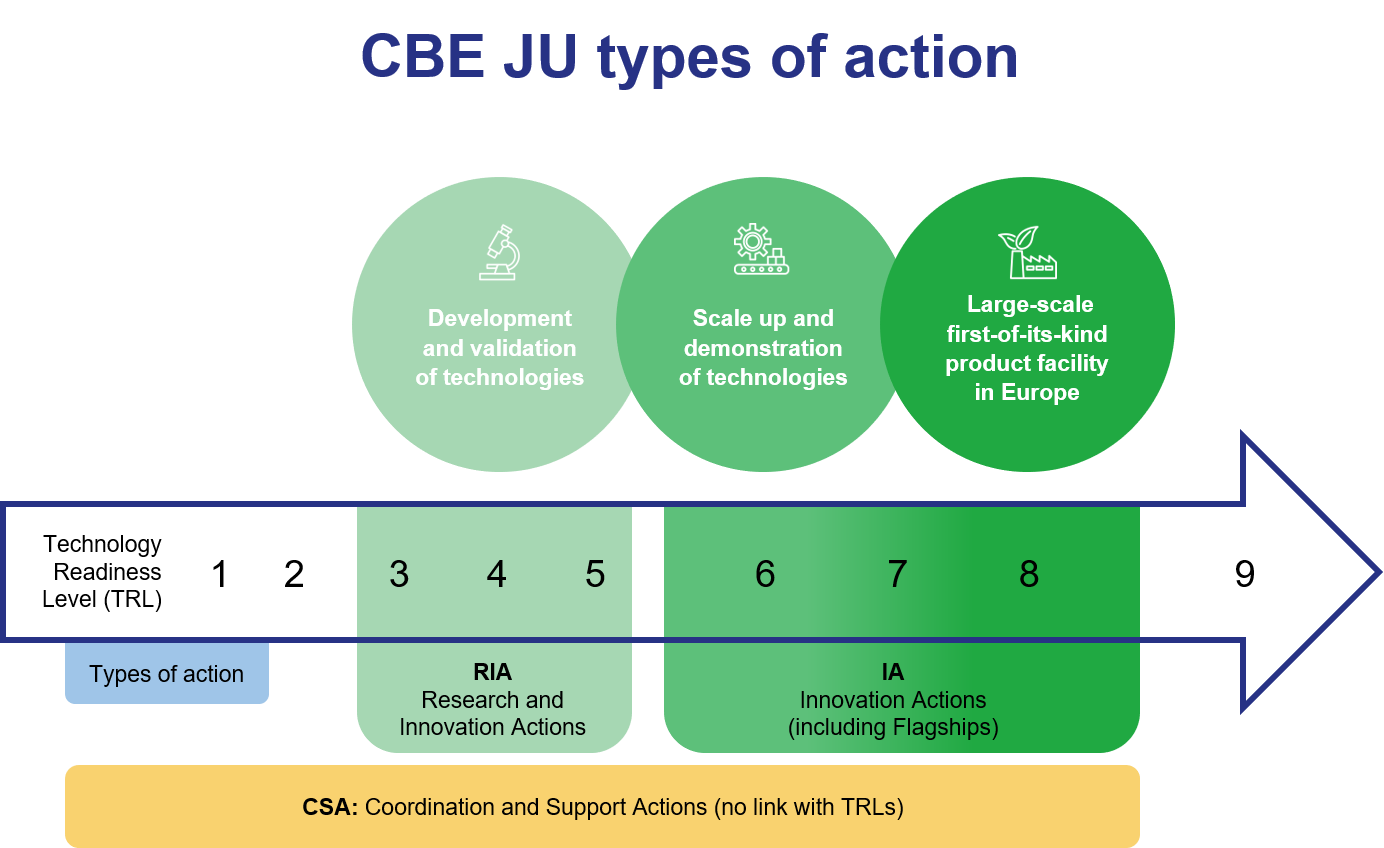
so it's a CFP, as part of this amazing circular bio-economy joint venture make-it-rain for the whole tech-readiness family! [0]
the specific one that you linked is ... research and innovation, but ... it looks extremely broad.
so, okay, it's not "basic research" (much broader than, let's say, "how to get the glue out of furniture leftovers"), but then what's the money for? (shouldn't this consortium already have a ton of projects ready for evaluation?)
and of course the verbiage is thick as fuck. it's not clear for me - again as an example - that if proposals MUST look at regulation induced bottlenecks or it's an "at least one of them" situation. (also, does it mean that think-tank-style NGOs can propose to do a survey of the regulatory framework and in theory get money for that alone? -- yes, I know, I should check the Annexes, and the call-specific docs/forms [but that's only available after registration?])
...
of course there are sections that absolutely seem to be prime candidate for consultant busywork ("avoid overlaps with past, ongoing and upcoming EU funded projects, including those funded under H2020, HEU and the BBI JU and CBE JU, ... P4P ... NEB ...."... WTF!)
...
all in all, it seems that when the EU wants to do something it ought to do an OKR hierarchy. (and yes, that's exactly what's happening with this 2 billion joint this and that. the objective is circular bio everafter, and the "key results" are reuse/recycle (valorization), etc.)
great. good job EU. still, if it costs 100K to file paperwork for this, I want my money back! :D (well, no I don't want it back, I want the grant system to be reformed so it costs 10x or 100x less to file. and let's spend the rest on writing better CFPs and so on.)
Worth remembering EU funding is collected from the nations that participate. In other words, our tax money is paid into the money pool, application consultants eat 10-30% of it and then it gets paid back to those who can afford to pay consultants six-figure sums at minimum. EU bureacrats can pat each other in the back for "creating inspiring and fantastic things", per your words.
Sounds to me like you just have an axe to grind and don’t really know what you’re talking about; just a strong desire to complain.
It’s not how solutions get built. But I say this from a bed of privilege — it’s true that I have a much better shot at fixing this system than most people in Europe, due to living in brussels.
It's not ad hominem; it's a fact: You sound like you just have an axe to grind and you're not adding much to the discussion beyond large scale vague complaints nobody can do anything about.
I'm not sure how the onus is on me to refute anything beyond that. I've added plenty to the discussion upthread.
My critique is having a largely inefficient middleman (EU) in distributing funds, and that it would likely be much more effective and transparent to have, say, business grants handled by the local governments. You did not address this at all, rather talked about some alternative EU-centric funding models.
The fact that you are not even considering that dismantling some of the inefficient central planning could help is rather concerning, but perhaps such is the way of life in Brussels. In that case I only wish you enjoy it while it lasts, since the EU is very rapidly becoming a largely obsolete player in the global economy.


I was surprised to find a few years back that the big consultancy companies actually have teams dedicate to advising companies on these applications and supporting documents. Helping them navigate the complexity.
If you need to pay consultancy companies to navigate the process then you just killed access to smaller companies and universities in less well off economies.