I see the vision here, which the top commenters (sorry, couldn't read all of them) seems to miss. This should be a moonshot bet on the next generation of user experience. People are complaining about apps, but the idea here should be to make apps irrelevant as a concept. You don't need "apps", you need data feedable to LLM and a visualization toolkit for presenting results. And maybe some tools to manually wrangle the data when precise manipulation is required.
On paper, this sounds amazing. Like "out of sci-fi books" amazing. The caveat, though? I very much doubt Google has the capacity to execute this properly. And we'll get another half-baked attempt at reskinning Chromium and/or Android.
I can't get Gemini to not cut me off mid-sentence and reply to only half of what I wanted to say.
It doesn't reliably integrate with Google Maps.
I can't trust it for basic shopping tasks because it doesn't reliably evaluate stated criteria. I can't even ask it if a specific web store has a specific item in stock and trust the answer.
Google hasn't gotten the bare-ass basics right. They're not about to "make apps irrelevant as a concept".
> [W]e'll get another half-baked attempt at reskinning Chromium and/or Android.
This product is exactly how Google improves Gemini. For better or worse (I'd argue worse) Google will be putting these devices in classrooms and everywhere else to train Gemini.
I'm not sure about that. The "normies" around me love AI. My mother and mother-in-law drive me crazy when I ask for advice and they copy the answer directly from ChatGPT. Not to mention the stupid images generated by AI.
The average Redditor that performatively hates AI sure. But outside of the chronically online bubble, the average person, in my experience, does not hate AI
I think once the hype dies down, and things start to normalize, the hate will fade into the background. Instead of "AI", we'll just get "apps with features" again.
> You don't need "apps", you need data feedable to LLM and a visualization toolkit for presenting results.
Unless Im missing something, how do you capture this data? It needs to be some sort of UI friendly method, as I dont see my mom chatting with an LLM all day about her dog's location (via GPS) or my dad counting calories through ChatGPT.
I would be curious to see how OpenAI or Anthropic would implement this vision without the inertia of a ~200,000 person company and with all the enormous brain gain these two companies now have. A Linux-based, LLM-native phone/laptop hybrid is pretty close to being my personal dream consumer device.
Can I somehow strip out the LLM-native part and just have a polished Linux-based mobile device, without someone trying to control what I run on it? Because that would be my personal dream.
+1 on having little hope Google can pull this one up well. Recently my Android auto updated to use Gemini instead of their legacy voice command, which already sucked, and it got significantly worse, it's trying to play songs on Audible and Libro.fm at random, while I even have Spotify running. And I'm on Pixel 10 Pro! When asking to play a soundtrack of a movie, it starts to play random cover instead of the official thing, just no idea how it can be so bad.
> The caveat, though? I very much doubt Google has the capacity to execute this properly.
I don't think it's a capacity issue, it's that their whole entire business is advertising and acquiring the user data to feed it. I don't see any reason they would want to execute on this in a way that is meaningfully beneficial for users.
I suppose, my own caveats for some of the responses suggesting people like being advertised to.
So this is essentially Android desktop mode with Android 17 Gemini integration.
Please get rid of that top panel. I just don't get why this and desktops like GNOME tries to copy macos top panel when clearly in macos it is menu bar that host app menus but that concept doesn't exists in these other desktops and yet they have a top panel. This is just bad UX.
This will follow same model as Chromebooks i.e different devices from different OEM partners and for x86 and arm. So soon someone will be able to create a generic ISO for this that you can boot on a standard x86 PC/laptop.
Samsung is also working on such devices but they will probably have Dex which is much better then the current Android desktop mode.
I like the top panel in gnome. You need a place for your clock and you status icons. I don't really care much if it's at the top or bottom or sides.
As an aside:
From a 'clickability' perspective the app menus in the top bar are nice of course and I theoretically agree that's the best place for an app menu. But in practice I really dislike macos' 'separated' app menus when a window is not maximized.
On MacOS it was a great example of the use of Fitts law, a vertically infinite target for your mouse pointer for commonly used tasks when you didn't memorize the keyboard command. But on a giant monitor it's too far away from your work. Macs, for the longest time, had 512x342, 640x480 or 512x384. It was already getting far away at 1152x882.
Even better, Command-? opens a search menu (usually under the "Help" button) that points you at the first matching menu option (even if there's no shortcut for it). The Unity DE tried to replicate that with their HUD feature, but it wasn't universal. It's an incredible feature and I wish everyone copied it.
Many apps these days have tabs at top like chrome or firefox and having a top panel (with or without menu bar) means you loose the useful of the fitts law for accessing the tabs of such apps.
The panel itself is not the problem, it's the lack of integration with windows. In GNOME, when you maximize a window, the title bar stacks underneath the top bar. If that window also happens to have a menubar (e.g. LibreOffice) that gets stack underneath as well.
This is just a lot of wasted space and makes the menubar harder to click, compared to having the menubar at the very top, next to the screen boundary.
I would like this feature to save screen space, but what happens when a window isn't maximised? The menu bar items get orphaned? Or you have differing behaviour?
IIRC Ubuntu provided this when they introduced Unity -- quite a long time ago.
When the window is maximized the menubar was merged into the top panel, but when the window was not maximized it looked like a regular window with tilebar and menubar at the window's top.
Not long ago there was also a KDE extension to replicate this; however, since many GNOME apps moved away from menubars, this approach isn't that helpful anymore.
Not sure what Googlebook is, but in general: I want to be able to move my pointer to the top right corner and click to close the window.
And before you make some claim like "use keyboard", the UI includes these window elements for a reason. Top bar makes them less friendly to use: They're tiny and with top bar it's an aiming game instead of a quick way to do something with a mouse or a touchpad.
As an i3/sway user I don't greatly care about this because I already have things the way I like, but I understand the frustration of the OP.
and I'd like to be able to move my cursor to the top edge of the screen to click tabs without worrying about where my cursor is on the y-axis, only x. we've completely forgotten about Hot corners and hot edges...
Yeah, this is the extension of the above. Main reason tabbed windows ditched the title bar in favor of having tabs integrated into it.
Unfortunately people who design UI or produce specs are not power users so the end products have been losing utility at an incredible pace.
My personal favorite is an input field which clears its content once it loses focus. So when inputting an address on mobile you can't switch back and forth to copy different parts of it.
So, I'm only slightly trying to be a smartass here, but... Who is this for? They are marketing what is ostensibly a computer for people who seem to not want to use a computer in scenarios that I don't think even exist.
Beyond that, this is a laptop that is running a really shitty, 'apps only, no you cannot do anything useful with this' operating system. I have an awful lot of complaints about MacOS's relatively restrictive use cases, but it's still at least a General Purpose OS. Android on laptop is very much not.
This is an overgrown phone with all the trash that comes with a phone, and the very finite use cases that come with a phone, only now it has a keyboard. It's solving none of the problems with Android as an operating system and doesn't seem to even be interested in doing that anyway. The marketing is demoing use cases that don't even exist.
> So, I'm only slightly trying to be a smartass here, but... Who is this for?
The primary difference between a Chromebook and a Googlebook appears to be the ability to run LLM's locally.
The requirements were spelt out at Google I/O. They boil down to a 40 TOPS NPU and a minimum of 16GB of memory. They appear to be trying to match Apple's M series memory bandwidth using software compression. ChromeOS didn't need an NPU and specified a minimum of 4GB of memory. Aluminium OS looks to have the same relationship with its LLM as a Chromebook did with Google Chrome, and needs the hardware to power it.
If they pull it off you will get GPT-4 performance, running locally.
As for who this is for: your guess is as good as mine. But if their replacement for crostini works (crostini is so hopelessly unreliable it felt like it never got out of beta, so it's a big if), even the minimum specs would be a very good Linux laptop.
i can kinda see it, they spent a lot of time getting Gemma 4 pretty efficient and then seeing everyone buy macs to run them and realize it’s maybe a real moat since Apple doesn’t make any AI
Would be an interesting product if it could actually give you GPT performance locally, will be an awful experience if it’s essentially just cloud AI…like a premium laptop where most of the features are locked behind a subscription would be wild
Yep, that's the answer. That being said I still imagine their preference is that nothing is run locally, all via their server to get all precious usage data.
A user has to use the CLI to turn off the Apple DRM to install software on an Apple laptop. The CLI is often cited as the reason people won't try Linux. This makes the entire user experience on those machines a restricted use case.
My daily driver for the past 20 years or so has been a Mac, doing everything from software development to music production to general computer use.
I’ve never had to use the CLI to turn off Apple DRM to install software. I use the Homebrew package manager to install all types of command line and GUI software and I download and install all manner of software outside the App Store regularly.
The only times I’ve had to do anything is if the app isn’t signed which is rare to come across, and even then it is a couple clicks in the macOS GUI to allow installation (I’ll grant you the fact they’ve made it more cumbersome in the past years by requiring you to go into the settings panel and click a button there, but it never outright prevents installation and never requires CLI use).
I really have to question if you’ve actually used a Mac or if you’re just repeating something you’ve heard because it doesn’t match my daily experience at all nor that of any Mac user I know (all my coworkers for example).
I think they're referring to disabling system integrity protection, which I've admittedly had to do for some specialized use cases that I can't remember.
I've been using a Mac since 2012 for all manner of work and personal use cases. I haven't needed to disable SIP to do anything in quite a long time. I used to need to do this to install kernel extensions for audio, but this is no longer required for systems that support AudioKit.
Basically, I don't see any impediments to doing anything I need to do with SIP enabled at this point. I'm not sure what GP thinks the impediment is.
No idea. The people that have no need to run real software and want a high end device probably have an iPad with a keyboard case. Those that want a low end device have a chromebook.
GrapheneOS users that need to access their banks but their bank's websites treat users on browsers as second class users by requiring phone in 2fa. Chase.com is an example of this. Android app on Chrome device? No issue.
> Beyond that, this is a laptop that is running a really shitty, 'apps only, no you cannot do anything useful with this' operating system. I have an awful lot of complaints about MacOS's relatively restrictive use cases, but it's still at least a General Purpose OS. Android on laptop is very much not.
Android 16+ offers a built-in integrated Linux VM that can be enabled from Developer Mode, and if this[0] third-party site is accurate, "Android on laptop" will have it enabled by default.
So it should not be too different from working on a Windows laptop with WSL2, or on an OSTree distro where you use distroboxes to work with non-sandboxed programs.
(fwiw, I would still refuse to have one of these for personal use because Google is a shameless data robber. Unless someone were to de-google Aluminium like LineageOS and GrapheneOS did for Android, but that would probably take years.)
For corporates it could be a good balance between security and being able to spoon feed people AI. It is an alternative to Microsoft and the mess of different products and licences.
Yeah, a Chromebook's killer 'feature' is that it's web browser attached to a keyboard and functional screen for cheap on a platform that you can't otherwise screw up.
If you price that up to $1,000 (which some Chromebooks definitely do), then I start to ask a variation of the same question: Why did you buy that?
every large corporation is going to come out with a hardware device in the next 12 months where you don't directly use applications, where the AI acts as an intermediary
openai, anthropic, meta, google, all of them
even you will want one of these devices, probably (not saying this is a positive development in the world)
And every one of these ‘AI first’ laptops will be cancelled in a couple of years when generative AI is no longer the hot new thing and end users realise its severe limitations.
Would prefer a 'Google Linux'—a native desktop OS with a unified UI philosophy, similar to a macOS experience but built on a standard Linux foundation. Instead of ChromeOS or Android as the base, treat them as subsystems for compatibility.
The real 'next big thing' would be integrating an engine like Gemini with OS-level hooks (similar to the OpenClaw approach) so agents can manipulate app windows and state directly. Resurrecting Web Intents as 2-way App Intents would be the key to making this work.
Also, keeping prompts as local .md files with an Obsidian-like system editor would be a huge win for power users. Simply gating Gemini behind 'premium' Chromebooks feels like the old 'licking the cake' strategy from the Google+ days—trying to force a new product's success by coopting existing hardware rather than building a superior platform.
I can imagine having Gemini + local Gemma working with Agents, which have access to my e-mail (ideally on GMAIL, but also supporting outlook), keeping local history of my visited sites and messages... and using RAG or something even better, ideally with looking also on repos I have checkouted to my file system, and maybe even whole file system....
Work related e-mail about "sending invoice to customer"... it may suggest proper content for e-mail. Having "dashboard" with summary of todays communication to you, your tickets (at work) and so on....
Can Google build such thing? If somebody can - it will be them. Will they build it? Probably not, they would prefer to build 3rd version of Google Pay.
> The real 'next big thing' would be integrating an engine like Gemini with OS-level hooks (similar to the OpenClaw approach) so agents can manipulate app windows and state directly. Resurrecting Web Intents as 2-way App Intents would be the key to making this work.
I think for something like this, it will only work if you can allow you local files to get messed up by the LLM but then, because everything has been synced to the cloud, there's a safe "revert" option.
I'd love that built on a Linux foundation too, but realistically reckon if they're going down that path they've got the core of "all your app state can be backed-up/transferred" already in Android so they'd likely lean heavily on that.
> similar to a macOS experience but built on a standard Linux foundation.
From a security perspective, this cannot exist. MacOS is fundamentally superior to classical GNU/Linux distros. Android/ChromeOS are the only Linux systems that make a serious attempt to close that gap.
I think the closest thing I can imagine is a system that goes all in on a Snap/Flatpak type platform (basically, like Fedora Silverblue, plus throw ~50 million dollars at fixing all the sandboxing, improving the SELinux policies or whatever, cranking up the system integrity story, getting some kernel hardening in place, stuff like that). With Google's funding I do think that's technically viable, I would love to see it. But, I dunno if it would count as "standard Linux foundation". And, kinda a weird thing to do for a company that's already spent billions over the last 20 years to build several existing Linux OSs.
(BTW, this is a totally security-brained take. I do actually run classical GNU/Linux on all my personal computers, the fact that it's a fundamentally insecure OS doesn't actually bother me that much. But I don't think Google can realistically ship a "product" like that. If it really took off and gained the kinda adoption they are presumably hoping for, it would honestly be quite irresponsible of them).
Android now runs a Debian VM, too. It's early days, but I'd be surprised if they don't get Linux GUI apps integrated into Android in desktop mode soon.
Reading comments like this makes me feel like I live on a different planet from some people.
The Coral USB dongle is from 2019 - it is a dev kit, not a souped-up edge inference unit. It was not designed to compete with the Macbook Mini (???) and is not some sort of touchstone or landmark in AI development. It's a tiny TPU that Google made to prototype technologies for their own SOCs like Google Tensor later down the line.
I mean, I'm sure they absolute could build it and do a great job of it, but their incentives are all aligned to having you use web apps or buying from their store. A real linux would be absolutely counterproductive to those goals.
I can't see how this would be meaningfully different from ChromeOS. Google cannot force GNOME and KDE to stop clashing, there's no opportunity to "unify" the UI philosophy of Linux any better than the current efforts do. And upstream Linux has no big selling point for most users - the people that do care about that stuff will typically avoid Google's distro altogether.
If you want an upstream Linux kernel with folders of markdown prompts and virtualized ChromeOS/Android containers, just use Linux. You don't need to wait for Google to build that experience for you.
I bought a Pixelbook during the middle of their product lifetime, and it was one of the best laptops I ever had. I genuinely don't know how broadly that sentiment was shared, but the cancellation of the product line suggests "not that broadly." Google has changed since that time and I am a bit skeptical this will meet that specific niche for me.
Yeah, I had the original Chromebook Pixel and the Pixelbook and they were both great. Somehow I'm still using the Pixelbook today and it chugs along.
That said, its hard to justify the prices for these premium Chromebooks. When I picked them up they were heavily discounted with some developer code or other.
I also agree with the shaky future as far as being able to actually opening these things up with developer tooling. It seems like they've simply been on a path to rollback all of that.
I recently replaced my Pixelbook with a Lenovo Chromebook Plus. I don't like the increase in size/weight, but it's far more performant and Lenovo periodically has steep discounts on their hardware.
I don't know if these were related but I had a Pixel C tablet and I'm still upset they killed that off too. It was a nicer tablet than any Samsung I tried and felt like a genuine competitor to the iPad equivalent really excellent build quality, and then they abandoned it. I still have it but whatever they did to the software before giving up on it made it crash and blackscreen all the time while completely idle and I haven't had the energy to install something else on it, if something else even exists.
I think the big issue is it's still not a real full laptop, and that dramatically limits the audience. No matter how well it's made, they're never going to actually do what needs to be done to make it a mass market product. Google doesn't really have the dedication to be a real hardware company. Their hardware is more of a showcase to demonstrate things they want other people to do. And at this point they kill projects so often lots of folks are very hesitant to spend money on their things only for it to die, just like you experienced.
Likewise I bought the Chromebook Pixel LS and a Pixelbook during that dark period before M-series laptops and these laptops were awesome and IMO well ahead of their time. The ChromeOS with all its faults was a modern OS without legacy. For example the OS settings are closer to the Phone OS like settings vs MacOS settings that are still a mess these days.
I always wanted a pixelbook as I loved the hardware design and the taller aspect ratio screen, it was just too expensive for me to spend on a chromebook only laptop. IMO it looked nicer than the Macbook Pro's of the time.
They all suffered from severe hardware issues that got never fixed.
Chromebook Pixel 2013 had that atrocious function key row that didn't align with the rest of the keyboard and where made of different material and had terrible travel. The Pixelbook had some terrible PWDM issues with the display and iirc it also had severe ghosting issues. Not to forget the cut in performance of these mobile fanless Intel chips because of Meltdown & Spectre. I think the Pixelbook's WiFi/Bluetooth module made by Intel also suffered from hardware faults where using Bluetooth could degrade WiFi performance and vice versa.
Wiggling the mouse is what people do involuntarily when the computer isn’t working right. They are setting themselves up for Gemini to be the uninvited Clippy, except this will send everything you are working on to Google to harvest data from.
The video they show (which is probably exaggerated by cutting out LLM generation time) is pretty sci-fi. I don't know how it works in practice, but it looks fun to try out. If this could run locally, I'd love to have a feature like that.
Most people don't really seem to care about data collection when it comes to AI usage. A lot of people who will feed Gemini/ChatGPT/Bing/Claude/shady clusters across the internet for bargain bin prices/Mistral every detail of their lives will probably be fine with Gemini as long as it doesn't interfere unnecessarily.
It probably works similar to how Gemini works in Android for a while now.
You can point or select anywhere on the screen and it understands and searches the context. If you select a text block, even text inside an image, it allows to copy or search the text online. Otherwise it can search the image.
I use it often. It's intuitive and fast even on non-flagship phones.
I'd wager their A/B tests went well enough to warrant a port from phones to their new "Chromebook".
Their video is completely different from what Gemini does now. It analyses mouse movements, like circling around things, underlining things with the mouse, pointing at things to indicate where they need to go. It's a lot like the interfaces you might see in sci-fi movies, where generic gestures are understood within context in a way that modern computers can't handle.
> circling around things, underlining things with the mouse
Do we use the same Android Gemini assistant?
Because the one I use does that and it has object detection smart enough to be intuitive. It usually gets it right when I point something on the screen. And when it doesn't, I can circle around the thing or just click again.
This Instagram post for example, it automatically highlighted the entire person, but I wanted to know about the shoes. I then clicked once on the shoes and it knew exactly what I wanted and gave me the info in about 2 seconds:
Google's Gemini features differ per region to a massive extent. There's a good chance privacy laws prevent Google from providing me with the same Gemini you use.
Object detection is mediocre at best. Circling things and using their AI editing features works, but the artefacts confuse Lens and other image parsing systems. Extracting objects from images usually mostly works, but it's not on par with what Apple had long before Google built it.
The difference remains that the Gemini app on Android requires activation. You cannot tap a button or click a link while you're on the Gemini screen.
It's an absolute privacy nightmare for most people, but if we ever get enough RAM and compute to run this stuff locally, I think this can actually make a new paradigm for user interaction, something with lisp machine self-customisability but for people who don't know anything about computers.
And if it doesn't work, it'll be the most horrific, messy, useless UI humanity has ever invented, and we all get a new funny meme to laugh about Google. Win-win!
If you buy the Google Gemini AI Agentic Laptop or whatever they will market this as, you're going to want to try AI. What else is the point of buying a Chromebook, as nice and slick as it may look, when similar or even better alternatives exist.
It is deliberately designed for maximum accidental invocations so the managers and execs behind it can claim the large user numbers in their promo packets.
Oh my goodness, the use cases are so… badly conceived:
> If a friend sends you a picture on your phone and you need to email it from your laptop, the file is just there — no need to email it to yourself.
So are there really people who will email a photo to themselves from their phone to… send the photo in an email?
Interesting to note that there is no mention of processor or operating system in that post. I’m guessing that it’s Android in a laptop form factor which I suppose might be something that some people would want, but I’m not one of them.
Getting files on and off of a phone is shockingly hard. Shockingly. It's even worse on an iPhone, if you don't have a mac. To get my photos from my iPhone to my PC, I had to first upload them to iCloud and then download them again. My phone and computer are, like, a foot away from each other but I had to send the photos across the country to some server and back just to look at them.
Everyone emails themself stuff, that's normal. The weird part is how often will you ever need to email it specifically from your laptop, but it's already on your phone? If it's on your phone and you need to email it to someone, couldn't you just email from your phone?
Have you tried using the Gmail app? It's missing a whole bunch of features. For example, you can't even insert hyperlinks with custom text. For images, I often don't want to send an image at its full resolution. Rescaling images is a task that's much easier to do on a laptop.
Oh, I use use AirDrop to myself for this. Yes, given my photo library syncs to iCloud, just opening Photos seems like it makes sense on a fast WAN which I sort-of do have, but of course, iCloud syncs only happen when the device decides the mood is just right, and can't be triggered manually, because I guess that would just be 'clutter' in the UI.
What drives me absolutely nuts about AirDrop is that it's only device-to-device even if devices are on the same WAN.
My wife and I have home offices at opposite sides of the house with hardwired desktops and Wi-fi APs, but we can't AirDrop to each other as we're out of range for it.
I remember in late 10s I could just connect my iPhone to a windows machine and the photos folder would be right there, mounted, with the typical iOS filenames for each picture. Is this a false memory? Maybe I was on a Mac and just forgot?
Photos taken on iPhone are automatically synchronized with iCloud.. I guess you can just go to iCloud.com and download them on your PC?
If you want to send a photo to your friend from your iPhone, just click on the photo and click the "share" button, then you have many options, including sending it via Email..
The synchronization is opaque - more than once I checked for photos and they weren't uploaded yet. Also downloading stuff is very, very slow compared to wired transfers, and logging into Apple anything on your web browser is a huge pain in the ass.
That's mostly an iPhone problem. Plugging in an Android phone still works, and wireless exchange with QuickShare also works on most devices. With Google reverse engineering Airdrop, I hope they can get the Android <-> macOS experience to finally work correctly soon as well.
I'm super techy but I admit that I just use Signal to send me a "Note to self" whenever I need a file from my phone on my computer quickly. For images I just use immich, but texting myself is honestly the quickest way for files because the experience is indeed terrible.
I've been using pairdrop.net (fork of snapdrop, which got bought out) a lot recently. Only needs a web browser on either end, and doesn't take any prepwork.
They should have just said "USE it on your laptop", not email it.
I all the time use my phone as a camera (esp. for coin photography) than e-mail the photos to myself as the most convenient way to get them on my desktop where I can edit them with GIMP etc.
I just open photos.google.com and grab them. No need to fiddle on my phone.
When on wifi, the photo backup upload starts immediately. If it doesn't (possibly due to your settings, this used to be my issue) you can manually open the photos app and tap the backup now button.
I'm not sure if that's an option for me, since I'm not using the regular camera app - I'm using Halide which is better suited to macro (coin) photography.
Google Drive would be another option to transfer, but would be more work (about same to "share" as email, but less convenient to access on desktop).
The e-mail way is actually quite convenient since on the desktop you can just download all the photos you sent in one go - they appear as a zip file that you can then just extract to your working directory, rather than having to save one at a time.
It’s a poor example. Recently, I did have to email myself photos taken with my phone to access them on my laptop. Would be nice if they were automatically synced. It’s work phone and laptop so I could have gone through OneDrive or Box but just as inconvenient as email.
These are usually targeted at kids and newbies. My mom would 100% appreciate that feature for photos and pdfs. She still struggles with files on Windows and managing files are even less clear on chromebook.
Yeah I and i suspect a lot of others email myself little files all the time because surprisingly that's the most convenient way to get those files quickly from phone to laptop.
I do that all the time with my iPhone and my windows machine, sadly. Still not a particularly compelling feature, just speaks to how sad our modern ecosystem is.
I feel like very much not the target market for this. Tokyo Vintage Shopping Trip? LOL
I got mad when I bought a Chromebook thinking it was a cheap laptop I could install any OS on only to find it was boatloader locked and the model I bought hadnt been cracked yet. Say nothing of all of Google's recent practices with Android. This whole thing just sounds like the plague.
Looks like their Reddit post has a formatting error?
...as computing shifts from operating systems [to intelligence systems](TKTK)...
`[text](link)` is the syntax used to create a link. But since `TKTK` isn't a valid URI, it doesn't render a link. My guess is TKTK is placeholder and they were supposed to fill it in before posting on reddit... but forgot?
I haven't been around reddit much for a few years, but in the past at least, /r/android was one of the best tech communities on the internet. It was even better than the iPhone subs for iPhone discussion.
I mean if you think about it, the type of person to own an android phone and care enough about phones to join a community is pretty much guaranteed to only be a tech geek.
> Example: Point at a date in an email to instantly set up a meeting, find good spots to meet up, or draft a reply.
This is actually a good use case for AI. My university sends a lot of newsletters with several events in free text format; all I want is to be able to select one of them, have an LLM parse the title, date, location, and category, and put it in my calendar.
Still, I'm sceptical this will work. Samsung phones supposedly have this same feature, and it works 1/10 of the times. Pasting it to ChatGPT and tell it to add the events to my calendar works fine, but the bottleneck is always the project managers in charge of the UI. Of course, having a small local model and being able to choose my own right-click items like I could in 1995 would be an actual solution.
AI mouse pointer is definitely not something I wanted to think about today. A recent HN post implored vibe coders not to modify the mouse pointer and now we get this from Google.
Damn... ~1min in he verbally asks to put the 2 ingredients on the list.
Like... my dude that's way even slower than drag&drop the text on a light right next to it!
Same later on about changing the calendar appointment from whatever to 8pm... he is behind a desktop with a mouse, just input the number or click on the arrows to adjust.
I bet some people will mention that those are "just" simple to understand examples or that it's great for accessibility ... but it's not. It's not reliable enough for complex cases and not reliable enough for accessibility. So... yes JUST basic examples that are slower than other means.
PS: I did prototypes using voice and pointing in XR and yes that paradigm IS powerful, it's just being multimodal.
Gross. This is just more proof that corporations simply don't know how to market AI. Everything is an ad for an ad at this point. The very first thing they show this new machine doing is helping people shop for clothes using AI.
No one is doing that, these people don't exist. No matter how hard corporate America wishes they did. This is why AI doesn't sell. This is why companies like Microsoft and Dell are pulling back on their AI claims and why Apple has nearly wiped it off their site all together, seriously go check out apple.com, not a single mention of Apple Intelligence.
At this point I'm convinced that marketing has been completely taken over by shareholder shills, marketing to customers they wish they had instead of the real customers that exist.
Also, P.S: Not to say that clothing/shopping is the primary use case, but I know plenty of women who use AI for clothes/fashion/interior decoration etc related tasks.
What feels already like old history is that Apple made a generous deal to OpenAI based on the premise that their AI could do the claims.
Apple engineers spend months trying to prompt engineer their way, thinking the prompter is at fault if the soon to be AGI system diverged. Some of these instructions were trending out there, as reveals of how naive Apple was at the time.
They could be traced from the device's logs so not so much of a leak: Don't hallucinate, strictly follow instructions, followed by all sort of refined predicates, appended as if an LLM had reason
Then Apple released a paper to warn everyone (well, a few, and to save face) that we are getting fooled.
its really hard to read that first apple paper in context when it doesnt have a date on it. I know research papers are meant to be timeless artifacts, but when it says things like "Recent generations of frontier language models... " "frontier LRMs" etc i'd like to know what they were testing on and what the zeitgiest was around that time.
Please put a date on your research papers! I could figure it out roughly by looking at the "last accessed" date on their citations - 2025-05-15.
The specific models are specified. E.g gpt version's, deepseek R1 etc. but I agree that's terrible practice not to timestamp a paper aside the authors.
I had a similar reaction from in-law family members. The main reason was that they wanted to be able to see the ads that unlocked more gameplay time on their free game.
Just feels crazy to me, but I guess that's what addiction looks like.
It's really not uncommon for me to speak to someone who actively doesn't want any sort of adblock on their computer. I would say maybe 5% of people, anecdotally, just don't want it, even when you're in front of their computer at that very moment, and offer, and insist that it would take 30 seconds to install. It's not a majority, but I found it surprising.
On the spot. A lot of replies in this thread which outline "useful" AI features fail to acknowledge the same: this is hackernews, and it's a very specific and non representative slice of the population.
This. This is why "sync your files and cast your apps with 0 installs" are even being sold as features.
Normies HATE customizing their devices. Children will literall reach for AI instead of search engines when they just want to change a background image.
Jailbreak is a slur for "Installation" that tech companies want to keep that way.
EDRi is in the minority, the EFF is in the minority, and so on. But someone has got to fight the corps, they can’t be the only ones dictating what’s socially acceptable.
By that logic though wouldn’t Google have wildly successful products instead of a long line of failures? Googles product strategy is akin to throwing spaghetti at the wall to see what sticks.
Sure some stuff sticks but most falls off the wall and is axed barely half way into the product life cycle.
You're on HN, you should be aware of the idea of not needing every product to succeed. They only need 1 in 10, or 1 in 20, or however many moonshots to succeed. You can not like that strategy, but it's basically the entire tech industry.
Pretty much all companies have a long line of failed products, only the ones we heard have successful ones. Google is definitely one of the most successful companies ever existed
People need to understand Google. They have a long line of failures, because they are an innovative company. Their whole goal is to scale products to billions of users. So if they release a product, and they see no path to billions of users they cut it and move on.
This has always been the way Google has worked. This is why they are literally the most successful company in the history of the world.
Sure, and Microsoft acquired DOS, and Adobe acquired Photoshop. At a certain point though, after 20+ years of development, you need to give some credit to the new owners for making it into what it is today.
I don’t block ads. I like buying things. I go to work and make money. I’m going to spend some of it on stuff that looks nice and seems fun. Ads are a good way (not the only good way) to find out about new things to buy.
I feel as if you're exactly the opposite of me. This feels, to me, like such an upside down, back-to-front position.
If I need to buy something new in order feel like I'm having 'fun', then I try to ask 'why' as many times as necessary to work out what hole I'm actually trying to fill, or what scratch I'm trying to itch. There are a couple of second hand items I want to buy off Gumtree, but I have no immediate need for them, they'd be for some future situation that's more likely than not to be only theoretical. Knowing that they are there, available, makes me want them, rather than some actual existing purpose.
> to find out about new things to buy.
I would interpret this as "to find out why I should feel unhappy and empty that I don't own these things".
On things that look nice, yes, I've got some nice art, but there's a limited amount of space in which to put up nice looking things, and if you're buying them frequently then you're either throwing out a lot or you're having to store a lot. Additionally, I don't think I've ever seen anything that looks remotely nice advertised on the Internet; or at least looks nice and isn't, in actuality, mass-produced shit that's been polished up.
Having said that, if I had more money to throw away I'd do up my study like an old-school English manor-house library, full matching bookshelves, wainscoting, desk and chair. That's purely 'looks nice' and I would throw away the patchwork that currently furnishes my study. I'll say that's been advertised to me through (un)intentional 'product placement' in movies and TV shows, rather than Internet advertising though.
Exactly. Good ads are a service to me that inform me of things I want to buy. They aren't tricking me into buying stuff. Sometimes I see an ad and immediately believe the product would improve my life and it does.
I think the problem with HN/Engineer types is they basically never see ads designed to appeal to them because they aren't a large enough audience.
I always thought of ads as "something that informs me about the things I should want", and that the point of the entire "discipline" or marketing was to "create desire".
It's kind of amusing to me how such an obvious statement like this is getting downvoted so much. I suspect most people feel this way about ads and HN readers are more bothered by them than most people.
(I hate ads too, but I think I understand the alternative perspective).
I've installed a lot of adblockers for non-hacker type people over the years. As far as I've seen, no one has ever asked or attempted to uninstall them. I think most people are mostly fine with ads, but prefer life without them.
Even as a kid, me and all my friends used to groan when the commercial breaks came on. I've been muting commercials since I knew how to use a mute button.
Ditto. It hadn’t even occurred to me that she was clicking on the damned things, but then I’d never thought to ask “hey, how did you find out about this useless Chinese plastic crap that lives in a drawer and is never used”.
let's be clear: Google is a titan because they successfully sold ads to people who sold to you. We were never the target market beyond building a monopoly on eyeballs, and it's questionable if their ad empire continues. Outside of that they've had very few successes, and while traditionally the hardware is high quality, the bundled services and level of enshitification now is a no-go for my family. If you're buying into the single vendor for the rest of your life, the choice is currently Apple IMO, because they're "least bad".
I used Gemini recently to upgrade my 10-year old desktop PC. I listed my current components, budget, requirements and it walked me through different options/components etc. Gave me all kinds of tips. I committed probably ~£450 to the project and more or less trusted it.
The handful of times I did a manual "spot check" of it's advice, it turned out to be good. The upgrade was a success and I'm very happy.
My take away is that AI is a wonderful tool and if this "AI laptop" is optimised for that then it's a bet/product worth trying. Well done Google, I'll watch with interest.
Why wouldn't I use AI to shop for clothes? I'm not much into fashion, but I could see using AI to help me search for a winter parka that meets my needs, for example.
And I did use AI recently when shopping for a car. After doing a bunch of research on my own, I decided why not try feeding my criteria into ChatGPT and see what it recommends. And it did actually recommend a couple of models that I had not previously considered, including one that I ended up considering very seriously.
I also pointed it towards some used listings and asked questions like "does this listing have ventilated rear seats" - and it was able to respond that it likely doesn't, and told me where to look for the controls in photos to verify for certain. I probably could have figured out on my own with a bit of digging, or else contact the seller, but this was a pretty quick and easy way to get the information I was looking for.
Is that gross?
I didn't look too closely at the Googlebook, so I don't know why I would use that instead of just an app on my MacBook. But at some point when competent models can be run on comodity hardware I think hardware and OS-level support for AI will definitely become a selling point for me. We're just not quite there yet.
I guess the pragmatic answer is that you don’t need AI for that. You need good filters. I don’t like Zalando one bit, but I’ll grant them that it’s easy to find the right clothes on their website because they have very good filters.
LLMs don’t ‘know’ if a pair of jeans is a tapered slim fit with a gusseted crotch, at least not by default. But if the brand uploaded them as such, the filters will find them.
That’s just a quick take. I’ve tried to shop with LLMs and the results are mediocre at best. Of course search, filtering, and content tagging could always be improved, instead of “just slap AI on it”.
It's worth pointing out that in the Googlebook video she's not asking Gemini to shop for her. She starts with a picture of herself, and asks Gemini to combine it with vintage clothing photos from a website she was browsing, to help visualize what she would look like in those clothes.
This is more than just search + filtering. I've done similar things when trying to visualize home improvements, and find that it really is a useful way to help validate my ideas.
So far a lot of the negative responses I've gotten have been along the lines of "only a fool would let AI do your thinking for you". But I find that it's a useful tool sharpening my thinking. Brainstorming, overcoming my own personal biases and gaps in my knowledge, idea validation, etc. Like "rubber ducking" [1], but the duck actually responds with some pretty insightful advice with surprising frequency.
Do I "need" AI for shopping? No, of course not. Can it reduce friction and lead to more informed buying decisions in certain cases? In my experience, yes.
Of course I've seen plenty of useless "just slap AI on it" jobs, too. Netflix put out an AI chatbot that I found particularly egregious, for example (I think maybe they've taken it down since). I didn't find Amazon's "Rufus" to be very trustworthy, either. And I know I'm coming across as pro-AI here, but in other matters I have plenty of serious concerns about AI. I'm just hoping to have a more nuanced conversation than "shopping with AI? Gross!". Or "only a fool would use a product built by greedy corporations!"
Given how Search-Engine-Optimisation (SEO) has been gamed, what will make you think that somehow this NEW system, that's really prone to prompt hacking & already promotes sponsors' products over alternatives, won't be?
For me it doesn't need to be a perfect, bias-free information source (no such thing exists). It doesn't need to solve all my problems. It just has to be useful in certain contexts, and I will use it while also trying to be aware of its limitations and conducting my own "sanity checks" to make sure the information can be trusted.
Nobody is picking their laptop for the best AI integration. You can do those things just as well on every other platform. In fact, additional AI integration is universally a turnoff to most normal people.
“Nobody” is pretty universal, yet there are plenty of people now buying new computers specifically for their local AI capabilities. It’s not all Mac minis, some of us prefer laptops.
My terse answer to, 'Why not use AI to shop for [X]' is that if you are letting AI do the shopping for you at any level, you aren't actually distinguishing products by features or quality or it's ability to solve a problem. You are being fed junk that is likely paid to be moved to the top of the list.
It's probably a nice feeling when you can put in a list of soft requirements to ChatGPT et al and get a list of things it recommends, but I would suggest you are a fool if you think those listings aren't bought and paid for.
In an era where the gap between a 'good product' and a 'bad product' is growing ever larger and the price is not an indicator of anything, the onus to actually become knowledgeable re: "How to identify products worth buying" is becoming greater and greater. If you are using AI to do the shopping for you, not only are you not building that muscle, you are actively weakening it as a chatbot convincingly recommends something to you based on unverifiable platitudes about 'quality' and 'value' - a recommendation that was, again, bought and paid for.
So yeah, that's gross and I would argue pretty strongly that it's just as brain rot adjacent as something like Tiktok. Like Tiktok though, I expect it will see at least some level of popular use, and also like Tiktok, I think it'll end up making the population dumber on average.
> I would suggest you are a fool if you think those listings aren't bought and paid for.
At no point in the process did ChatGPT direct me to any listings. I fed it my criteria, and it gave back a text response listing car models that met my criteria. The only links it included were links to reddit posts and other car reviews. And the results were useful to me because they pointed out where my own pre-existing biases had caused me to overlook one model that I probably should have paid more attention to.
What you are suggesting feels more like a potential future threat than my actual experience thus far.
I found the listings by conducting a separate search on a used car listing website - and the number of matches that met my criteria were small enough that I was basically able to look exhaustively through all the matches. But shopping for used cars can be a little confusing at times because there are a lot of different configurations that change every year. Sometimes the listing might just say something like "2022 Touring, Safety Package" and include a bunch of photos - and identifying whether a given listing has a particular feature you are looking for requires some investigation (ideally they would include a full list of options, but often times they don't). Or often times the listing itself might contain incorrect information. And I found ChatGPT to be a useful tool for quickly making sense of the various configurations, and of course conduct my own sanity checks to be sure the information is not hallucinated.
I'm not suggesting you should solely rely on AI for shopping (although in some cases for low-risk purchases it may be fine) - but rather as an additional tool to aid in research and decision making.
> What you are suggesting feels more like a potential future threat than my actual experience thus far.
Do we really have to litigate this? Have you been on the Internet at all in the last 2 decades? Do you seriously think that even if that kind of advertising vector isn't being paid for today, it won't be tomorrow?
It is almost childishly naive to assume that these companies that are bleeding billions will have the ethical fortitude to say 'no' to Chevy / Ford / Jeep / Whoever when they offer them a check to make sure Toyota and Honda are unceremoniously just de-prioritized as recommendations.
---
Beyond that, the issue is still that you are not going to get complete market coverage. It's feasible that you might on certain smaller market segments (Cars, for example), but something with much more producers and products in the segment has no chance. You would be better off spending the time to understand the market, what differentiates the products in it, and how to think about the parameters involved - all things that are being just abstracted away by asking a Chatbot for a list of requirements.
> Have you been on the Internet at all in the last 2 decades? Do you seriously think that even if that kind of advertising vector isn't being paid for today, it won't be tomorrow?
Conflicts of interest are nothing new - dating back to newspapers, radio, television, and search engines. And yet in all of these mediums companies have figured out how to display sponsored content while still maintaining the trust of their users. AI companies have a similar vested interest in maintaining their users’ trust (not to mention adherence to current and future advertising regulations).
> Do we really have to litigate this?
Yes, if you are going to assume the worst possible outcome, then you must also explain why other outcomes - such as clearly distinguishing sponsored content from “informational” content - are not possible.
> Beyond that, the issue is still that you are not going to get complete market coverage.
Which non-AI information sources promise complete market coverage?
> You would be better off spending the time to understand the market, what differentiates the products in it, and how to think about the parameters involved
I agree this should be the end goal in decision making. And in my experience AI can be a useful tool to get there.
> all things that are being just abstracted away by asking a Chatbot for a list of requirements.
ChatGPT doesn’t just give a list of results without context. It’s also quite good about justifying why it gives the results that it does. And you are free to ask follow-up questions, and fact check the responses against other sources.
I treat it the same as basically any other information source that I come across. I fully understand that it is not perfect. But that doesn’t mean that it’s not useful.
I can very clearly imagine it always going for branded products where brand is not required, unless specifically prompted not to, which the average person won't do.
> I need dishwasher tablets
Could mean buy a 30 pack for £25 which have all the marketing buzz surrounding them, or buy the own brand 45 pack for £5 which does the job just as well.
Or the information I would be fed if I walked into a car dealership and asked a dealer. Unbiased information has never been a thing, and while AI introduces a set of tools along with a new set of risks, it doesn't really change the fundamental problem of needing to vet your information against trusted sources.
Yes, if you engage with the 'designed marketing channels' for products, you will end up with junk. If you want to have stuff that isn't junk, you need to do some leg work. A chatbot will not do that for you.
Sry to say this, but I honestly just want a working shopping AI model.
I want to make a picture from me, add perhaps height and one or a second other metric, then i want it to generate styles for me, finetune it with me and then it helps me buy it.
I'm waiting for this for ages as i HATE shopping but I would find it nice to look better.
Nonetheless, when I saw this page for the first time, i was very impressed with the case not with anything related to softeware. Might be a second type of device which might be a good alternative to an apple product. Framework and now this (perhaps)
If such an AI shopping thing existed, I wouldn’t trust it to do a good job. We consumers probably wouldn’t pay enough for it in enough volume to be the customers (Are you a Stitch Fix subscriber? Why not?). The fashion brands would be the customers and we’d be sold to them. The AI tools would tell you and show you that your skin tone really works well with a shirt from $BRAND who bid the highest that day, and the brand that can afford to do that won’t be one with low margins (aka: a good deal), it’ll be one with high margins, and that means some combination of cheap construction and high price.
I'm tall and thin. When i want to shop a sport shirt, i would go to Adidas (german company, german person) and would accept the brand markup just to get something 'stable' and more controlled quality control despite the shirt being a lot cheaper somewere else.
Despite this, adidas does not have a tall thin filter despite them selling tall thin shirts in shops.
I do not know why.
Now i have to start searching around what brands have this option to filter.
I do not know why ecommerce online is so shit at least it feels shit for me.
If AI would find something in that price range and it would just work, man i would be happy.
I actually worked in ecommerce, including clothing brands. In one company, we built our own bespoke ecommerce website, using third party software only for the fulfillment part. In another, we used Shopify.
Building your own is expensive, which is a stretch to cover with the margins of ecommerce and not go broke. And the off-the-shelf things are shockingly bad in their core functionality (e.g. Shopify, which may actually be the most developer-friendly and innovative, has no native concept of a color swatch that works the way you'd expect, nor does it have filtering other than by a single, painfully-manual, non-composable "tag" feature). Shopify's got a huge ecosystem of one-trick-pony "Apps" that add all the missing features, but running 50 "apps" doesn't fix things either - not only can they be fundamentally incompatible with each other, but nothing can fix the underlying deficiencies of the core data models (or if I'm being more charitable, their suitability for one's unique business domain).
Brands fit for the country of the store. For example, you won't find anything for a tall but not wide person in Singapore, except a few special stores, that won't be Adidas for sure. Unless ordering from overseas (and that costs nice money).
If giving the customer more filter/searching power was something companies wanted, Amazon's search result page wouldn't be like visiting a flea market.
I'm pretty sure what Decart is building does exactly what you want.
I saw a demo - it took you, put a piece of clothing on you, and showed in realtime how that clothing moved on your body in the size you'd selected. I think it even picked the size.
Not super relevant to the Googlebook ad, but in case the perspective is interesting to you: I'm quite tall (194cm) but not very wide, so I usually struggle with buying clothes online. I used AI to scrape a bunch of clothing stores to see whether they sold a men's shirt with an LT or slim fit size, in stock, and matching a particular vibe.
This just shows how bad search engines have become. About 15 years ago you could type fully worded questions into Google and would be pointed to the exact sentence of a website that answers your question. I happened so slowly, we were all frogs in boiling water.
An the same will happen to AI. We will remember these days as the golden age for AI, where you weren't required to prompt an AI three times before it answers with a non-ad response.
It took the mass public a long time (15 years?) to realize search engines had shifted from the former to the latter, and that allowed Google to leverage that misplaced trust into huge profits.
Expect commercial AI to be the same, unless it's explicitly set up otherwise (read: Kagi assistant).
This reminds me of an old video about a guy that got invited to stay in the penthouse suites of casinos. In the video, he has a 'friend' who organises these trips for him (the friend works for the casinos).
This guy couldn't recognise the conflict of interest, and neither will 80%+ of AI users.
You're right but I think AIs can be better than Google at it's height.
But whether it's search or AI-chat, what's annoying is efforts to have it replace that things that exist rather than serving as useful addition. I use ChatGPT X many times a day (or hour) but unless I ask for an AI's opinion, I don't want it.
This is kinda the exception that proves the rule. I can imagine lots of cases where people with specific needs would find benefit from the “AI clothes buying” experience, but I will bet you anything that any searches you try to do will lead you to the same half-dozen giant mail-order clothing vendors that everyone already knows about.
That's not how that works; "someone is doing this" doesn't prove a rule "no one is doing this" -- quite the opposite
"The exception that proves the rule" is for things like "closed Thursdays" (rule = open on other days), "no parking after 8 PM" (rule = parking allowed before 8 PM), "no refunds on games" (rule = refunds available on other items), etc.
You're confusing "The Exception That Proves the Rule" (in English, as used colloquially) with "exceptio probat regulam in casibus non exceptis" (in Latin, which has a use similar to what you're describing.) While the law attempts to be precise, common usage embraces ambiguity.
They really mean the same. What changed was the meaning of the word "proves" in English. When the saying was coined it meant "tests", not "confirms". People kept saying the...saying even though they were using it backwards.
> "The exception that proves the rule" is a saying whose meaning is contested. Henry Watson Fowler's Modern English Usage identifies five ways in which the phrase has been used…
Personally, I use it in cases like:
- Rule: Don't do X, it's a bad idea.
- Exception: One time, someone with very special circumstances did X, and with a lot of finagling and effort they managed to make it work sort of OK.
Or:
- Rule: This fortress was an impregnable defensive position.
- Exception: In A.D. 1305, the fortress was taken, with great difficulty and many casualties, by an attacking army 100 times larger than the defending force.
Or:
- Rule: This river never overflows its banks.
- Exception: Once in history, on the day of the biggest rainstorm in 1000 years, the river is recorded to have overflowed its banks very slightly for a short time.
The exception proves the rule because the circumstances necessary for the exception to occur were themselves exceptional.
I believe the phrase is used to mean something like "the fact that you found something that is obviously an exception proves that the rule normally applies."
For example, imagine if your skydiving instructor said "if your parachute doesn't open when you jump out of the airplane, you're gonna die", and you replied with "well actually that's not true, Vesna Vulović survived a fall from high altitude." Yeah, okay. The fact that you had to be smarty-pants about it and dig up a random exception really proves the point they were trying to make.
In this example the “exception” that proves the rule though was not a smarty-pants special circumstance. Using AI for shopping is just one of its many normal usages and if anything proves it is used by normal people doing normal things. It’s not like the rare example that happens once in a hundred years.
Ok but I’m not sure the relevance here? Everyone has unique needs, if they want to get specific enough. The promise of AI here is that anyone can get as absurdly specific as they want, instead of accepting whatever advertising bucket they’d be traditionally sorted into.
Fair enough, I can buy that. I feel like in most cases where I've heard it it wasn't nearly so clear cut, so that logic wasn't obvious and it sounded like nonsense
I'm not really 100% certain this is the correct or only meaning, for what it's worth, so don't take me as authority. It's just the common thread I've been able to gather from context over time. If you're gonna use it (I rarely do) it'd be worth researching it to make sure you're using it correctly...
I knew what he meant and still thought it spawned an interesting discussion. Mainly because I've never quite intuitively understood that saying. So, I did not take it as OP being tedious about it at all.
Yeah, I use AI for this stuff all the time. Found a visa agency, accountant, great cafes to be working, etc just in the past week.
Also sometimes when doing more complicated purchases that require multiple products, I use it to sift through Amazon.
Especially ChatGPT seems to be optimizing for this use case, like a “search engine that can actually reason” (by lack of a better description). It’s convenient, and saves me a lot of time compared to the mess that Google has become.
(Obviously it’s likely this will happen to AI as well in the future, but right now, it’s pretty good)
How many of the things you've listed here are $20/month better than a search engine? That's the actual deal here.
Obviously, a better search engine that also doesn't display ads is better. But is it $20/month better? When it's also got daily usage limits? And they're almost certain to start injecting ads as soon as they possibly can without alienating people?
I’m already paying for it, this is just one of the many ways I’m using it.
Your phone and internet connections also have usage limits, and you’re also using them in various ways.
I agree that it’s extremely likely that, especially post-IPO, monetization will kill the current user experience, which I already hinted at in my previous comment.
I’m not entirely convinced that they will be able to monetize that effectively with ads. Right now I can buy more chat than I can use in a month for $10 in API credits via commodity open model providers.
Given the growing distrust of ad supported tech, I could see AI remaining as a paid product.
...seems more like a case against Amazon (search) than for AI, then.
Maybe I'm fortunate enough to live someplace where Geizhals[0] exists, but it's been years since I gave up on Amazon altogether. The bad UX is just user hostile and there are many competitively priced retailers with web shops anyway.
Don't you think that's backwards from how utility usually works? Most effective solutions come from attempting to solve a known problem, not by searching for problems to apply an available solution. Even thinking outside the box is usually in service of a particular problem - just applying creative or unorthodox solutions to that problem.
You're thinking about it the wrong way. Have you never come across some successful business idea and go, 'Huh, I never realized this problem even existed' or even 'People are paying this much for this? Wow'
These machines are general purpose technologies used by hundreds of millions of people. ChatGPT alone is used by over 900M people every week at least. You can count the technologies with that scale of users in your hand.
You'll never conceive all the sort of uses it could possibly have, much like nobody could ever conceive all the uses the internet had and will have and it would be misguided to think so. As you see, there's like 2 dozen people here telling OP the thing he thought 'No one' could possibly LLMs use for is in-fact seeing some use.
I don't think people doubt what AI _could_ do, they just have been through enough enshitification cycles to know this is not any different. Right now AI is better than Google but only because Google regressed so much. Market forces always prevail. The operating costs are just too high to offer AI for free for everyone but people will refuse to pay, so AI (at least for the masses) will become just an other marketing funnel companies can buy out.
I also don't see how AI will change the fact that clothing companies target average users and don't serve the long tail.
Yeah it's a helpful and useful tool. It's the people who use it in annoying ways and marketing pushing it too much. It's natural for people to think like that. It's strange being there. Isn't exception a word that describes it well?
That's the problem. It moves an incredibly amount of power into a small handful of multinationals.
I don't want to live in a fucking world where an AI watches everywhere I go, reads everything I write, listens to everything I say, and makes decisions that affect me with zero appeal or recourse.
Because that's exactly where we are headed as people.
---
As businesses, we are headed to a world where if you don't pay tribute to the AI syndicates, your business will be undiscoverable.
ChatGPT has helped me find multiple niche products and vendors. It is really good at that. Products I fruitlessly tried to find for years, ChatGPT found right away.
> I can imagine lots of cases where people with specific needs would find benefit from the “AI clothes buying” experience,
That is kind of the idea of serving the long tail. Everyone is unique, and there are a lot of everyones.
That said, I don't get online clothes shopping. The fit is 80% of the product.
> That said, I don't get online clothes shopping. The fit is 80% of the product.
Indeed it is, but when you are p95 (at least for height, but not overweight), you'll soon learn that you do not have any other option: common sizes stop growing in length (at least noticeably) usually at XL or even L, so you are looking for specific fits (long, slim) and those are rarely stocked in stores. Sometimes I'll try a model from one brand and buy a different colour online.
But enter online shopping and 14-30 day return windows.
Still, for formal wear (shirts, jackets, suits), I simply stick with made-to-measure and custom tailoring.
I bought a used laptop with the help of ChatGPT last month and was amazed. It helped me narrow the model that suited my needs based on my prompts. I needed to renew my old Thinkpad T480. It also helped me find an ad and negociate with the seller.
I ended up with a T14 Gen 4 and I'm super happy with it.
> ChatGPT has helped me find multiple niche products and vendors. It is really good at that. Products I fruitlessly tried to find for years, ChatGPT found right away.
isn't that what search engines were built for? we've just forgotten how to build a search engine that's not just an ad factory, so instead we're putting an ad factory into our new search engine?
ChatGPT and similar are, in some sense, a semantic web search engine combined with an operator that's able to jot down its findings, pivot to different lookups, and filter/combine outputs.
I use Kagi to search, and claude to help me find things. These are different tasks.
If I know what I'm looking for, Kagi is much easier.
If I don't know what I'm looking for (I have hobbies that involve learning new techniques, and my method for learning a new technique seems to involve getting inspired by short-form videos, which don't come with a glossary of terms or a dictionary of tool names, so I often don't know what I'm looking for) then I can describe it to claude who can usually come up with a name for the thing, some useful advice about it, and where to start looking.
Last time, as an example, was all about enamalling and cloisonne, which was quite a rabbit-hole. And yes, I could search for beginner guides for the thing. But that is going to land me at a YouTube video which has 5 minutes of "hi welcome to my show, hit the like and subscribe" and then 15 minutes of waffle before finally getting to "the thing you want is called a trivet". I can read way, way, faster than people on YouTube can get to the point, so I prefer talking to claude.
I wonder if LLMs will actually kill Youtube for those who are like you (and me)? I am curious to see if anything happens to earnings from Youtube over the next few years as people increasingly do not need to sit through whole videos.
It means Google will show you the top 5 brands for a product category and then give up. If you want something more specific you have to search through reddit threads. Or you can have chatgpt search through reddit threads for you.
I also did a bunch of shopping with AI to identify clothing recently. I was going to DC for a bunch of meetings, and did not have a good sense of what clothes are appropriate in different DC contexts. I did a bunch of iteration with AI to identify something that communicated what I intended, and then ran the final list by a friend with more context to confirm that it was indeed a readable choice.
Just in the last three weeks I cut buying an used car analysis (1-3 months usually) and a new dryer (usually at least a week) to three days total -- this is "time to shortlist" aka "any of the three remaining options will be a great choice".
Using several AI models to cut through the multidimensional sea of options.
It's not all grim, thia technology can genuinely be helpful.
AI helped me shop for some bits and tools that I needed to do my rear differential and brake fluid, and after some nudging, I also got it to do price comparisons for the tools I needed. saved me a lot of time to walk into each store with an exact list on the bits that I needed. And time with getting exactly the tool I needed without overspending.
I previously would have spent this time opening up 4 tabs on three diff hardware store sites, and an additional tab to pull up the relevant car forums for tips and advice. Which I ended up doing anyways, as well as some YouTube videos because I don't trust the results. But it still saved me a ton of time investigating and weighing out options as a decent aggregator of info.
That's fine? Especially if the AI does the searches for me, and does them more frequently than I would.
I have a half dozen facebook marketplace searches going. I used to automate craigslist searches before craigslist became irrelevant. It's nothing complicated but "AI searches for me and notifies me" is better than me remembering to look.
Uhh I don’t think you shop for clothes if you think there’s just a half dozen giant mail order clothing vendors.
Well obviously you shop for clothes, but nowhere like the way people who like clothes shop for clothes.
Finding clothes is about matching the vision in your head. If you’re the type that just buy clothes whatever, this is not a problem that exists in your world.
> I can imagine lots of cases where people with specific needs
You know, everyone used to have specific needs in clothing when I was young. Somehow fast fashion advertised that out of us to solve their own supply chain problems.
Actually, I think you're really underestimating how many people struggle to find clothes that fit them well. Most people's bodies are not perfectly average. For clothes not to fit well, you don't need to be a significant outlier in one dimension. Just the accumulation of several smaller deviations from average can be enough to create an awkward fit.
Beyond that, even if we limit it to height alone, there are hundreds of millions of people who are much shorter or much taller than average.
I can assure you having observed the process of clothes shopping for the women in my life, that as far as they are concerned, clothes do not just “fit them”.
Yeah, that’s how AI should be used. If the ad was using AI as a tool to solve a real problem then I’d be down. But that’s not what this is. This is AI as a shopping cart, or a thing to organize the busy life of a casually rich person who flies to Japan to buy vintage clothes.
Basically I’m only saying the ad is wildly out of touch with reality.
There have been several startups focused on helping consumers find clothes that fit properly due to lack of consistent sizing between brands (or dress size "inflation" for women). Some of these used optical or laser scanners, or asked consumers to measure themselves. I think they're all dead or on life support now, but it still feels like there's a profitable business opportunity in there somewhere?
There are multiple Thai tailors that fly around to major US cities. They'll take your measurements, and then sit down and design a bunch of custom clothes for you.
Quality is amazing, fit is incredible, and the price is only 20-30% more than off the rack, but the clothes can last a decade+.
Sometimes the ancient solution (meet another person with a measuring tape) is the best one.
You can also get a local tailor to take your measurements and then order direct from tailors in Thailand or Singapore, and it tends to be cheaper than off the rack.
It has been a long time since I used the services, the shirts I got a decade ago are still good, but it was like $130 for a really nice shirt where I got to customize everything including the stitching and the buttons.
I have one shirt where each button hole has contrast stitching around it, an absolute baller of a shirt.
Even if they cost me $200 today it'd be worth it. They last so long and being able to define your exact own personal style feels great.
For dress clothes at least, Maxwell's is great. I have some of their shirts and a jacket and they all fit and feel great. They do tours and measure you in a hotel conference room:
Big issue that also seems to unfortunately be more and more common is variations in sizing within the same brand and article of clothing! Different batches with minor variations of the same exact size, or sizes changing over time.
Quite possibly! But Google Gemini, who obtains the specs from the same flawed, inconsistent, contradictory, or absent size charts that I have to look at, is not positioned to be the solution to this problem.
I don’t think there is. People who care will go out and try the clothes on in the fitting room or just order online and return. That’s a much nicer experience and more foolproof.
Heh when I came to this country I was overjoyed to see that they had a "Big & Tall" store. Until I realized they actually meant the conjunction there...
I use chatGPT to track my nutrition goals, and adjust exercises. I also let it code review my personal projects to (at worst) gain exposure to new patterns.
I wouldn't buy a deeply-ingrained AI laptop even if you paid me, and even then I'd install Linux on it in a heartbeat.
Researched men's sneakers last night. Super conflicting TMI for my odd size so going to a store for human sizing and gait evaluation. Info on durability was complete garbage. Suspicious about tuning for favored brands but AI recommended shoes will have the edge in my purchase decision since I've done some research.
Undecided. One of the sites didn't have an LT but the LLM flagged that chest dimensions on their large were narrower than others, so could be worth trying.
That you didn't just search for "Big and Tall" or some-such tells me the search engines aren't as decent as I might think. Are search engines really that useless? Or did you start with a search for "clothes, tall" and then use AI to scrape the hits to find more details?
I did that first, which didn't work for a couple of reasons. Many "big and tall" stores are the intersection only, and many of the stores didn't quite have the right vibe. I do have some of my wardrobe from places like 2tall.com but I was looking for something very silly for an in-joke for a friends vacation.
I recently used AI to shop for clothes. A T-shirt I liked and wanted more of had doubled in price due to tariffs, while some shorts that needed replacement had been discontinued. AI helped identify alternatives with comparable fit and fabric that were respectively domestic and available, which would have been a much bigger hassle pre-AI.
Imagine you could take a few photos of yourself and a system would find your real-life doppelgangers around the world. Then see what they wear and easily copy them. They get a commission.
Or have shopping items be shown on your twin in a simulated fashion shoot on a doppelganger simulation. It should also show movement, situations and vibes.
This sounds like a terrible idea. Why not just have a simulated fashion shoot of yourself rather than requiring a database of the entire populations likeness to find your doppelganger? Very dystopian
I mentioned a "simulated fashion shoot" .. maybe after you posted the initial comment?
Yet on the other hand, I've got a very extensive page of me wearing and using a bunch of different things. (see link in bio) It'd be interesting(?) to have a hundred(?) fans(?) wear what I wear. Some may be my size, most wouldn't be. I don't know how this world would end up. I presume it's about building a sort of "icon kingdom" or mob of Mr. Andersons. It may be utopian if you find the right community.
It's not just about size and fit, but what people may be looking for is vibe, community and vision. The interplay between fashion and sub-culture is not always so clear. People may want belonging and community, but will that sacrifice individuality and freedom-of-thought? Would you rebel until anarchy or to improvement? What's the focus and vision of your life? Times by 1000 and you're impacting the world through a prayer-like scenario.
Dunno if it's the best brand in terms of bang for your buck, but I've bought a lot of shirts from "Have it Tall" on amazon and I have zero complaints about the fit. 6'4" and a pretty average build.
Hi. What AI and procedure did you use for this?
I am also looking for good formal clothes that fit my broad shoulders but narrow waist than typical mass market clothes shoot for
It used to be so local (regional) brands had sizes adapted to their demographics. There used to be a thing like Italian, French, German, Scandinavian, etc sizing. I guess for global brands like Patagonia it's going to be challenging to fit everybody into the same – let's say – "M" size.
You scrape sites, okay, but what's "ai" got to do with that (I assume ai means chat bots in this context?)
I'm genuinely curious, whatever you're doing sounds cool, but more details beyond the buzzword pitch you'd tell your manager would be welcome on a hard technical site like hn?
(ftr, I'm skeptical of all applications of machine learning, but I keep experimenting with all the various kinds of it, generally with no good result; last real-world useful [to any extent] ml model I tried was BASnet, but whatever you tinkered out sounds cool and if it actually scrapes and filters clothes the way you describe, that'd be quite cool [perhaps even product worthy…?], cuz there are way too many clothes online to look at all of them manually and then esp. on fast fashion sites, there are oftentimes reviews you want to be wary for that indicate low quality products… anyway, that just sounds impossible to automate in my experience, but feel free to prove otherwise)
What "ai" got to do with that would be that he didn't write a scraper and a clothing style ("vibe") categorizer to build a database to process entries in to pick a shop. They just prompted the "ai" (I really don't know why you're putting that in quotes), and it in turn did that for them.
Was it a technically impressive effort from the prompter? No. Are the tools created in the session somehow a massive technical achievement? No. But was it a very useful result? Yes. It took the kind of task that would likely never get done otherwise, and turned it into the kind of thing that got done on a whim.
Doesn't mean that your laptop needs "AI buttons" though.
Ah so what they meant was like a 'vibe coded' a scraper? I thought they meant something like turning descriptions/reviews/photos of clothes into embeddings, as in like sentiment classification but way beyond that? Because the latter would be somewhat cool if it's actually achievable (I doubt it is tho…)
(I mean honestly the project idea[?] they posted sounds like daydreaming some science fiction scenarios, otherwise with all the hype and investment around chat bots, this way of shopping would definitely be mainstream already. If it weren't daydreams, that is. But if my grandma had wheels, she would've been a bicycle, no…?)
You could turn clothing descriptions into embeddings and have a fashion vector database, but doing that would mostly just net you the ability to find adjacent clothings, rather than the ability to navigate available clothing or clothing fitting certain requirements.
What was done is more like using the LLM as a personal assistant that doing long manual labor to find what you might be looking for.
This way of shopping is already a thing. "Hype and investment" goes into how the companies can monetize AI harder (ads! integrated LLM shopping! business development! premium pro max enterprise data policies!), it doesn't really focus much on how the individual can save time and money through non-flashy tasks.
> You could turn clothing descriptions into embeddings and have a fashion vector database
Well, that assumes descriptions are extremely accurate down to the last seam, which is not true. You'd be better off considering reviews and photos, esp. user provided photos, you also need to take into account the model/s in the photos are not necessarily shaped the same as you, so you need to somehow counter that bias in training. This is simply not a task achievable with current ml techniques, however again, feel free to prove otherwise.
(and ftr, I'm of course making a basic assumption that we're past the topic of markov chain/'llm' based chat bots at this point? Those are completely irrelevant to the goal of categorizing clothes based on some characteristics [i.e. the so-called 'vibes'])
Okay but then 'AI' is just a noise generator when it comes to very specific information… I mean just try asking any chat bot to search for something like specific photography gear for some specific scenario and in my experience it's just as good as simply picking some random stuff, except the chat bot will also gaslight you into thinking you made the right choices, so you don't question them… :/
What were your results? I'm nearly the exact same height with a shorter torso than leg length but super long arms, so I tend to need a medium tall, 36" inseam pants.
I asked Gemini for help with something similar recently and it just made up a bunch of stores and items. When I pointed it out it said sorry and that it won't do it again. Then it did it again.
It's called Gemini because there's two of them responding to you. One that tells the lie, and the other to apologize for telling the lie (which, of course, is just a different lie).
Hilariously I've done something similar for the same reason. Medium shirts/sweaters are generally too short on me but large sizes feel baggy. I only travel occasionally to the US for work, so last trip I had ChatGPU look at several US-based retailers (eg Land's End, LL Bean, American Tall) to see if there was stuff in stock I might want to have shipped to my office/hotel.
Just curious, did you check the stores’ sites afterwards for false positives or negatives? eg, “no this store doesn’t have anything for you” but it did?
Your valid use case doesn't contradict the point that so far most consumer-focused "AI features" are rarely useful and often just get in the way. I'm pretty sure a specific "AI Shopping Feature" wouldn't actually do what you're already doing, or if it did, it would add more steps/distractions than you have now.
Just asking a web search / browser-enabled chatbot, as you are now, is already close to the optimally efficient tool for you. Unfortunately, aggregating results from many disparate retailers into one seller-neutral page filtered down to what you uniquely need today is no longer considered optimally efficient by most web retailers. Just like they erected barriers to stop being indexed by unaffiliated shopping aggregators, most large retailers will try to stop automatic aggregation of their current inventory (or lack thereof).
Sadly, we're now in a post-enshittification world where Amazon's learned removing search features like requiring or excluding terms increases revenue and Google's learned giving you the search result you want first reduces ads served.
I feel the real problem is poor standardized sizing for clothing in store and worse online. I swear every store has their own unique sizes and when it comes to no names on sites like Amazon it's just pure good luck.
As far as this laptop is concerned I feel like it's a repeat of that super expensive chrome book that fizzled out because it was basically nerfed by Google unshockingly. As one of the top posters here if they delivered quality hardware, good Linux and solid Google support and even gapps, this would be an absolute win. instead i can only guess what this is unless I missed any real information on the site it's just a metal Chromebook with extra AI?
I mean, same on the struggle as a tall person, but doing that kind of research is pretty easy even without AI. Just find a couple brands that fit and some shops that sell them and you're pretty much set. I buy almost all my t-shirts from a specific company for tall people now, that I found on amazon by typing in something like "tall t-shirts"
Search engines are good for finding shops, but not individual items. There also aren't many shops that are dedicated to only tall, usually big and tall instead.
I don't know how good AI is at these kinds of tasks, but I can tell you that it's not easy manually, especially in some parts of the world where you might have to factor in shipping/return costs.
I wonder if for the next period websites will really try hard to prevent scraping (already happening, in some industries very pervasive, i.e. its impossible to get accurate quote for power) until they realize they can sell much more to people using agents.
Or everything just going to race to the bottom like a manufacturer or distributor since it's so easy to find everything anything you need. Kinda already happening with saas companies loosing value while infrastructure is soaring.
At my height, I have to do custom on a lot of things, though LT sizes can work for some pieces (short sleeves anything, some long sleeve items if the cut is intended to have longer sleeves).
AI is good for shopping today because all other platforms are fully enshitified but AI is still in the pre-enshitification phase. It will be infested with ads soon enough. Enjoy it while you can.
> The very first thing they show this new machine doing is helping people shop for clothes using AI.
> No one is doing that, these people don't exist
I don't know what world you live in but I personally know at least 4 people (all female interestingly) who regularly use ChatGPT to give outfit advice and when clothes shopping. One has manually taken photos of clothes laid out separately so she can put different combinations into ChatGPT and ask if they work together.
I work routinely from coffee shops. Literally like 80% of people on their laptops have Claude or ChatGPT open when I glance over. Listen, I do think AI still has a LONG way to go to be the automation & productivity utopia we so desperately crave, but underselling its usefulness is just silly at this point.
I used to be vehemently against AI coding just a few years ago, because the hallucinations were a deal-breaker. However, these days, most of my code is written using AI. It's still very "corporate junior" so it takes constant tweaking, hand re-writing, or total re-architecting, but it's leaps and bounds better than what it was. And I find myself working on the interesting parts: product, user experience, novel algorithms, etc.
I'm not blindly spending money? I'm doing research for specific items. I then research the brands, the materials, the makers, etc. Yes, this is more than most will do, but I'm definitely not giving it my payment info or trusting its recommendations out of hand.
That said, for specific queries—e.g. "I need a linen sportcoat that is beige/natural. What are some brands? My price range is $XXX"—it is very good.
I was tired of getting flat tires on my rider mower, but I was a little afraid of replacing it with the wrong thing. Fed Claude the parts manual and ended up with some good flat-free recommendations.
Got something that fits and is working: something that, even if I'd done some more homework on my own, I might not have gone with because I would have been hung up on finding a perfect, 1:1 replacement.
And I just came back from Seoul where Gemini suggested local clothing labels I would have never found if I hadn't told Gemini what brands I liked already and to find similar ones. And it was bang-on style-wise (some of the shops were really hidden and out of the way).
You sent Anthropic a picture of yourself and had it generate images of you wearing various articles of clothing and then bought them based on the images that it showed you?
“Just had a baby, generate a shopping list for my registry”
“For each major item on registry, research and recommend the top 3 products. I care about GreenGuard certification. I’m not price sensitive.”
“I’m looking for new shoes. I’ve previously owned XYZ models and here’s what I liked/disliked. Can you recommend shoes I should consider?”
It’s immensely helpful. It replaces what I used to do before which was typically search for “[product] Reddit” and read and sift through a ton of comments.
It’s not perfect but the volume of transactions I’d have to do research for is high enough and the return policies easy enough that it makes mistakes feel much easier to correct.
Unfortunately, they do. "Normie America" loves that shit. It's why they've been pushing it so hard: it's one of the few areas they're getting serious traction in day to day life.
We were talking about the clothing mockup using AI: "The very first thing they show this new machine doing is helping people shop for clothes using AI."
Also, Japan is a cheap travel destination right now. Two people can do a 14 day trip easily for $3000 total. That's not nothing but it's also in the realm of many middle class people regardless of where they live.
You probably don't even realise how far you are from average Americans, who are currently struggling to pay for their groceries. Shelling out three grand for a two-week vacation is simply unattainable for the vast majority of the population.
So really, you may be the one who's disconnected from reality. Not to say that things aren't getting better, I think they're getting worse. Just that you've got a bit of a doomer mindset.
No, 40-60% plan to travel, and the average amount of that travel is 3000. That is not at all the same thing as “40-60% of americans spend $3000 a year on travel”!
The data provided simply isn't sufficient to support the claim.
I went down a whole rabbit hole trying to find the numbers for this. If you Google there are lots of different numbers reported.
According to [1], the average American household spend $682 on airfares in 2024, plus an additional $199 on "Intercity bus, train, and ship fare"
There is spending data on "out of town" trips in [2] but it is extremely hard to work with.
If the average household spends $881 on these cost then it's probably at least reasonable to double that in total travel spend, so in round numbers at least $2000 is an estimate I'd believe.
It also makes $3000/year within reasonable bounds of possibility. But in terms of measuring how households are doing I'd note this is down from the 2023 numbers.
The normal issues with measuring average vs median apply etc.
Neither article provided anything like the sort of figures needed to determine if the median is way out of line with the mean; just a whole pile of uncorrelated percentages. You have not provided anything that supports the claim. And I don't have a dog in this fight, just pushing back against bad statistics.
More people travel overseas than ever before. To the extent major tourist destinations are having to take measures to limit the number of tourists coming there.
Mate I'm in the EU and neighbor has got a statue of big gorilla on his balcony.
The EU is just as consumerist as the US. I can't tell you the number of young dudes who think they look cool because they're wearing a fake Hermes manpurse and who wear a cap as if a videoclip from the 90s from Vanilla Ice just called (don't get me wrong: I love Ice Ice Baby and I read Vanilla Ice is a good person. But it's 2026).
And there have been several EU companies getting funding to create an "AI personal shopper app" (all getting pwned by Google and other big players).
People will order clothes they see on tiktok without ever having touched them. Having something where their users can basically say "order me that shirt" while they are tiking their tok or rolling their reels, and it works most of the time, is a company's wet dream.
Though, people "want" a lot of things that actually end up making them less happy. So responding to demand doesn't necessarily make it a good thing, but only time will tell.
Tangental rebuttal, but I shop for food using AI every day. Grab app (Asia's equivalent of Uber Eats/DoorDash) has an option "Translate using AI". It (attempts to) translate dishes and ingredients. The app gives a prominent warning (in corporate speak): "these AI translations can be horrendously bad" - and some translations are indeed way off (often hilariously!) but although scrappy, this AI feature is incredibly useful.
Before this feature, I'd have to laboriously screenshot (since you can't select text in most delivery apps on iOS) then open the screenshot in Google Translate. This only gets you one screen's worth of translations making browsing too arduous.
A shitty AI feature that actually solves a problem is great, whereas a polished AI feature that doesn't is "gross" :)
> since you can't select text in most delivery apps on iOS
This is all you need to know about mobile to understand we're in a complete duopoly that desperately needs a modern "ma bell" style breakup.
The fuckers who make these devices have zero interest in allowing you to do anything other than spend money with them, of which they will take their cut.
The whole thing feels optimized for trapping users, not enabling them.
To be fair to the fuckers who make these devices, that anti-feature is a choice made by the fuckers who run the delivery apps. Whether text is selectable within an app is up to the app maker.
There isn’t a local language - a quick scan of Grab in Kuala Lumpur shows menus in Mandarin, Bahasa Malaysia, Tamil, English.. Items are entered in a language that suits the food vendor, not necessarily “the local language”. It’s obviously nice if you don’t need translation, but learning a language in five minutes casually scrolling a menu is a tall order, and most locals don't speak 4 languages so they benefit massively from translation just as foreigners do.
Yes, I absolutely use AI To find stuff to buy. The results are mediocre but the alternatives are even worse. Google search for any product is SEO garbage. Reddit is somewhat useful for filled with astroturfing and tedious to get actual signal from. AI can summarize the Reddit recommendations and set filters to save time a bit.
From what I see of my own use and friends use of "AI" - it is a glorified search aggragator with nice pretty print output which has replaced Google search because all involved are tired of wasting time with the cesspool that vanilla search has become.
this is def. the #1 use case, and it's why we can't have nice things. I use the internet to go to places I already know most of the time; when I use a search engine to try and find something it's a complete failure - often because of all the LLM generated astroturfing.
Meanwhile i just tried to have Gemini AI on my Android read the screen to add an event to my calendar: it can't do it. It could, some year ago, which several articles wrote about. It no longer can.
God this is so annoying. The actual functionality we need is not there or is half-assed.
Someone on HN a few months ago said that they gave up and decided to try Copilot in Outlook, which Outlook kept nagging him to do. He tried the example prompt that the nag screen gave him, whatever it was, and Copilot said 'sorry, I don't have that functionality' or something.
Not only the actual functionality people want is missing, but the functionality they're nagging us to use is missing./
I'm not sure if it's more frustrating or just laughably absurd how often I have experiences like this. Like where an LLM chatbot (mostly Gemini) or other AI tool gives me sample prompts to click and test (so they can show their capabilities, give inspiration etc) and it fails right off the bat.
Out of all things you'd think they'd at least invest some time to run some quality control on the demo options lol.
I do, indeed. It used to work, so while I get why they would strip down the Workspace accounts of some functionality, at least they should communicate that properly.
Try now. I tried several times with different types of content/apps displayed, to no avail. It analyzes the screen and tells me whatever Gemini would say, instead of actually doing it.
I just tried it now, it worked. Specifically, I long-pressed the home button to pull up Gemini, pressed the "+" to add screen content, and said "add this event to my Google calendar". Confirmed it worked by opening my Google calendar.
Plus the random decision to split Google Assistant functions off from the bottom search bar. I still randomly try to tap that bar with it's mic button to ask the assistant to do something only to have it try to do a Google search. That's leaving aside all the random things that worked rather well in assistant until they started trying to push Gemini, can't think of a reason that should correlate (/s).
Also the homepage search widget, the app drawer search, and chrome address bar search are three near identical experiences, yet with enough differences to be painful. Either unify them, or make them distinct!
It acts like it is now but it used to act like it was one team and was an alternative assistant trigger, or you could even type to the assistant if you couldn't/didn't want to speak. Now that's basically only available via the "Hey/Ok Google" wake words and at best the bottom search bar uses the Google home page AI.
> I don't really get why people have the audacity to presume what other people like and do.
Part of this is that we are increasingly in self-selected communities of people just like us. Prior to the Internet and social media, you more often interacted with people that all you had in common with was spatial location and a dash of socio-economic status. It wasn't an unbiased slice of the populace, but it was at least less biased.
But today, it's much easier to have all of your social interactions limited to a social media bubble that reflects yourself.
That in turn makes it really easy to believe that whatever is true for you must be true for everyone because it seems to be largely true for all the people you see on a daily basis.
I think CEOs are so drunk on the shareholder buzz for AI that they think this is also what the customer wants. I love integrating AI into products, but only in a way that is seamless. For example, I did my taxes recently and there was a button to upload my tax pdfs to do a best effort auto-fill of some forms on the tax website. No mention of AI even though AI was almost certainly used for that button, just a simple plain button.
Also product managers. Google has a chromebook brand that will a strong. It feels like someone split off the hardware and software under a different brand to get a promotion...
plenty of people are shopping online and in fact they are using the same services that this company provides to them. That is why this type of targeting is affective. Society has grown to a large customer base that is simply what they are everything is for sale. This makes the point that to sell a computer these days they have to imaging you are using it to shop, based on statistics that sad truth usually lies in numbers. How many hours a day is an average American looking for deals or the hottest thing out right now. Newer products are not event glamouring the specs of their devices it simply what you can do with them now that sets them apart from their competitor. Smartphones ads are mostly focused on the camera capabilities and the screen clarity, that is what today's average user is focused on along with how long in a day they can enjoy this new smartphone (battery).
What worries me is how invested in the AI idea these companies are. You can see the great deal of hope they're emphasizing on.Not sure if this will last, but time will tell.
My friend just bought a Pixel instead of an iPhone because it had better AI voice chat integration, he's non-technical and has been on iPhone as long as I remember
The Google voice chat integration in android auto is vile currently. You ask it to map something. The map spins up and adds the address quickly. Shortly thereafter, the Gemini agent asks you if you want it to plot the directions? And then it starts bothering you with extra questions like "want me to tell you the weather for your destination or figure out some fun activities?". No, leave me alone and do your job better, please.
I was getting more-consistent, useful responses from the then-new voice-operated modes in Android 2.0, ~16 years ago.
Even the paid version, which is included with my Workspace account, is awful. Every time I've tried to use it for something it has lied to me and then immediately followed that lie with a bullshit follow-up question.
Using it makes me feel angry. I don't like feeling that way.
I use Gemini pro at work and home for some LLM tasks and it's fine. Decent for coding.
But the voice implementation of it and integration into Android and Android auto is such a half assed attempt that is being slammed down my throat. It's offensive. And I agree, it's a regression compared to the very old AA auto assistant for basic tasks.
I haven't used it for coding. I don't get very many Gemini Pro prompts with my [very pedestrian] google workspace account. Most of those prompts are spent dealing with the the lies, and after we get that straight there isn't much left for anything resembling actual work.
As a bonus feature: Because it's a workspace account, it forgets everything about what went wrong last time so every session is like a scene from the film Groundhog Day. It is apparently impossible to change this behavior even though I am the administrator.
Overall, I find its utility to be negative -- I'm worse with it than I am without it.
Which is remarkable, I think: I've been using ChatGPT since pretty early on in the demo days and paying for a Plus account for about as long as anyone ever could, and my opinion of that is generally positive. I've accomplished some fairly neat stuff with OpenAI's offerings that I wouldn't have been able to do on my own.
So I'm not generally averse to LLMs. I'm just averse to using Gemini to do anything more complex than turning on a light bulb. :)
I'm glad to hear that you're able to find some utility with it.
Sometimes I feel like there's no huge tech companies left* that remember: you're supposed to convince me to give you my money. I'm not just going to do it because you used the right trendy buzzwords.
> The very first thing they show this new machine doing is helping people shop for clothes using AI.
You may be the wrong gender to market this to, but giant numbers of shops and the space in those shops are devoted to one half of the population in general really liking buying clothes. Going shopping is a leisure activity. Retail therapy is a common phrase.
I also think it's not a great, world-changing, google-scale idea, but I'm probably the same gender as you.
"Going shopping" - exactly. That is a social activity with the primary goal of hanging out in a shop and having a good time. You don't do that at home in front of a laptop. This is a total misunderstanding of what "shopping" fundamentally is about.
Funny, clothes shopping is actually my favorite personal use of AI.
A while back I was driven nearly insane because I discovered that 90% of hiking pants don't have a rear left pocket. Some clothing designers have some specific vendetta against it that I just cannot figure out. As a user of said pocket who wanted to buy compatible hiking pants instead of changing my pocket usage habits, I wasted hours looking at photos and browsing physical stores to no avail. In the end I just surrendered and let $Skynet suggest some for me, which it happily did immediately.
I don't know which universe you hail from where Google Search would give that information prior to LLMs, but I don't think I came from that timeline.
But if your claim is that no one needs specific hardware to do that instead of just pulling up $Skynet.com, then I completely agree.
Google is desperately trying to find their place in this brave new world, where the only thing they make well is hosting other people's VMs and LLMs. It is so sad. It was their labs that invented the transformer, yet they failed to capitalize on it. Sure, many people are in a position to have to use Gemini via APIs, myself including, and not happy about it... because it is dirt cheap compared to most all, but still this is not what I would call AI-era domination or even stable presence.
Meanwhile Microsoft and Amazon is eating their cake with Azure and AWS. A whole new generation of smart kids is now starting their day with ChatGPT (not me, I do Claude, but same point), instead of Google... so for many people it is not Facebook nor Google Search where "the internet starts from". This is massive loss. Broadcom is probably going to eat at their push for in-house TPUs. And surely Apple already ate everyone's cake on the affordable laptop with Neo, which is incredible for Apple to do, as they've always been roughly 1.5 the price of windows competitors. And Apple did it years after Google forayed into Chromebook, which this Gemini Laptop basically is version 2.0 of. The moment ads start showing intertwined with GPT output, Google is roast, most their revenue is ad-based, no matter the very strong (and perhaps top) cloud tier and Android licenses. Regarding this - Fuchsia is still not used in any frontier product, and poor Android is so much Java-tied, that it basically lives in the 90s from in a certain sense.
We can only speculate what the reason for this all is, but I'll put a very unpopular bet on Google shrinking massively the next few years into something aggressively robotized which looks more an utility company, than a SOTA research camp. For what is worth IBM was clairvoyant enough to do this shrinking years ago, and now can brave for thousands of COBOL lines being rewritten, and then some layoffs. But IBM has evolved an ecosystem that keeps companies locked in many dimensions, similar to Oracle perhaps, while Google does not.
Wtf. I use OpenAI for all my shopping now. How to match clothing and finding things I have seen.
ChatGPT has helped me with all the wired social things I have no clue about. Like how long should a suit jacket be, what to pair with loafers. And more often than not I buy the things ChatGPT suggest.
I thought similarly, until I actually tried using AI to shop for clothes, now I’m a total convert. It’s like the best possible men’s fashion concierge…
The pressure to turn on the money faucet is very real, and as soon as they do, the AI shopping experiences are going to just mean “run an auction and steer the user to the highest bidder”. Like how Amazon, google, etc all have been doing it for ages. It’s way too profitable for them to ignore.
As long as the trillion-dollar machine can continue to provide useful male fashion advice, then I don't really care if there's a bidding war over my attention going on behind the scenes.
That seems like a poor forecast. I've been buying things from Amazon since they really were just a book store, and for this entire time it has seemed like their search has been Not Good.
For instance: I have a small, old cast iron pan that I use to cook eggs. I wanted to buy a very small spatula (or turner, depending on vernacular) to use with it. But the harder I worked to integrate the concept of "small" into the search box, the bigger the spatulas were in the Amazon search results.
It was like being in opposite-land. I ultimately gave up and bought nothing.
But sure: It's absolutely possible that the fashion-oriented utility of a connected LLM will degraded from wherever it is today, and become every bit as terrible as the Amazon search box has always been.
I hope that it doesn't happen, but it certainly can happen.
Really? I must be hallucinating the multiple people I know who do this here in Portugal. Clothes, random parts for stuff they need. They just point a camera and ask for it, often iterating. They clearly prefer the chat interface that somewhat also limits their choice, instead of the plethora of ad-filled websites that are hard to navigate. I'm aware this poses several problems we will need to solve, but it's still happening.
Related: Bar some of my somewhat AI-resistant friends and some older relatives, almost everyone I know (including college students I teach to, my dad, friends, non-tech co-workers...) no longer uses google as their first choice (they do fallback to it if they need to). They all use ChatGPT, Claude, or Gemini. Used to be just ChatGPT but now there's a relatively equal divide. And an ever-increasing number of them are clearly using AI for pretty much everything else (proof-reading, writing e-mails, building spreadsheets, tiny custom apps for themselves, creating music, images, jokes, memes, photo editing/touch-ups, student evaluation, school material preparation/creation, personal/intimate advice, and much, much more.)
It is especially fascinating to note that, with the exception of AI-assisted coding, there is clearly more AI usage among the non-tech folks, as so many tech people are immensely resistant to using AI for something other than work. It's clearly shifting, though, as I see more and more of those AI-resistant people slowly also using it in their daily lives, as opposed to "only for work".
I shop for things with AI as well. For example for haircare, or skincare, there is no way to figure out what ingredients are fine in various products. I pulled down 600 shampoos, prices and their ingredients, and made the AI choose which one based on my hair type and what I want.
I have another pipeline that pulls down all the groceries from stores every week in a 3km-radius and then builds cheap, healthy recipes from them, then orders the things I need by how the stores are laid out.
In general I spend about 65% of what I used to, so I think that the incentives for consumers are there.
> The very first thing they show this new machine doing is helping people shop for clothes using AI.
Shopping with AI is something I wish actually worked, but instead it doesn't. I've been using ChatGPT and Claude to try to help me cross-shop, solution/ideate, and figure out a path forward with various things: whole home dehumidification / HVAC updates, car mods, whole home water filtration systems, door locks, kitchen and office lighting updates, exercise equipment, et al.
As a whole, that experience has shown me that AI tools are /okay/ (but not "good") at recommending products that I can then go research more on my own. The tools are /TERRIBLE/ at confirming fitment or really doing anything that will give me the confidence to go from "this is interesting" to checking out in a shopping cart. ChatGPT has at least gotten better at bailing out, and now mostly recommends I send an email to a vendor to confirm fitment or that I hire a professional and recommends someone in my area rather than answering my questions well. As an avid DIYer and fairly handy/competent generalists, I have no desire to hire someone to do anything unless I can't help it, I'd rather figure it out on my own but the information to do so is often lacking or hidden away.
My hope was that AI tools could synthesize information from manufacturer's datasheets and install instructions which are hidden away and targeted at pros/distributors, with listing information from retail sites, to verify fitment, compatibility, and fitness for purpose, so that it could make a proper holistic recommendation. I wasn't even able to get it to give me proper torque specs for bolts on my car, but was able to find them by digging far enough in Lemon Manuals (https://lemon-manuals.la/).
On the whole, I would say AI tools are pretty shit at helping me spend my money effectively, and so are ads. It's an exceptional amount of work and time I have to invest to find the right things to buy, and I don't see any progress towards this situation getting better. I think Google is on to something with there being an addressable need, but I have no faith that Gemini and their approach will actually work and be useful. It's mostly a gimmick right now that results in poor outcomes that are only acceptable to people who lack the competence and discernment to know the difference.
It's like Meta advertising their AR glasses with it annotating prices over fruit at the grocery store - like why are you trying to sell me on some made up use case that doesn't even exist?
How is it getting that pricing data? By reading the giant, three-inch-high price labels that are right next to the fruit?
Call me crazy but I don't think that "discovering how much oranges cost" is a big enough pain point for most people to spend hundreds of dollars on smart glasses to solve.
I think this is probably the wrong group to say people don’t use AI for shopping. Even if only 10% of the world uses AI for shopping, you’d likely find 8% of them active in this group.
Regretfully, search engines and SEO astroturfing have become so bad that one is often forced to rely on AI to sort through online storefronts. I've had to resort to this for several recent purchasing decisions, as web searches didn't reliably surface the options (nor surfaced trustworthy information/reviews)
I use AI to research different options when buying. Eg, I used Google Search AI Mode to search for specific t-shirts with specific attributes. And I found what I was looking for and bought it.
Thanks to AI I did not have to parse through a lot of different vendors and different webpages manually.
I know plenty of friends into fashion that use and want to use AI features to find fashion, design looks for themselves, etc.
I know this game is 13 years old but had non-gamer friends who are into fashion get addicted to the Covet Fashion game.
Personally I want to use AI for fashion shopping, it just currently sucks. I want to be able to search for very specific things. Example: "women's button down collared shirt with thin vertical red and white stripes and a floral inside collar lining"
gets me a few close results but also gets thick lines, wrong colors, and not a single one actually matched the description.
First words "Now Supercharged by M5, [LEARN MORE?]"
*M5*
AI in the fast lane. MacBook Air delivers blazing‑fast AI performance thanks to the powerful combination of the GPU, Neural Engine, and unified memory in M5. With a Neural Accelerator built into each GPU core, AI tasks run with amazing efficiency. From AI image upscaling to running the latest large language models, you’ll be more productive and creative than ever.
As for the fact that corps like Apple backing out of AI marketing, it is because AI itself becomes a negatively connotated term that is no more associated with something great and pleasant - but has become a negaive term people associate with fear of job loss, uncertain future, high computer + RAM prices, rising retail electricity prices, AI slop spam etc etc. We basically approaching AI fatigue to the point of AI hatred - and you do no want to raise those feeling and have them associated with your brand. Apple gets that, others will follow suit.
This has btw. nothing to do wheter or not AI does actually have positive impact on society or not - it is the feelings that matter, not objective facts.
It's crazy how confident that sounded. I'd bet that energy would have been better spent on asking people instead of assuming that a subjective opinion is representative for anything.
"I don't personally know enough people doing what a mega-corporation with a massive market research team with multiple layers of market research audits has concluded people claims to want, so I'm just going to diss the product"
yeah, any of the AI bots are bad at helping me find clothes b/c they don't even consider my size, gender, or anything when suggesting things after like 3 back and forth messages (this is both ChatGPT and Claude).
I went to the apple.com homepage, literally zero mentions of Apple Intelligence, just a dropdown option under iPhone's menu items.
In the mid 90s, one of the main use cases advertised for the Web was sharing recipes. I didn't know anyone who primarily searched for recipes online, clearly those ads were targeted at a different demographic group.
I know my comment is not useful, but this scenario makes me ill. We have been taught to consume. Forced to consume. Reminds me of that Monty Python skit. "It's only wafer thin." And then we explode. https://youtu.be/MFQuP-DSmGo
You are just misunderstanding the job that it is doing.
It is not "shopping for clothes with AI". It is recreating the dressing room experience from home, and it likely will be a table stakes for online shopping in the near future.
Many people are slowly realizing that AI are the fancy letters this corporations tack on to increase their prices or make it seem better then what is it. Does not improve the experience or anything
Really? I extensively use AI for shopping recommendations now, down to 3d printer filament, I don't touch sites like Wirecutter.
I was even at a shoe store the other day and just took a pic of a whole shelf full of sneakers and asked claude to explain them for my use case (running vs tennis).
It combines research with a buying decision, which most eCommerce sites don't currently do (except for just listing hundreds of reviews)
> The very first thing they show this new machine doing is helping people shop for clothes using AI. No one is doing that, these people don't exist.
Lol. You're really out of touch, aren't you.
That being said, I don't know if people shop with AI would need a laptop for this... what they showed in the ad looks perfectly doable on an iPad. Perhaps this is Google's iPad attempt?
I dont think you are right. In the near future every purchase and every offer request will go through AI. I imagine you request 1000 offers from similar companies for your product wish. No longer do I need to spend 1 week searching for a good priced painter for my house. My AI does it. Same for all other products. At the same time, companies at the other side need to adapt to this situation and have to use AI to handle the massive amount of requests. Requests can be a real offer. But also crawl results from AIs. The circle is complete. Google wins.
There’s no way this scenario doesn’t get wall gardened off in some sort of way - as the AI SEO market will decimate current AI results in the next 3 to 6 months for sure. The slop is already making organic product hunting impossible.
I asked an LLM to research some clothing options just yesterday and it's done a great job putting together a list of brands and models with the specific parameters I wanted, very quickly.
Google's product managers live on another planet. Whole Google Stadia fiasco comes to mind. Imagine the claims - real time 4k 60fps gaming over Internet. Went through acquiring game studios. Designed their own controller. A year later - nothing.
Went through acquiring game studios. Closed them before they released a single game.
A big part of Stadia failing was it didn't get traction, and a big part of that reason was Google's history of just giving up on products out of nowhere, so very few people were willing to give Stadia money with the risk of everything they bought vanishing. Then, when Google did give up on Stadia out of nowhere, Google said they'd refund everyone everything they spent - the kind of pledge that might have encouraged more people to actually give it a try.
Then again I heard anecdotal stories from a lot of developers that Google was a pain in the ass to work with because they didn't understand anything about working with game studios; it was just "we'll give you X money to bring your game to Stadia" when that money didn't make it worth taking developers away from the platforms they were already publishing to.
There are several AI companies now with billions in yearly revenue that didn't even exist a few years ago. Many more with many millions in revenue. Saying AI doesn't sell is completely delusional. You're in an anti-AI bubble.
Whether or not they are making a profit yet is a different question from whether they sell. The amount of revenue and growth clearly shows they sell. It remains to be seen if they end up like airlines - an industry providing enormous value, with the airlines themselves capturing only a fraction of that value.
Are my 70 year old parents regular people? They've never had tech jobs, and they figured out how to use AI once I installed ChatGPT on their phone. They provide it pictures, talk to it, and also use text input.
Are the majority of people who don't like / don't use AI not regular people? Definitionally, they are, more so than your parents. Funny how you try to make a general statement but immediately fall back to anecdotes when pressed.
and why Apple has nearly wiped it off their site all together, seriously go check out apple.com, not a single mention of Apple Intelligence.
Which is weird because Apple Intelligence + Shortcuts is the most underhyped corporate use case for AI. For my money, it’s the quickest and easiest method a non-programmer can use to prompt-build a program that both works and that they can understand.
Reminds me of all those facebook portal ads (was that the name?) showing kids talking to their grandparents all excited, or those ads where people point their phone at a thing (I think it's for Gemini?) and it pulls up the item to buy. I've literally never seen someone do that, and I have some insufferably-obsessed-with-AI people in my life who try to use it for everything.
Yeah anecdotal, but it just doesn't strike me as how people shop.
> At this point I'm convinced that marketing has been completely taken over by shareholder shills, marketing to customers they wish they had instead of the real customers that exist.
A bit of a tangent here, but the tldr is that I think this has been the case for quite a while.
I don't have any stats to back this up, and maybe someone does and will prove me wrong, but marketing doesnt feel significantly more effective than it was, say, 50 years ago, and yet the main reason every scrap of data about our personal lives is harvested is supposedly for marketing. Maybe it turns out theres just not that much you can do with the data, I'd certainly hope so, but I think a lot of it is just down to the fact that marketing execs don't actually use the data in any meaningful way, like you say marketing to customers they wish they had to buy the idea they were gonna do either way.
Like I remember a decade or so ago, the promise/warning was that advertising and entertainment would seamlessly blend when it can be tailored to exactly you, to the point where people happily and willingly watch advertisements. We got the opposite, adblockers are extremely common, companies have to strong arm you into even looking at their ads, and people count down the seconds until they can press the skip button
I for totally agree with you. I actually think the people disagreeing with you are just exceptions that prove the rule. You are right, nobody is really asking for this. Now, we can't say literally "0%" but what this prove, and we all sort of know, there are a lot of neurotic people out there. But, yes, this is just slop for the vast majority of people.
Theres a similar ad fod chatgpt that is on YouTube and it totally baffles me. It shows a guy lifting weights and then someone typing into chatgpt "can you help me get to 40kg by Xmas" and fhen he goes back to lifting weights again.
What the hell was that?! Chatgpt didnt do anything. The person that made that ad should be fired for gross incompetence
Maybe this will be a market success? My non-tech brother loves all the AI features on his Pixel phone.
Apple has a good story with Handoff to connect Apple devices. Google might have some success selling a Googlebook + Pixel phone combo.
Cons: Google cancels products that some people love.
Pluses: I think there is a real chance that Anthropic and OpenAI tank financially and Google might win consumer AI, with enterprise AI shared between Microsoft, Amazon, and Google.
What does this mean? I'm in Australia so I would expect Sept-Nov.
But since I've only ever heard of American companies use seasonal typed release dates, my first instinct is to assume this is an American site and therefore American Spring - but Googling 'spring season usa' tells me Mar-May. And we are already in May.
So then I have to scroll to the bottom of the page to see what region this might be in, and it has got Australia selected. I change to UK, scroll to the top, and it has changed to autumn.
So, it is actually Australian Spring. That actually surprises me since most pages like this would not be updated to reflect my region, and so I would never expect this kind of text to be localised.
Let's just all use unambiguous wording and units :)
I think if I wanted a cheap laptop I'd probably get the macbook neo, and if i wanted a non-gaming expensive one i'd get a macbook pro.
I really don't see the market fit for this, I guess the android integration. But my god, I'd die of cringe if someone asked me about my laptop and I had to say "googlebook". Believe it or not, these things matter a lot, particularly if you're trying to target a young audience.
I used DOS,then Windows, then Mac for a total of almost 40 years. I think using Windows and OSX are insanity, but to each their own.
I now have a machine that boots almost instantly and just works without maintenance, upgrades, or compatibility issues. I can throw it in the river, and for $300 get a machine that will be up and running in about one minute. I can use multiple machines (small/cheap to bring on a trip, laptop for casual working, larger machine for more serious work, even at the same time. I have full access to everything from my iPhone, or access to some computer anywhere. I use remote VSCode via Crostini to do development work (terminal, vi, Codex, Claude Code) on a bunch of beelink boxes and Hetzner servers.
I cannot run installed software and I am dependent on Google for email, files, photos. For the latter, I have backups of my email and files (photos are not as easy).
also - I do not like developing on my personal machine. I got into this habit a long time ago - I would always use a remote Linux box, and now with LLM's I ride them bareback (or maybe they ride me). If I trash a machine (which has not happened yet), I just rebuild it or find another box.
I am retired, and don't need to - I have a couple of beelink's (just need my home wireless running) and a couple of VPS if I really want to do things away from home, which I don't
I cannot remember the last time I wanted internet access but could not find it. Cell coverage is pretty good and reliable these days.
With AI dependence, unless you are a holdout, offline development isn't really a thing anymore. Perhaps to do some code reviews, but actually producing new code?
Nothing changed. You can still code the old way. All those 100x productivity gains are probably closer to 10% productivity gains after you account for all the added debugging and steering.
I feel like we are of a similar age. This is great advice. My small company is growing and i'm thinking this is the path so I don't need an IT helpdesk.
Do you still use vi or were you meaning vi(*) and actually use something else? I've been on vim for a while but happy to go back to vi
actually both. vim for "real" work, but also vi when I am moving though different machines that have minimal tooling (production or production support machines, which may not have vim installed). I have been retired for some time, so I am programming for fun, and have recently gotten into it a lot more with Codex/Claude. Before I retired I also used more visual editors with debuggers since we were on Macs in addition to vi/m. I have found that I don't need those fancy editors with the LLM's as I am just editing markup/config files and browsing code.
While I think Chromebooks are great, I would consider that if your company grows, not everyone is comfortable with vi/m, and a Mac does give you some nice options for higher end dev systems.
I have multiple Chromebooks and an extra monitor, and use Google for files, email, photos. I can grab my cheap Chromebook and throw it into my backpack, don't bother with a case. I have learned to live without using installed apps.
I have a couple of beelink boxes at home that I stash in the corner of a room, connected to my home wireless. I use Crostini to remote into these boxes to do any development. I treat these boxes the same way I treat my Chromebook - disposable. I have scripts that will reconstitute my dev environment from GitHub and my backups.
If I trash a chromebook, I grab or buy a new one. I can do pretty much anything (except dev work) from my phone if needed. If I trash a dev server, I use another one. I also have some virtual machines at Hetzner. I keep my backups there, as well as any apps I want public.
My only concern is my Google dependence. That is the trade-off for being 100% cloud based and treating my devices as disposable.
you can do the same with mac os and also have a great user experience; perhaps not the cheap replacement but doesn't feel right optimizing for replacement given that my devices last around 5 years anyway
The first party integration is the difference. You won't have your files and photos instantly there when you login and you'll still have to download and setup those apps.
I take more risks with my Chromebooks than I do with a MacBook, such as mountain-biking with it or leaning it in a car when visiting sketchy neighborhoods. Chromebooks offer a good-enough on-the-go, full-Unix experience, with an all-day battery. Sure, M-series Macs have higher performance and >20h batteries, but those nice-to-haves re well in excess of what most users need, most of the time.
I think Google is alluding to the fact that they'll continue Chromebooks but they aren't promising anything right now, or even clarifying much outside of the specific reveals.
They've won the netbook market and they'll have existing contracts and education market to always account for. With messaging that the ChromeOS experience will change and may have some things removed to refocus it I think the assumption is that it continues within it's specific use currently.
ChromeOS is a very competent, fast, and easy-to-use operating system. For my family, it's basically perfect. It's virtually unbreakable and anyone can pick it up quickly.
Windows is a hot mess and frankly I wouldn't recommend it to anyone outside of gamers. For the technically competent, there's nothing to gain on Windows, and it will just get in the way. For the those less technically inclined, Windows means complexity and viruses. Also most Windows laptops suck major ass.
MacOS is better, especially if you have an iPhone. But even MacOS is a bit too complex for the less technically inclined. If you have an android phone, then a chromebook is 100% the way to go for those people. Also, chromebooks get crazy software support these days, on par with macbooks.
I see this too often. But, realistically users do not care about the harvesting as it is unseen and behind the scenes. Most people just want get stuff done in a competent, fast and easy-to-use operating system.
>It also locks you into the cloud services of an advertising company
this is pretty much any company these days. microsoft is guilty of the same.
Users absolutely care, what a terrible comment. Users have ZERO choice. Tech companies are not regulated, tech companies abuse their monopolies at their users detriment, and tech companies do not have consumer councils to help mitigate these issues.
What it actually appears to be is we have a market where undemocratic business leaders are deciding the direction of technology in a country that only seems to benefit them and not the population.
What a terrible mindset to have and I sincerely hope you never have any capacity to yield power in your life.
Man you clearly need to talk to people outside of Google. I'm glad the vast majority of Americans hate tech companies and their leaders if this is the mindshare they purport: "you don't have a choice, fuck you."
How did I not describe a choice? If you don’t want to be tracked and manipulated, don’t drink the free beer. Turn off JavaScript. Pay for a search engine. Run your own mail server. Host your own fediverse node. Accept that life will be harder. Don’t be so naive as to think for profit companies aren’t going to milk everything they can from addicts who can’t quit their “free” services. Go start a co-op or something if you want to change it, but you can’t compete. And the reason is because they offer it for free and hide what you’re really trading for it in the EULA.
If you think I’m not mad about it, you’re not reading between the lines. I’m just a realist. This is what Peter Thiel meant by “free email was not enough”.
Until your google account gets locked for some unknown reason and you there is 0 support and recourse. And now you can't even log into your own computer.
>If you use your own Ubuntu/Debian or even RMS certified disro same can happen. An upgrade and you see only a xorg blinking cursor.
This can be fixed yourself, whether that's hopping into a TTY or having to boot a live environment and chroot in. You aren't at the mercy of some major company's support people.
Even without fixing it you should be able to get at the files on the drive for use on another machine, or backing them up if you're gonna reinstall.
So is Apple. Went to the Apple store recently. To buy something they told me scan a QR code. The code popped up
"Get Start and Personalize Your Apple Store Visit" and a big button "Share Now"
Under the button in small text was a link to "customize" which said they were going to harvest your contact info, your carrier account, your phone model and applecare info, the list of all devices you own, the list of all your subscriptions, your purchase history, your reservation history.
They said all of it was for ads (to make more customized recommendations)
> I see this too often. But, realistically users do not care about the harvesting as it is unseen and behind the scenes.
And when it's brought up where people do know, there's always these attempts at gatekeeping by speaking for the average user like a priest would speak for God.
The person who asked that cares, and didn't ask "the average, realistic user", because you can't ask an abstract concept questions.
They don’t care because they don’t understand, or don’t want to. It’s a scary thing to confront the fact that you are psychologically and demographically profiled so that people can manipulate you to extract as much of your money and attention as possible.
>But, realistically users do not care about the harvesting as it is unseen and behind the scenes.
Like them I think I am also surprised not because that isn't the case, but because it's wild to see that take on HN, which skews way more towards privacy/owning your compute.
I've been working in the privacy space for ~4 years now and have worked across, homomorphic encryption, Federated Learning and finetuning.
I've also run multiple user studies on privacy during my time doing a master's in privacy at CMU.
almost 10/10 times users will choose, easy to use and accessible over complex and more control over their data.
In fact, for one of the Mag7 we proved that, users only want to have the feeling of safety and don't really care what gets done with the data.
very unfortunate, but this is the world we live in.
So does Windows. macOS locks you into a company that hoovers up your data but pinky promises not to sell it and will fight tooth and nail to have prevent others from doing the exact same thing on their operating system.
If you care about privacy, Linux and BSDs are the only options, but actually good out-of-the-box Linux laptops are few and far between.
MacOS doesn't have to force it, users will gladly sign into their iCloud account. Virtually nobody uses the Windows Store, but the Mac App Store is a necessity given how restricted 3rd party apps are on macOS now.
Since when is the Mac App Store a necessity? It's still possible to download DMGs straight from the internet and install the .app by dragging it to /Applications
The only restriction to 3rd party apps are unsigned apps. Very rare these days, mainly small hobby projects. You can still activate them through the System Settings.
Unsigned apps are a pain, but you can have your app signed without being in the macOS App Store. Nearly all my apps are signed and non-App Store. e.g. Homebrew requires Casks be signed, so anything you can install via Homebrew is a single line to install without additional restrictions.
Though if you want to get rid of the persistent nag on your Dock to log in to your Apple account, that's a significantly higher level of magic than what it takes to use Windows without an MS account.
(I just installed Windows a week ago without an MS account, and it was a 30 second step during setup to skip an MS account. The steps to get rid of the macOS nag are daunting enough that I just live with it permanently.)
That’s no better than Windows (without a lot of effort and a constant game of cat and mouse only achievable by technical users). At least Google’s cloud services tend to actually be good, if you made peace with the tracking and privacy concerns.
Apparently you can create a local account on a chrome device [1], although I can't vouch for the process; otherwise cloud auth is tied to Google, yes. You could use a guest account for everything, if your really want; but then you lose out on persistence.
But as long as you accept that everything you do is in a browser; which is reality for the vast majority of computer users, there's no real lock-in. You can just as easily use the browser version of Microsoft Office as the browser version of Google Docs.
You're certainly locked into Google for the browser and for updates, unless you do a lot of work. But it's been a while since it was common to get commercial OS updates from a 3rd party.
Yes, this is true, and I myself am degoogled. Mostly, except YouTube, but I am off Gmail and stuff these days.
But, we need to pick our battles. For most people the reality is they have a Google account anyway, and they will log into and sync on any device. So, it makes no difference.
Counterpoint. I use Windows and MacOS daily and they are both awful (and occasionally wonderful) for different reasons. Windows on a laptop sucks simply because I can't close the lid and put it in my bag without it catching fire, but apart from that I don't care too much either way.
I use Linux CLI all the time but every time I've tried to use a Linux desktop as a daily driver, it's stopped working one day for reasons that are beyond my ability to care enough to figure out.
I used to think so too, but when my extremely-non-techy mother's Chromebook died, she was able to switch from chrome OS to Ubuntu with minimal fuss. Chrome OS has some specific features, but if you just need a web browser Ubuntu works fine.
It's also a non-issue if you use Ubuntu like chrome OS. She doesn't have any data stored locally.
More generally, this feels roughly equivalent to saying "it's better to live in a tent than a house, because a house will crush you when an earthquake happens."
It's also very rare on Linux. On Linux, 99% of software comes from trusted repositories. The odds of randomware existing in the Ubuntu repos is low.
It's not the wild wild West like Windows. There are structural reasons why Linux desktops are less susceptible to malware, as well as the obvious marketshare issue.
I support a lot of old folk on laptops that are less technically inclined. All they want is Windows because familiarity, despite Microsoft making things unfamiliar every release.
My mother (80+) runs Fedora, and I believe she is incapable of messing it up, even if she did have the root password. Doubleclicking random exe files off the internet is almost uniquely a Windows problem. I dunno about Macs - its users are usually technically illiterate, but Apple has done a pretty good job of locking users out of their own machines.
I work for organizations that spend thousands per year on MDM to turn macOS running on Macbook Airs into effectively ChromeOS.
For certain use cases, a computer that can do nothing whatsoever except run the absolute latest version of production Chrome is better than any other device.
The HP Dragonfly Chromebook is pretty good. The Asus models are also very nice. The Acers are hit or miss; quality is iffy on those and there's a zillion models so it's impossible to find a specific one.
I wish Framework would keep supporting ChromeOS but alas. You could put ChromeOS Flex on one - it doesn't have Android apps, which is fine for me, and it does support the Linux environment, which is excellent.
...basically, I have "nerd cred" and run linux on my desktop, but for my laptop I wanted: disposable (no leaky hard drive), zero maintenance (no kernel modules for sound drivers), battery-portable.
90% of the time I'm wanting `vim` + `git` + `ssh`, and 20% of the time i'm wanting to run some random stuff locally. Chromebook is basically zero friction and 1/10th the price (and 1/10th the capabilities) of a "very nice mac laptop", plus you can pop into a very capable linux VM (w/ passthrough GUI support) without a lot of ceremony.
Windows laptops are out of the question, and pure linux laptops (until only very recently) were of marginal support and low battery capabilities (especially "close it and stuff it in a backpack for 3 days").
"""last week: Pop!_OS 22.04: kernel 6.17.9-76061709 — module BTF validation cascade boots system to emergency mode #3961
Thanks for taking a look,
Quick update — I'd already recovered before seeing this comment. The path that worked: boot Pop_OS-oldkern, run sudo apt install --reinstall linux-image-6.17.9-76061709-generic linux-modules-6.17.9-76061709-generic && sudo kernelstub, reboot. 6.17.9 came up clean. The reinstall's postinst hooks ran update-initramfs automatically; /boot/initrd.img-6.17.{4,9}-* are both freshly dated 2026-05-06 (~11:44 / 11:46), and kernelstub copied them to the EFI partition. Verified: journalctl -k -b 0 | grep -iE 'btf|failed to validate' | wc -l → 0.
"""
In the year 2026, on my Linux laptop (T14, Linux 6.18.26) I ran the following:
lsmod | cut -f 1 -d ' ' | grep snd | wc -l
And it responded: 53. Fifty three kernel modules are dedicated to sound. I, of course, never had to install any of them by hand, or take any other direct care.
Those modules are all in tree. The distro chose to build them as modules. You could have built them into the kernel. I don't think that counts. When I hear about manually futzing with "kernel modules for sound card" I think you're running out of tree modules in 1997.
> Windows laptops are out of the question, and pure linux laptops (until only very recently) were of marginal support and low battery capabilities (especially "close it and stuff it in a backpack for 3 days").
Dell has sold laptops with first-party Linux support for nearly fifteen years, to say nothing of other smaller OEMS.
As for the battery issues during sleep: that actually has to do with a combination of the BIOS settings + downstream ramifications of secure boot (and how the old-fashioned "hibernate" used to work). Unfortunately, that isn't specific to Linux. My MBP has the same problem, and so do the same laptops running Windows.
Chromebooks make a pretty nice, Linux friendly machine. They're usually cost optimized given the market they address, but that's fine if it fits your needs. Sometimes they have "weird" hardware, keyboard/mouse controllers and stuff at least wasn't always "pc standard", audio controllers seem to be commonly outside mainstream as well.
It's nice to run Linux on a machine that was built to run Linux. No silly windows key, no fighting with firmware that was built for windows first. I have a Chromebox that was a great mini desktop and the pricing was nice. My first Chromebook ran FreeBSD pretty well once it was no longer needed for ChromeOS, etc.
You have to shop carefully, you want something that's easy to put a MrChromebox firmware on and doesn't have any known issues with the OS you want to run. It's been a while since I purchased a ChromeOS device and the current state is different than it was then; I'm not sure how easy it is to find reasonable options now, but there were plenty of good options in the past. You also want to be sure that it has enough ram and storage for you needs or that those are expandable, but I think soldering ram and storage is pretty common across the range.
The number of people who have "installed linux" other than ChromeOS on a Chromebook is probably in the low single digits, while the ChromeOS installed user base is in the hundreds of millions. For any given thing someone is going to try to put linux on that thing, but it is not a common use case for Chromebooks that we need to discuss.
I was genuinely asking. In “my circles” a Chromebook is a cheap laptop that one can install Linux on. As in, “oh, I just picked up this used Lenovo Chromebook and installed Ubuntu on it”.
You'll get a more informative answer from them. I couldn't speak to their motivations. But I certainly wouldn't advise doing it. ChromeOS has better security and performance than Ubuntu, and it automatically updates things like peripheral firmware that Ubuntu isn't even aware of.
It feels like the wrong tool for the job in both directions. If you wanted a host platform for Ubuntu you'd choose something else, and if you wanted platform software for a Chromebook ChromeOS is the right choice.
In the real world, Chromebooks are excellent candidates to install Linux. They are highly compatible, low power, excellent size/weight, and run great. You don't sound like a person who has any real world experience with this topic despite the authoritative tone in your responses.
Battery management tends to be best-in-class on Chromebooks, it's far from certain that you'll get anything nearly as good after installing 3rd party Linux on it. That's my #1 reason for not even considering it (despite having installed Linux on many different Chromebooks years ago when they were new and ChromeOS was still literally just a browser).
My <$200 ARM Chromebook got around 12-14 hours battery life new (though as with my M1 Macbook has degraded to probably 70% capacity after 2-3 years). It draws essentially no power in standby (ChromeOS will enter an ultra low-power hibernate-like state seamlessly after a while). I've opened it up a month after last using it and it turns on in <10 seconds having lost a couple percent.
Updates are seamless and add like 5 seconds to boot time when they apply during a restart (thanks to ChromeOS A/B update model there's no loading spinner or anything, you reboot and it's done. Update countdown extortion a la Windows isn't a thing either, you can stay on an non-updated Chromebook for months without a reboot and the most you'll see is the same passive "Click Restart to Update" button in the notification area.
I use the built-in Linux VM all the time, it runs GUI apps like VS Code without any issues, and my ARM Chromebook runs all sorts of regular Arm64 Debian builds for GUI or terminal out of the box. I turned off the Play Store for Android Support, in the past when Linux support was weaker and web APIs in general weren't as capable I needed it for some specific apps but don't really have a need at this point.
The security model on ChromeOS means that untrusted scripts/installers running in the Linux VM are completely isolated from anything on the browser so you (or your proverbial Grandma) don't have to worry about credential stealers/ransomware/malware. You can copy files between the ChromeOS filesystem and the LinuxVM filesystem but a process running in Linux can't cross that boundary and are confined to the sandbox.
Plus, very much unlike my Macbook, I can actually install an app from Github or compile myself without 7 clicks and three different dialogs each time (as is the case with Apple's aggravating security hassleware on MacOS Sequoia). Proving you can have a heavily locked down, secure model without actively making the user experience as miserable as possible (to "encourage" use of the built-in app store).
It's easily the least intrusive OS experience of all the major OSes, and completely gets out of the way without drawing attention to itself. And sure, Google is an advertising company, I get it, but my Macbook advertises iCloud products and Apple TV shows to me more than anything on my Chromebook.
With the 10 year Chromebook support policy, I've got a crazy amount of life out of all of my Chromebooks. It really is liberating having an OS that de-emphasizes its own existence in a world where I have to fight ever changing MacOS deprecation and security restrictions and Windows bloatware being thrown over the fence in every other update.
Not sure I understand why you would not want to separate your personal machine from your dev machine. Even more importantly, I do not know what you want to tie yourself to a piece of hardware.
I like having multiple personal machines that are always in sync with each other.
I also like have multiple dev machines that I don't care if I (or my AI) messes them up.
> ChromeOS has better security and performance than Ubuntu [...]
I'm going to need a citation on that, especially performance. Doubly so if Crostini is put into the mix.
> [...] updates things like peripheral firmware that Ubuntu isn't even aware of.
Like what? WiFi cards, etc.? Isn't that generally in kernel already? What kind of updates do you think are not done by Ubuntu or another Linux distro?
Last I tried ChromeOS was on the Pixel Slate way back when. A buggy, unstable, clearly not properly tested, unperformed mess that I would not wish upon my enemies. Glad to see it has improved to usable now, but that it is better than any other Linux distros, I can't say how considering even being on par with e.g. Fedora would have been a miracle not to long ago.
Happy to admit that purely on the UI/UX, ChromeOS is very solid in my opinion, arguably and subjectively the most consistent and user friendly designed desktop environment I know. Far more consistent than anything MSFT or Apple have provided in quite some time, everything looks like it should, placement is easy to grasp and reliable with a clear identity. Consistency wise, only Gnome can hold a candle to the strictness with which the ChromeOS team execute their vision, though there is the clear divergence in the Gnome team pushing new UX innovations and concepts even if they are controversial and may need to time to learn, whilst the ChromeOS team seems purely focused on the most clearly easy to master approach one can take.
Have you tried configuring secure boot - with - every single protection on Ubuntu /any distro?
Just google: Mathew Garrett On The State Of Boot Security
implement everything and comeback.
Maybe slate with android? If you disable android in ChromeOS it a dream to use. Everything just works.
And remember normal people (i.e outside USA) already have Android phone. They just login and use. All passkeys etc. synced and running. All these are a pain in fedora etc.
> I'm going to need a citation on that, especially performance
Multiple reasons. ChromeOS ships an optimized, platform-specific kernel, built using LLVM with LTO and AutoFDO. No other distro even attempts this. The only one that has even considered it is CachyOS that offers optional LTO, or Gentoo, where you can DIY LTO, but neither supports FDO.
Another reason is that Chrome GPU acceleration actually works on ChromeOS. IPU webcams work, too. On Fedora, Arch, and others you'll be patching and rebuilding kernels to get IPU.
> Like what? WiFi cards, etc.? Isn't that generally in kernel already?
This is another aspect where the ecosystem is the advantage, not the technical details. Chromebook makers are required to furnish firmware updates. ChromeOS will update (silently, without user intervention or notice) everything in a Chromebook: SSD controllers, battery management, radios, touchpad, USB PD controllers, the Titan security chip, the CPU, whatever. This is very different from the situation on random Linux+hardware combinations where the only source for many of these updates, if they are available at all, would be to reboot to Windows.
> ChromeOS ships an optimized, platform-specific kernel, built using LLVM with LTO and AutoFDO.
Ok. How significant is the difference they gain from that? If this yields such major gains, there must be benchmarks showcasing it. At the same time, there must be reasons why something isn't widely adopted if it can provided tangible upsides. Would be very surprised if Clear Linux (rip) and similar in spirit distros didn't go far beyond those optimisations, if they can yield measurable benefits. Even then though, there are measurable performance tradeoffs for anything running via Crostini which I know for a fact any compile time optimisations won't make up.
> [...] where the ecosystem is the advantage, not the technical details. [...] SSD controllers, battery management, radios, touchpad, USB PD controllers, the Titan security chip, the CPU, whatever.
I just checked and I think you are confused. ChromeOS uses fwupd [0] for those things, literally the same toolset and even sources (LVFS) to e.g. Ubuntu [1]. There is no difference in ecosystem, there is no advantage for ChromeOS here. I have to also point out that these are not "silently, without user intervention or notice", Google says so themselves [2] (except for UEFI/firmware but that was the only one you excluded in that list). Fortunately too, you wouldn't want ChromeOS (or any OS really) to do such major changes silently for many good reasons.
The "technical details" are important here. They are the same, they are not automatic, they can't be superior one way or the other. It is really neat that these solutions are so robust and reliable users of ChromeOS can start to think they must be some special secret sauce, when in fact they are just FOSS solutions we have had for a while. Heck, even the verification/testing isn't unique to ChromeOS.
> [...] random Linux+hardware combinations where the only source for many of these updates, if they are available at all, would be to reboot to Windows.
This does both Chrome OS and the FOSS projects it is built around a disservice and is not true. And not just because I can tell more than one instance where using Windows on a newly released laptop during the early Renoir days yielded driver issues which were unresolvable because Windows Update found it necessary to force a faulty AMD driver onto my system every time I provided a network connection, even after I manually tried to suppress that specific update and had already installed the proper driver, all while Renoir support in the then current Linux kernel was flawless out of the box along with Wifi, touch screen, etc.
It is great if everything feels polished and I feel the UX is great on ChromeOS, which may lead someone to think it is better than alternatives even where it can't be. But in regard to updates, how could they be, they are literally using the same solution with the ChromeOS team being happy to give credit and admit such.
> when in fact they are just FOSS solutions we have had for a while. Heck, even the verification/testing isn't unique to ChromeOS.
You answered it yourself (last paragraph). The main point is everything is in FOSS but not packaged like chromeos.
I strongly want bluefin/silverblue/bazzite etc to succeed but even installation is PITA. UI is not really that polished. Whether or not great one like proper integration (a.k.a like Apple) like passkey in Google Chrome/Android etc.
- Installer of bluefin etc takes super long - issue with btrfs - no idea. Dev says upstream issue - not us.
- flatpak is still pain for normies - we wanted to deploy it to a large compter pool
- ecosystem is controlled by Google. So fewer failures with hardware.
- And polish (like you say). Why can't <distro> make it so that uefi etc is hidden?
- Normies expect sleep to work. This is still not perfect with distro (not their fault).
Many including me - want OS to be like an appliance. Just works.
FWIW I'm one of those people. I have an old rotting pixelbook that I installed Linux on back-in-the-day thanks to Mr. Chromebox. It was a huge improvement over chromeos but I'd never buy a chromebook to install Linux on it again because there was too many small annoyances like needing to fix the keymap every time I did a clean install (the caps lock key was bound to super and I vaguely recall some craziness around the higher function keys), and sound didn't work.
This is actually the perfect detail to discuss. ChromeOS printing is literally just CUPS, so it has the same functionality as any other Linux distro. If you have a modern IPP printer on a normal home Wi-Fi, you can expect it to just work. This covers most people's needs.
Where ChromeOS shines is that it has never been affected by severe and numerous CUPS security vulnerabilities like CVEs 2024-47175 through 2024-47177, which were unauthenticated remote vulnerabilities, while Ubuntu and Fedora (and all other major distros) were affected. Why? ChromeOS sandboxes the hell out of these kinds of subsystems. CUPS runs in a PID namespace, network namespace, mount namespace, on a read-only filesystem, with seccomp filters. It cannot use the network, ever. It can only communicate over a pipe with a network proxy. The proxy is only active if and when a user tries to print. The proxy is also in a seccomp jail that prevents it from doing anything except enumerated network traffic and the pipe. The proxy is written in a safer language than CUPS itself, and protects CUPS from malformed, malicious inputs by validating both PPDs and print requests.
We tried Chromebooks for our kids, and the instant I could buy Neos I did. It might just be that we're fully bought into the Apple ecosystem, but I had a hell of a time trying to get stuff like parental controls figured out on ChromeOS.
You're not the target audience. My parents, in-laws and the schools are the target audience.
A reasonably large chunk of the world use a computer for "googling" information and sending/receiving emails. For them, opening "the internet" means clicking the Google logo (Chrome).
I think it's a successor to the Chromebook. In the vast majority of modern K-12 public schools, the school district owns the hardware, not the students.
I recently heard from couple of Technology Directors at schools that they are looking to procure Macbook Neos replacing their Chromebooks. This might be a strategy to defend their Chromebook market in schools.
Macs are very popular in schools today for teachers and staff. Switching to Macbook Neos for students would actually simplify their support burden. I'm not sure they'd be cost justified though.
Pretty sure when they talked about "very high build quality" and such they're saying this is not a replacement to the cheap chromebooks (which I think the macbook neo is eating anyway) but a higher price point.
I don't think these are Chromebook successors. This is supposed to be a premium line according to the "Android Show" video. But I suspect future Chromebooks will use this OS eventually.
Unless they're cheap, it's not going to sell well for K-12.
I used to work for an ed-tech company that was specifically focused on software for chromebooks and in talking with customers the biggest selling point of chromebooks for schools what their price. The school issued devices get absolutely beat to shit and they just expect a certain number to be decommissioned at the end of the year. Most schools are looking to buy the cheapest thing that does the job and the small group that have the money to actually buy premium devices are going to gravitate toward Apple products.
If Google is selling these for less then $500 then maybe there's a place for them, but like we saw it with the Pixelbook, there just isn't really demand for an $1000 chromebook
A Chromebook is far cheaper than a neo. It could be less then a third the price, and that makes a big difference when you're buying a thousand of them.
You might be surprised how good cloud gaming has gotten. I play AAA games at max settings on my MacBook Pro through GeForce Now, and with fiber internet it's nearly indistinguishable from native.
The problem with cloud gaming is that there's too many ways for it to go wrong and only one way for it to go right.
It's hard to explain to normal people that if you have a stable internet connection and live relatively near to a data center and you buy a dongle and a cat6 cable to avoid any Wi-Fi interference and you enjoy playing certain genres of games but not other genres of games, then you can get a good gaming experience.
You have to be a technical person to understand the failure modes and most people aren't technical, get frustrated, and just say that it sucks. Cloud gaming is not a mass market product.
I know people in general hated it, but I found Stadia to be quite good. I'm not too upset because Google paid me back full purchase price, but it's almost a shame that they managed to mess up cloud gaming that badly.
I don't know, I saw quite a few positive comments on Stadia, both as a service and the general approach. Most of the negativity was about it being a Google product and not wanting to get invested in a platform they would inevitably kill. Then of course there was the reaction when it was inevitably killed.
It seems pretty inconsistent. I tried GeForce Now on my gigabit internet and it was super laggy with a lot of audio glitching. Maybe I just didn't have a datacenter near by.
Yes, it's just streaming a video to you. The main limit is your connection speed if you're not near a datacenter as you're limited by ping, so controls can be laggy. You can try it out for free though, which will give you an idea of how good your link is.
I use boosteroid, which is just steam on cloud. ~4k @ 120Hz for $12/month. No HDR though (they recently removed it). Such a stupid good deal compared to the price of a gaming PC, that I can't really complain. So many data centers with GPU sitting around...
Not just sitting around, available for rent at hourly rates that will add up to a lot more than $12/month if you actually use them! I'm surprised they can offer this service at $12/month with presumably unlimited usage.
The main problem now is publishers have to opt their games in to be playable. Until that's solved cloud gaming is a non-starter for me given my current library.
I'm a happy Apple ecosystem user. However, there are many more Windows and Android users worldwide.
I think that the appeal of this product is that the Wintel monopoly of years ago is dying. If the Googlebook is well executed (as the Apple M1 line was), it can be an option for Android users who wish to move away from Windows but are not knowledgeable enough to use Linux. I think the only problem here is Google's track record of abandoning product ideas. A new product like this requires multiple iterations to get it right, but if Google abandons it as soon as the results are not what was expected, it will not have the time to mature in areas like gaming or app support.
FYI: aluminium-os.com is an independent information platform. We are not officially connected with Google, Alphabet Inc., or any related organisations.
Googlebook is cringe? It's just the name of the company, calm down.
They used to have something called the pixelbook, which is the most generic name you can possible have. Neither of these names are unarguably better than the other.
If this ends up being great for developing android apps, and running them on the desktop, plus having 15+ hour battery life, it could be interesting. Knowing google, it probably won't though.
Apple was given a free run by Intel's fab issues. I'm hoping Panther Lake laptops together with Dell's CAMM2 will make Linux on amd64 highly competitive with Linux on the M-series, so maybe months and months - not years and years.
There's people who hate Apple and won't buy a Mac no matter what. They're a sustainable market segment to compete for. Google isn't competing with Apple for customers, but with Acer, Asus, HP, etc
>but my god, I'd die of cringe if someone asked me about my laptop and I had to say "googlebook"
i'd hate for my computing choice to lack fashion forward qualities -- I wouldn't want to be embarrassed at Gate A-13 with my new Apple perched on my lap proudly while waiting for the next question from my adoring fans.
I hope they appreciate the new color!
real talk : my favorite excuse for using an Apple product throughout my life is the tried and true "my company stuck me with it and I hate this piece of shit.", so I find it kinda fascinating that they're such cult objects -- and to be fair I am sure i'd say exactly the same thing if I was ever stuck in a company stupid enough to try to make me be productive on a fancy chromebook, too.
Why anyone would view a non-upgradeable phone slapped into a laptop case with minimal computing capability for the price would ever consider a Neo is beyond me. At that point, get a damn tablet. It’s literally the same thing but, like, designed with intent rather than a bunch of scrap pieces.
Seriously, what’s the draw? The 8 gigs of ram? The 200 gigs of storage? The major lack of ports?
Have you ever touched a Neo? It does not feel like scrap pieces. That is the magic.
A phone has great battery life and standby power management. What’s the problem with running a different OS on it if it works just fine?
Different stuff for different folks I guess. At work all files are on the cloud, I have a NAS and a computer I can remote into for development. A Neo is just perfect to make all of that mobile.
As for tablets, I’d only recommend one if you need a stylus for drawing or a smaller form factor. I think that is the market where the Neo is competing, that is where you have a point.
In local prices, a MacBook Neo is $800 for a 13" display, 8GB RAM, 256GB storage.
A 13" iPad Air with 8GB RAM, 256GB storage and a Magic Keyboard is $1648.
The iPad has a notably more capable CPU, for over double the price.
An Android tablet isn't a capable replacement for a MacBook/iPad. (And I don't know that you can get even get any 13" Android tablet with a reasonable keyboard case for a discount over a MacBook Neo.)
Got a cheap Acer Win11 machine for like $500 last year. I don’t think they even know what the low-end market is like, it is all about getting the most RAM/storage while everything else is reasonable and cheap enough. In which it is really hard to make a profit there because the price is the most important thing
Just the build quality on MacBooks compared to your random PC laptop piece of plastic that falls apart within a few years would make me very picky. I have a random “corporate” Lenovo and everything physical in it is way way worse than in my work MacBook
I wanted to like the Pixelbook, but it had a lot of limitations, ChromeOS being the major one. I recall that people were able to run Linux on them, but no idea what that experience was like.
There's an entire world outside of Silicon Valley and the Apple ecosystem. Apple has a ~9% PC market share. Who is buying the other 91% if there is no demand?
They’re surprisingly powerful for all three games that are available on the platform.
Jokes aside, there are some games with competent Mac ports and if you only have an M-series Mac, you can find some titles that play nice. But most of the stuff that you’d play on a PlayStation or on Windows is simply not available.
Linux gaming is getting a definite boost from Windows 11 being a shitshow.
And pracically _nobody_ does native Linux games, they're all just running Windows games through Proton, and faster. So fast actually that Proton is Microsoft's performance target :D
I encounter a few native Linux games from time to time on Steam, mostly indies and other smaller games. There was a time there was a medium-sized push for this, Steam was pushing it, lots of Humble and GOG stuff came out with Linux versions...
But yeah, Proton is so good now that I don't think there's much impetus to port. Test on Deck/Steam Machine/Proton, sure, but not so much port. Steam Play also handles runtime container stuff for native Linux games so that can be pretty good and stable itself, but I've definitely had situations where switching over to the Windows version via Proton is a better result than the native Linux one.
The processing power is there but the actual game support is not, which is the more important part. There are some games that support it but at least 3/4th of my Steam library won't run on a macbook.
Even games which used to run on mac mostly stopped after 32bit support was killed.
That wasn't really my question. The M1 Ultra is a 5nm chip up against the 8nm RTX 3090 - for >$2000 and 220W+ you'd kinda hope the M1 Ultra outperforms the 8nm stuff.
My question is, what games are people playing on Mac? Tomb Raider is one of ~6 AAA titles that was ported to Mac in the last decade. All the other big-ticket games - GTA V, Arc Raiders, Elden Ring - are all hamstrung by Apple's terrible translation software and don't run much better with Crossover either.
Apple Silicon, strictly speaking, is the least adept hardware that you can own for gaming. If you are a gamer, almost every single other GPU on the market would perform better for your needs.
I have an RTX 5090 and am an avid gamer. When I travel I use my M1 MacBook Air and play indie games like Slay the Spire, Hades 2, Balatro, and Hollow Knight Silksong. Not cutting edge but definitely cutting edge fun. Those games run with no difficulties.
Slay the Spire 2 is in early access and has some major issues running but I suspect that’s some issues in the game engine because it’s not framerate but some sort of hitching that makes button presses not register.
YapYap which is an intentionally retro ugly 3D style runs barely in a playable state on the M1, but it got me through in a pinch when my kid wanted us to both play.
If I want to play AAA I fall back to my desktop, you can stream using Moonlight or Parsec but unless both sides are wired it isn’t great.
The Googlebook name won't stick around for that long. It'll be like the Nexus and Pixel C, around for 1-3 revisions, canned, then brought back a few years later.
It's sad that the M5 Apple chips don't support Linux better. I'm in the market for a laptop, and I'd buy a MBP in a heartbeat if I could wipe it and put Debian on it.
My 2013 MBP was going strong with Debian until the battery started puffing up last year, and I finally had to recycle it.
I get it, I know I'm not their market, but it still pains me because it was a great laptop.
What is more sad is that no one in the Linux world has taken the bull by the horn like those three former Apple engineers who got a license from Arm to design Arm chips why hasn’t anyone taken the leap in the Linux world to make that happen for Linux OS? In short, that isn’t Apples job it’s been 35 years for someone in Linux land to step up to the plate.
So, I'm not usually one to point these out but one of those words is considered pretty offensive by some and I am assuming that was not your intention.
Why pay $500-700 for Mac Book Neo for the same low processing power experience that you can get on a Googlebook for half the price? Especially considering you can install linux on it natively.
Other then that, Gemini is the biggest advantage. Google can offer Gemini for free because its TPUs are orders of magnitude more efficient than Nvidia stuff. Even free tier Gemini is really good considering it can integrate with a bunch of your stuff like google docs, and the lower last gen models have pretty generous usage limits.
Overall, if you are in Android ecosystem, you don't really even need a cheap laptop anymore, considering things like Samsung Dex exist.
> Why pay $500-700 for Mac Book Neo for the same low processing power experience that you can get on a Googlebook for half the price?
What makes you think a googlebook will be half the price of a macbook neo?
Also, a used M1 macbook air is $300 on swappa/ebay and will be even better than the neo anyway. It's still more performant than every other non-Apple ARM based laptop/chromebook on the market and will have far superior build quality.
Lol. There is zero chance the low end mobile phone SoC shipped in those is remotely as fast as a six year old M1. Even flagship SoCs from qualcomm and samsung still do not exceed it's performance yet.
> Why pay $500-700 for Mac Book Neo for the same low processing power
I pre-ordered a Neo on a whim to use as a couch laptop alongside my work laptop and gaming computer. It's so fast. It blows everything out of the water when it comes to interactivity.
Plus the whole build quality, screen, touchpad and speakers are all so much better than the work Latitude. Linux support is lacking, but it's still a full usable Unix.
> Google can offer Gemini for free because its TPUs are orders of magnitude more efficient than Nvidia stuff. Even free tier Gemini is really good considering it can integrate with a bunch of your stuff like google docs, and the lower last gen models have pretty generous usage limits
Good point, that could work. Buy this and you get so many years of Gemini for free and such. "Why pay Anthropic $200/month for Claude when you can buy this and get Gemini for free for a few years". OpenAI and Anthropic are not going to make their own devices most likely either to compete.
Having seen how people managed to run Cyberpunk 2077 on the Neo with okayish frame rates I don't think there's a single ARM laptop out there that could deliver that performance on Linux. Maybe I'm wrong though.
> Check responses. Internet connection required. 18+. Results may vary based on visual matches and are for illustrative purposes only. Sequences shortened.
My next startup will be a company selling cars, with a little disclaimer at the bottom: "Car features not guaranteed to work. Drive infrequently and slowly."
I will never buy another google hardware product again after my most recent pixel experience. I was sent a phone with a defective modem that they refused to replace. This is despite having bought 5 other pixels and also using google fi and a bunch of other google products.
I will never trust them with a hardware purchase ever again.
Good. Pixel phones are the single most overrated phone you can get today.
They've managed to convince people to pay $800 (usually with some discounts to be fair) for what's essentially a $400-450 mid range phone. Even if nothing was defective and customer service was "perfect", it's still a midrange phone priced like a flagship.
>I was sent a phone with a defective modem that they refused to replace
To be fair, how would they even verify this? Unless it's outright broken (eg. no cell reception), someone with a "defective modem" is basically indistinguishable from the 99 other people with a perfectly fine phone, but nonetheless want their phone replaced for various nonspecific issues about cell reception.
My experience with Google hardware is that they shipped an update for Pixel 4a that crippled the battery. In Australia, they announced a safety recall due to a discovered battery safety issue, but in the rest of the world, it seems they wanted to save money by crippling people's phones of their own volition without much explanation. But no worries, they're offering 3 methods of compensation: free battery replacement to restore it, $50 cash, or $100 credit for another Google phone.
I went to redeem my compensation - free battery replacement unavailable in your country, $100 credit unavailable in your country. I guess I'll take the $50 cash...? I fill in the form with my IMEI, full name, address, etc etc. After a week they send a response saying unfortunately after thoroughly looking into my case, I'm not eligible, and no further explanation is offered as to why. In effect it's as if they hacked into my phone and installed a virus that cripples the battery and there's nothing I can do about it, like this is just a normal way to do business now. You don't really own your phone after all...
This is not a laptop announcement. This is an attempt at a software announcement disguised as a laptop announcement.
All that's shared about the actual laptop are renders. The website and the video spend much more time and pixels advertising hypothetical software features. The worst part is it's not a hardware announcement, but it's also not even a software announcement since the software is also just conceptual renders and nothing material. It's a website to advertise non-existent software features, running a non-existent google-branded laptop, for the purpose of what exactly?
I can imagine two reasons this website exists today. It exists because someone at Google has seen the possibility of getting a promotion by relaunching Chromebooks, and it was launched today hoping people will hold off a few months on buying the MacBook Neo, to weigh their options once this launches.
For those wondering why this isn't using the Pixelbook brand, the Reddit post sheds more light.
A Googlebook is something "above" a Chromebook (maybe the AI featureset imposes hardware demands that Chromebooks can't service) but is still made by third parties. I suppose they're keeping Pixelbook for first-party devices.
The most interesting part to me is the "Create your own widget". I'm really interested to see bespoke UI become a first class citizen. Why _can't_ I just ask Gemini to build a widget that serves the data I want how I want it?
Building "small" UI is for the birds, just expose the API and the basics and let users tell the AI what UI they want.
Yes, they could have done a chromebook or pixelbook variant. No sane reason for a third brand that dilutes the other two aside from internal google politics/promotions and to show shareholders.
This does nothing for the customer and you can see a brand called Apple which has been successful with the Air, pro and neo under one brand.
Branding is way off. Marketed as an AI laptop sounds like local inference to engineers, but no. The general public are weary of AI. The Neo is selling so well that Apple is running out of the A18 Pro chips. Rumors are that Apple may have 2 steps: mark as sold out, or upgrade to the latest iPhone SOC which comes with an upgrade to 12GB of RAM. I also suspect this is Ternus' first product launch as CEO (not officially until Sept 1).
Anyway, this will be fun to see price point, manufacturer differentiation (surprised that Google isn't building this themselves) and reviews. Hard to see how it competes with the Neo at $499 that can run a full Desktop OS and integrates well with the ecosystem.
Have you interacted with the 'general public' in the last year or so?
Every non-technical person I know uses AI for 'fact checking' now, as well as 'doing the math' before deciding something, despite these two literally being the well known blind spots of modern AI. People have adopted AI suspiciously cleanly into their habits and workflows.
The only person I have seen being weary of AI recently is a labor activist, for good reason.
Who's hackernews? This is one of the most AI-optimist/AI-aligned websites on the internet.
My experience with the people around me are that most people love AI. When I go to coffee shops with people studying, I see people using chatGPT/claude web chat almost every time.
A simple search for "neo" is now up to 32 results, up from 6 at the time of this comment :) Somewhere someone said why Neo when Googlebook would be 1/2 the cost, but I highly doubt its going to be $250. No official pricing has been released.
Between Crostini and Android, it's "full desktop os" that much of a differentiator? And as far as "works well with the ecosystem", the press release makes it sound like this will integrate well with an Android phone.
I'm pretty much at I need very strong justification to own something I haven't wiped and installed a clean and open operating system on. I'm certainly curious if this is easy to do with this device, but I suspect the intention is quite the opposite
Another perspective from the posters saying "rich people"; in most advertising, it is aimed at aspiration and not reality - so "people who want to be rich leisure class people, or social media influencers", which tracks for a low-end laptop for a younger phone-native audience.
Advertising aimed at the actually rich is usually more about saving time, "elevated" experiences, or building legacy.
Like most things in tech, it's targeted at upper middle class or rich people since they have way way more disposable income. It's a "premium Chromebook" which, as much as I like Chromebooks, seems like you would need a lot of disposable income before considering since most actually resource intensive stuff (video games, video editing, etc) you wouldn't get a Chromebook for.
My wife and I actually went to Tokyo for a vintage shopping trip haha. I went to Shinjuku to buy vintage camera lenses and she went to Omotesando to buy a vintage bag. I mean, we did other stuff besides vintage shopping too, like eating good food, but still.
From past phone launch ads, its usually the people who were always looking for dinner reservations, concert booking, meeting at drinks. Basically leisure class people. So this vintage shopping trip seems to fit right in.
The ZipAir direct flight can get you a week long trip from SF to Tokyo for ~$750 outside of peak seasons, although I'm not sure what their rates for extra bags are if you were only going to shop.
the last time I went to Japan was I think 2015 and the exchange rate was about 120 yen to the dollar. I bought almost all of the clothing that I wore for the next year or two during a stretch of three days in Tokyo. The exchange rate right now is 155 yen to the dollar and prices on everything in the US have gone through the roof, so this doesn't seem all that ridiculous to me. I am more annoyed by the assumption that I live in SF than the idea that I might go from SF to Tokyo on a vintage shopping trip.
Although there's a lot of consumer tools that won't stick, because they just don't actually help, AI is going to make big inroads for lots of different categories of task (just not all). It seems software engineering (or the act of coding specifically) is going to be heavily affected, because a lot of the labs focus is going into developing AI coding skills, and because it's easier to verify correctness than it is in many other problem domains. I've moved my focus to retooling - consolidating much of my workflow in a tool I'm working on https://www.agentkanban.io - A remote kanban board with agent harness integration (Github CoPilot currently) and context management. It's a tool that I use everyday in my own agentic coding workflows, and I can honestly say that it improves the quality of the code produced and reduces friction in organising working on concurrent features.
I know this is not for me. But if correctly executed, it could sell like piece of cake. It should be thin, light, massive battery life, fast and seamless. It seems Intel, Qualcomm and MediaTek will be supplying chips and curious to see how it will pan out. Do you think this will be a market disruptor similar to chrome books 15 years ago?
All of society is heading towards an incredibly unpopular future. Nobody wants this. Tech was a mistake. I wish them all failure and shame. Feel bad and quit
I attended Google I/O in 2013 and was given a Chromebook Pixel, their $1300 laptop. The hardware was very, very nice, and I quite enjoyed using it for a while. One day, I dropped it and damaged the screen well outside of its warranty period. "Oh no," I thought. "This is probably going to be pretty expensive to fix." So, bracing for the damage, I called up Google and told them what had happened. They replied that there was no fixing it. They would replace the laptops under the warranty, but there was no repairing to be done. I was welcome to call around and ask local repair shops if they could do it. That went nowhere, of course.
I've been pretty skeptical of Google laptops ever since.
Looks and feels premium, but ultimately fundamentally disposable.
This pattern extends to so many goods in modern life. Washing machines, microwaves, etc aren't worth the time of a local repairman. Repair is economically incompatible with its life cycle.
Clothes are replaced, not stitched. And after a few washes at that. Cars, phones, etc, consist of proprietary parts all sealed up.
That’s a western perspective because we are spoiled and have no thought for sustainability.
Please take a look at poor countries of the world like Pakistan. They have a repair culture. They have vehicles from the 80’s out on the road doing daily driving work instead of being used as vintage show pieces. It’s a poor country, this is a necessity. But nevertheless seeing the repair culture there in contrast to the disposable culture in the western world makes me pause.
This... I wonder why isn't there a market in Tijuana, Juarez and other border towns for fixing broken electronics and similar appliances.
Here in Mexico there are plenty of "unofficial" laptops/mobile (Apple, Windows, Androids) repair shops that even receive your device by DHL/UPS, fix it and return it. Because the labor costs are low enough to make it worth. The only downside is that most of the spare parts are imported from the US.
In Western countries, the time of skilled repairmen is better spent repairing things which are much more important and expensive than consumer goods.
And a consumer usually has a much higher return from working in his specialized field to earn money and buy a new product, than spending time with difficult repairs of a broken product.
Yeah, this is entirely a function of labor costs. If you want your stuff repaired, ship it to a low-labor cost economy or hire someone to whom it’s worth the time.
> labor costs are largely a function of local real estate costs
Difficult to determine causality in that system. All we can say is places with expensive labour tend to have expensive real estate. (The confounding variable, I imagine, is immigration.)
> Looks and feels premium, but ultimately fundamentally disposable.
I'd add that experiences like GP help expose that the main difference in most products between 'premium' and 'disposable' is in the branding and the price tag. With few exceptions, most companies that used to make the respected brand of the thing (e.g. Sony, G.E., Craftsman) now churn out the same garbage as you used to find 30 years ago in a fleamarket with a brand you'd never heard of - and that's if they don't actually outsource the design and/or production to that low-bidder company and simply license their logo directly to them.
And that's because these are all public or PE-owned companies, and it's a shortcut to easy short-term quarterly growth if you can cut your costs while keeping your price high or almost as high (after all, you're a "Premium Brand" so you can leverage your past reputation to trick customers into continuing to pay that premium).
Good clothes can be definitely stitched. Some brands even offer free or reasonably priced repairs. Patagonia or Citizen Wolf are two examples that spring to mind, and it's even more common once you cross a certain price point. Same applies to good hardware, but you need to do some research before buying.
I am afraid Google's business model is incompatible with this approach as they have almost no customer service because it doesn't "scale". Actually, what they are doing is turning customer service costs into externalities, i.e. environmental waste.
It's the result of manufacturing at scale being so tremendously more efficient. It really does use less human effort, resources, energy, whatever metric you want to measure, to just produce a brand new one than to produce a more resource-intensive one and then try to fix in a one-off fashion.
Isn't that a feature not a bug? That means labor, a proxy for quality of life of the laborer, is more expensive than parts. That's abundance.
In fact, in "shithole countries" where everyone wants to emigrate from, it is exactly the opposite: i.e. you try to fix everything even if it takes sooo long.
Absolutely not when replacing costs 100% and repairing usually costs 0.1%.
And the reason people want to leave certain countries is for totally different reasons than not wanting to repair something. In fact, I would say with quite some certainty that emigrees who repaired first before leaving would still do it after emigrating.
The real reasons, in my opinion, are: 1) it takes skill and will to repair something yourself, 2) something new generally feels better than repaired/used, 3) logistics make replacing/repairing less cost efficient, 4) with every replace, companies have a new touchpoint to try to upsell their customers, 5) it takes less time to go to a shop and replace than repair, 6) it takes some giving a shit about the environment to prefer the more complicated route. And probably more.
If repairing usually cost 0.1% then everyone would do it.
The reason almost nobody in first-world countries is getting their microwave repaired is because it often costs more than buying a new one. This is because the new unit is manufactured overseas in a place with cheap labor, but the existing unit has to be repaired locally with expensive labor.
Of course people aren't emigrating because they don't want to repair things. But they are often emigrating because they want to live in a place with high labor costs (i.e. high salaries), or for other reasons that are very strongly correlated with high labor costs.
This is actually a thought-provoking perspective! I have to admit you're right in your conclusions, though the issues are:
1. The waste is still a tremendous shame, both in the materials that will realistically never be recovered in 'recycling', and in the toxicity that results from a lot of that trash created.
2. Jobs in repairing lots of things were arguably pretty good jobs, and we've traded these for, best case, more complete drudgery retailing/supply chain jobs as we get a new laptop every year or two instead of 5 years. Arguably a bigger failing of our economic system, which doesn't seem capable of adapting to global trade, or this shift we're discussing here, nor AI, but still a bummer regardless of fault.
> repair requires more labor than recreating the entire product
It requires specialized and local labor. For products you can ship back to the assembly line, this can sometimes work. If you need a local technician, on the other hand, because the assembly line is in China or the product is heavy, yeah, it very well may be that there is no niche where repairs aren’t a material fraction of a new product.
this logic does not hold up if the reason that labor is more expensive than parts is that the labor involved in creating those parts has been outsourced to a "shithole country"
If anything the causality is exactly the opposite. The labor cost will go up (empirically provable) in such "shithole countries" once work is outsourced to them, improving their livelihood.
What are you talking about. Trash is inexpensive, but Americans absolutely pay for it (solid waste utility bill). I think people conceptualize that they have utility bills?
Where Americans are renters and garbage service is hidden in their monthly rent payment, sure, but for Americans who own a home, they have to pay their local jurisdiction a fee for taking away trash and recycling and compost (and batteries and light bulbs). Also sewage and water.
Wat. Almost all Americans either pay someone to deal with their waste or are dependents of someone who pays on their behalf. Do you think we're all burning our trash in barrels or dumping it in the local river or something?
Horseshit. It means we're doing less with more and anyone with a brain should be able to figure out that's bad for Quality of Life on a long term. Wasting your resources is not how an economy grows strong.
Labor is an input too. Fixing something in a way that saves some materials, but requires hours of skilled labor and specialized equipment doesn't straightforwardly mean you're saving overall.
There are various localities that add recycling fees to electronics. They're on the order of 1% of the purchase price, so it's unlikely to make a difference in the repair vs replace calculation.
My washing machine started making weird loud noises recently. Had a repair guy come by and he told me it's the plastic gears in the gearcase wearing down. I asked him what it would cost to repair and he said with parts and labor it would be cheaper to buy a new one. He told me to just keep using it and deal with the noise until it stops working, so that's what I'm doing. When the time comes I'm considering paying $150 for the new gearcase and trying to fix it myself, but it's so stupid to that it's come to this
The rose-tinted era of things being made to last never really happened. For each of the old survivor washing mashines, refrigerators, vacuum cleaners, and Casiotron wrist watches that are still out there doing good work, countless thousands of others were recycled or landfilled because it was better to buy something different than to fix the old one.
It was never cheap to pay someone to work on stuff. The costs of hiring professional labor and the overhead associated with that labor (for service techs, that means things like vehicles, buildings, inventory, tools, training, insurance, book keeping, and covering next week's paycheck even if this week was slow) have always been expensive.
Parts have always been relatively expensive, too. Availability of parts has always been somewhat hit-or-miss.
It seems like an unpopular opinion, but I don't think it came to this. Instead, I think that it started off this way, and that it simply remains this way today.
So, sure: $150 for a new widget? Not so bad. Maybe a pro could get it done in a few hours (maybe they can even get two of them done in one workday!), while perhaps it will take you a day or two to work through R&Ring this thing on your own for the first time.
Whether the total investment (including time) is worth it to you is a personal decision, but that kind of decision-making is also not new. :)
Slightly off-topic but this is why 3D printing becoming popular is a boon to the repair industry. Yeah, the part might be bad, but instead of paying a ridiculous sum for a piece of plastic, you can take the old one, model it, and make yourself a compatible one within a day. Of course, this requires modelling skills and the ability to be able to disassemble the machine but so does any other kind of repair work and at least you are no longer reliant on the manufacturer.
Plastic gears in a washing machine just seems stupid, though. That's probably on me for buying a cheap one, but the repair guy said it's extremely common now, even in nicer models
Metal gears also break and wear out. All materials have finite strength and endurance.
It's up to the folks doing the engineering to make sure that the gears last long enough.
After all, it doesn't do anyone any good at all if the gearbox (whatever it consists of) still works after while the rest of the machine has failed.
And plenty of plastic gearboxes exist in the world. We just don't usually hear much about the ones that end up working Just Fine.
I have a 20+ year old cordless drill that I've beaten the snot out of. As cordless drills go, it offers a mountain of torque. I used it to roll new threads into long, extruded holes that were stamped into radiator supports of new Chevy Impala cop cars. Where my co-workers' drills would just flatly give up and they'd use ratchets instead, this drill would finish the job without a complaint. It did take two hands to hang onto the thing when doing this job and it was not kind to the operator even then, but it accomplished the work.
The plastic gears inside are still fine. The plastic drill body is also holding up very well. Again, we don't usually hear much about the plastic parts that outlive the rest of the machine, but those parts have been great.
In this particular case the nicad batteries for it became NLA, and the ones that came with it (and their replacements) are dead AF, so it has no value to me at this point. I really should take it apart, keep whatever bits are interesting to me and recycle the rest of it.
Due to the lack of new batteries, my world of power tools has moved on. This drill is not doing anyone any good how it is -- despite the astoundingly-good plastic gearset still being (as far as I can tell; ran when parked) just fine.
If it had metal gears instead and those also lasted longer than the machine's lifecycle, then that added expense wouldn't have been an advantage at all.
---
Anyway, I aim to be helpful instead of deconstructive here.
If gearboxes are a weak link in washing machines, then it is possible to eliminate them. There are washing machines that don't have gearboxes at all; these are usually front-loaders that only spin-a-ma-thing and that don't really do much in the way of reciprocating motion, but they exist.
Some of them are very stout indeed, though they may appear to be fairly featureless.
Dexter may be at the high end, here, with a belt-driven drum and a VFD-supplied motor; they're made in Iowa. Many places like laundromats and fire stations love these machines for their durability and repairability. Dexter is certainly proud of them; they are not cheap. I once read about their in-house factory testing: IIRC, they take a machine off the line, weld a weight onto the side of the drum that is 40% of the mass that the machine is supposed to handle, and let it run at its highest speed for for 1000 continuous hours. If it fails, they consider it to be a problem that needs to be corrected upstream. It's a pretty good test, I think.
Whirlpool has similarly-shaped mechanisms at a fraction of the cost; many of those are made in Ohio. That's not necessarily an unsafe bet. (I did have a long chat with one of their process guys about things like air-conditioned final assembly areas and conformal coatings once. I've also cleaned up some corrosion on the VFD board's contacts and installed some dielectric grease on a machine that was built in that same plant, but it was built years before this conversation happened.)
Speed Queen is a common consumer favorite. They're still independent, AFAIK. (I've never been inside of a Speed Queen machine or hung out in their factories, so my commentary here is limited. The one I once had in my laundry room was completely trouble-free.)
I'm going to offer a counter narrative here based upon my experience. I have LG appliances and they have fairly reasonable "fix everything wrong" prices. It's not literally everything, your bells and whistles might not work, but if you want just a washing machine, just a dishwasher, or just a fridge/freezer, it will be less expensive than the cheapest new option out there.
When our fridge stopped fridging, we got it fixed for $300: this included replacing the compressor and the coils. When our dishwasher stopped washing, we paid $250 to have 3 or so things fixed at once. And so on.
I don't know if any appliance makers offer this, but if LG still offers it when we eventually replace, they're going to be on the top of my list.
> Repair is economically incompatible with its life cycle.
No, it's because repair involves labor and unless we ship it across the world to take advantage of people making a dollar a day it's just not worth it.
The cost of making and importing stuff from the third world is just so cheap now that it's simpler to get a new one then to have someone making a living wage in the west fix it.
Unlike a lot of hardware and such in our homes, this mostly just boils down to people refusing to learn and is incredibly easy to remedy. Basic stitching is not super difficult. My partner has very light knowledge of stitching, learned it mostly as a kid and never used it much, but has repaired plenty of my clothes. I'm wearing stitched jeans as we speak (pocket got caught on a hook and tore nearly off). Typically gives my regularly worn clothes an extra year or two of life.
Strata
Pixels,
Nest Cameras
Google Smart Speakers
Nest Home Security system
but then I broke my Google Pixel 1 watch. I ended up chatting with service in India and they pretty much told me that there was no way to fix it. After that, I quit buying all things Google and switched to Apple. Now I only buy Google software products, no consumer devices.
I went all in on the Nest ecosystem when I bought my house eight years ago, and Google absolutely ruined it with the botched acquisition. Half the stuff is Google branded, half is Nest branded, a different half has Google branded software and a different half has Nest branded software. None of it really works reliably anymore. The lock to my front door is completely incompatible with modern "Google Home" and I'm unable to change its passcode.
It's a total disaster and I will never buy Google hardware again.
How is Apple any different? IIRC Apple watches have an abysmal repairability score too.
If anything, Apple is in general the worst on this particular metric. Switching to Apple because you had a repairability problem with another brand is kinda funny.
I haven't had an issue with Apple, but it's only been 3.5 years.
Are there stories where Apple straight up said they wouldn't repair a watch? I thought they'd repair it even if the repairs were more the the replacement value.
I really miss the Chromebook Pixel / Pixelbook / whatever it was called.
It was my travel laptop for at least 5 years.
It was expensive, but the quality, performance, and durability was top tier. And it lasted 5+ years.
The Pixelbook also had a "Google Assistant" button built in the keyboard. Should be easy enough to relaunch the hardware and swap in a gemini button...
Tying the browser version to the system version was a mistake too. Once it stopped getting system updates, it stopped being compatible with big corners of the web that expect Chrome to always be the newest version.
That's still the default state of Google Hardware. Just look at their out-of-warranty Pixel Watch repairs.
And if you're not in North America (or EU), chances are very high that any repair to Pixels is going to be either not possible or will cost you dearly. I personally had a terrible experience of this with Pixel 7 Pro that was in warranty and had a water-related damage, since then, I've stayed away from any device made by Google.
Those original Chromebook Pixels were awesome machines.
I wish they'd had open bootloaders, but I seem to recall you had to keep it in developer mode which required a nag screen, or something along those lines, if you wanted to run your own OS on it.
You can easily remove the nag screen by opening the device and unscrewing a screw and running coreboot with SeaBIOS. Pretty neat security approach (not too hard to do, not too easy for a layman to fall for instructions to self-compromise). I have two that work just fine today.
When I was actively hacking my chromebook, there was tons of advice like this, and 90% of it didn't work on both arm and intel-based chromebooks, and the advice-givers never mentioned which category it worked on. Sometimes it was buried 5 paragraphs into the webpage you were sent to for downloads, sometimes not.
Has any of this changed?
Also, I tend to take with a grain of salt any comment that starts with "it's easy/simple/obvious", especially if it doesn't provide details or a link.
I was talking about a specific device on a specific dimension brought up by the GP, i.e., "freedom to tinker for the owner while preserving security for the masses." Whether that became a standardized process is a different story. By and large it has changed across models, but nevertheless it was a good balance of ownership/hackability without compromising security that can be emulated by other devices if they choose to.
MacBooks aren't that unrepairable, you just have to go to someone who isn't Apple. Apple will tell you that you have to replace the entire logic board, and then you go to the independent repair shop and they can fix whatever it was for $100.
I've repaired my MacBooks multiple times before (although not one in the last seven years, so maybe they are totally unrepairable, but I doubt it).
The main issue is that Apple will want to replace everything to avoid you coming back and saying it didn't work, when it's actually a different issue.
The soldered on RAM and SSD, while technically replaceable, make it a much more difficult process than just swapping some DIMMS and an m.2.
I understood the technical need for soldered on memory (physical limitations of SODIMM got in the way of power and speed requirements), but the soldered on SSD is just inexcusable considering flash memory is very much a wear item.
It is absolutely unlike the situation for MacBooks, where you can walk into any of hundreds of retail stores and talk to someone who will quote you a repair or replacement price.
It sounds like problem with the lack of volume then? Since macs are super common, you can find a lot of places that repair them. Doesn't say much about the HW comparison between the two, IMO.
How is "I don't like the price of the readily-available vendor or third-party repair services" the "same" as "no repair is available for any price from the vendor or third parties"?
I have a macbook but my father had dropped my m1 air (which my brother has gifted me) accidentally from his car on literal straight concrete bricks from a considerably high height.
The damage is literally close to none aside from just a very small bump* but later I realized that if it was any other laptop then it would've been smashed to pieces but Apple's aluminium body came into clutch.
I am not much of apple's fan but I wish to give credits where its due and so from my anecdotal evidence it wouldn't have been the case with atleast my mac air.
This thing is crazy light, has a decent battery life and survived quite a high damage with tis but a scratch. Credits where its due to Apple hardware engineering.
I don't wish to oversell apple tho but from my anecdotal evidence, it handled pretty good in real life stress test and I am super happy with it surviving that drop with almost literally no difference, so there's that.
"AppleCare+ covers fall and accidental damage (drops, cracks, liquid) for a reduced, fixed service fee per incident. It offers unlimited incidents (or up to two per 12 months, depending on the plan), providing a significant discount over out-of-warranty repairs. A service fee, such as $29 for screen repairs, applies"
Indulge some pedantry with me... Why "Googlebook?" Pixel was meant for first-party computing devices, I thought. Nest for smart home and Fitbit for fitness trackers.
If you don't want to associate with past Pixelbooks and want to highlight Gemini, why not Geminibook or something like that? Does Google not have faith in the Gemini branding?
AI polls lower than "congress". People hate it - they hate it so much. They probably _wanted_ to call it that but someone who knows anything put their foot down.
buth the very first two bits of copy are about "intelligence" and "gemini". If they wanted to stay away from AI as branding they didn't do a great job.
Googlebook sounds like a first party hardware product but apparently it's just the new name for Androidified ChromeOS? They should have just called it "Android". And if there's ever first party hardware it should be Pixelbook or Gbook.
If Samsung isn't a Googlebook partner then those laptop OEMs could be shipping the Google desktop environment while OEMs are free to ship a Googlebook or scale up their own desktop environments.
I imagine they're going to do the same thing with this as with Chromebooks: i.e. do enterprise deals with schools and so on? Google's iteration-style structure where they kill products is fine for SaaS type offerings that are free and that you don't build your world around, but buying a laptop they won't support soon enough isn't that useful. Ultimately, just like with Amazon and their phone, it's obvious even prior to release that this is not a priority for the company and the side gig type stuff doesn't work when you are selling hardware.
Might have been more interesting if it were under a separate company that Google owned a large portion of, rather than carrying the Google brand. Then again, maybe the Google brand isn't toxic to the wider ecosystem of buyers. I still think consumer-hardware-wise Google is the Safeway Essentials version of Apple but others might think Gmail or Google itself which consumers consider best in class.
Please not the schools. We don’t need privacy-invading closed systems with built-in slot machines. We need deterministic open systems where kids’ privacy is protected.
The default is very very heavily weighted in Googles "Chromebook" favour. Getting a school with Windows (or Mac) exclusivity is a 4-leaf clover. Google genuinely have a pretty good product with Google Classroom though, so it's not completely lost. It's just a problem when schoolkids grow up and end up with new Windows/Mac laptops and have no idea how computers work outside of the web browser.
That would be illegal in many jurisdictions. And schools in general take privacy very seriously. Most schools won't sign up for google edu without a solid privacy guarantee.
Google is likely very happy to give up on the privacy violations for a few years of a child's life in exchange for getting that child hooked on Google services so they can freely violate privacy for an entire adult lifetime.
That’s a promise, no technical guarantee. Then there’s Cloud Act and FISA.
> Google is likely very happy to give up on the privacy violations
“likely”, exactly. This can change any time. We’ll just have to trust them. Scrolling through this thread it seems about zero trust in a US ad company who’s specialty is feeding off people’s privacy.
We should by now demanding technical guarantees. Open source, end-to-end encrypted with e.g. an overseer board checking the company. Companies like Proton are doing this.
I'd assume this opens up 'Googlebooks' to compete with the GPU/M Series Premium laptops so schools can provide them to teach things like Photoshop, Illustrator, CAD Design, anything that chromebooks couldn't do, right?
The performance of the machine offered at schools seems to get just a little worse every year too... like one of these days they won't have to worry about kids playing Krunker in class because they won't be able to.
It would be so much better for the student's IT proficiencies if the were some ordinary Linux computers instead. Preferably with limited central managment.
The Chromebooks are probably cheaper than the hardware itself could be, but that's a good demonstration of the issue.
It wouldn’t. The central management of Chromebook is what makes the whole system usable. All you’d be doing is sentencing school IT folks to endless, endless support requests.
Funny. At my son's school in Germany, students may bring any device they want without central administration (just Wifi and web platforms). It works quite well without inundating IT staff with support requests.
(To achieve at least some similarity of systems, you get a partial refund if you buy either iPads or convertible notebooks running Windows. My son's notebook technically runs Windows but he mostly uses plain Debian Linux with Xournal++.)
Sorry, I love Linux, but could you imagine managing a fleet of the cheapest hardware possible and also teaching a bunch of 6th graders how to use Linux? School IT workers are already heroes. I don't like Google, but they're a necessary evil to keep those guys from tearing their hair out every day unless we dedicate significantly more resources to computing in schools.
We managed fine with crappy old Windows XP Thinkpads in elementary school. Modern Linux is far easier, and I'm saying the slight challenge would be educational.
> We need deterministic open systems where kids’ privacy is protected
I don't think we need any computers really. They'll be inundated with computers and technology their whole lives. They'll figure it out. Just keep this tech out of the classroom altogether.
We've had computers in the classroom for over a decade now, scores and learning has not gone up. It's a failed experiment.
> Why are you opposed to using personal computers for education?
They'll have computers at home. And the evidence seems to point in one direction: the more exposure kids have to devices, the more stunted their development tends to be. Add to that the class division, where rich kids are increasingly raised with strictly-policed device exposure, while poor kids' classrooms are littered with iPads and Chrombooks, and I think we can start making blanket statements.
There's also the point that the rich executives at these companies that make computers for school use send their own children to schools which do not use computers for education.
If computers were that critical to education you'd think those same executives would be loading up their children with all the tech they can afford.
I don’t think we need math really. They’ll be inundated with math and arithmetic their whole lives. They’ll figure it out. Just keep math out of the classroom altogether.
I'd imagine they'll mimic the Chromebook ten year support guarantee, at minimum the eight year guarantee on phones and it'll probably extend to Asus, Dell, HP, and Lenovo models.
Shipping enterprise desktop hardware with AI integrated features will likely be a priority to improve the cloud footprint amongst fortune 500.
The EU Cyber Resilience Act already requires updates for at least five years (or the life expectancy of the product) after the last unit was sold. So if they sell them for 5 years, they're barely keeping up with the law. On top of that, there are already voices pushing for mandatory 15 years of support.
I think it's the overexposure to the inside workings of tech that leads a dislike of these brands. As long as Amazon delivers to you the next day and accepts free returns, you're pretty happy.
It's possible (likely?) that if the concept takes off that they might license or give the software away to other hardware vendors, just like the Android ecosystem.
I was anticipating an "AI phone" from someone like Google, not an "AI laptop", although it seems to be Android compatible so maybe that is coming next.
What are they trying to gain with this product? Financial incentives obviously won't be the reason as this can only be a loss leader. They have zero chance competing against Apple in the entry market after Apple introduced the neo and obviously no chance in the lucrative premium market against the Apple.
This is not an Apple competitor, this looks to me like a rebranding of Chromebook with a bunch of AI sprinkled on top. (There's very little market overlap between the Chromebook and practically any Apple product.)
My guess is that they wanted to name this Geminibook but couldn't for some ultimately uninteresting reason.
Not sure if it matters that they compete with Apple blow-for-blow, it's probably just the threat of existential risk if they don't own any platform. They want to make sure they don't get Facebook'd by Apple if/when they decide to go fully vertical on AI.
I think you're underestimating Google's ability and willingness to launch and maintain multiple competing products that appear redundant. But you are overstating the lack of support for past ChromeOS devices, because for the enterprise and education markets the support timelines for Chromebooks have been the same as "forever".
> But you are overstating the lack of support for past ChromeOS devices, because for the enterprise and education markets the support timelines for Chromebooks have been the same as "forever".
ChromeOS devices fall out of support on a timeline. Google sometimes extends the timeline for some devices, and new devices have a longer timeline than in the past; maybe it's better for Education targeted devices, but the Chromebooks I've had for personal devices stopped getting updates and you're left with whatever state it is in; my first one stopped getting updates in the middle of the printing switch where cloud printing was discontinued and local printing didn't actually work.
My understanding is that Google has announced they will stop development for new ChromeOS devices and ten years after the last device is released (not purchased) support goes poof ... and I imagine support activity for the last 5 years of the last device's ten year support will be a lot less than the first 5 years.
I could see myself getting a 16 GB model, assuming they are made available at reasonable prices.
Meaning OEMs, not the usual overpriced Google offers.
This can also be the final blow for Microsoft to finally get their act together regarding Windows quality, and the current mess in Windows native development after the UWP/WinRT adoption failure, mostly caused by schizophrenic management decisions on how to cater to devs.
Very upfront: "Don't pay attention to RAM, processor, battery, monitor, price, etc. We're not telling you that, because you'd laugh. We're selling access to web services. Lower your expectations, get excited for AI. Please clap".
Very rough. Moore's lesser-known cousin, Les, predicted transistor density-per-dollar would actually start to decrease over time. I guess Google's ready for that world?
And even the most virulently pro-AI people I know aren't using any of these services Google is trying to market as sexy. Who is this for? "Make a band poster for my kid", could they have chosen a sadder example?
It doesn't help that the first result on Google for "Google book" is Google Books. Even their "AI overview" is helpfully telling me about the specifications and pricetags of books on Google Books.
I thought that too, but it looks like this isn't a laptop but a new laptop class, and Lenovo, Dell and HP will all be producing Googlebooks. This does not appear to be a first-party laptop product.
I agree with "who is this for" but to be fair to Google's example, the most common use I see of AI for "normal people" besides chat/homework is creating event/business posters and small business promo graphics. The kind of stuff that used to be a Canva template, can now be created quicker/easier with an AI prompt. I agree it's a super-lame use for AI, but the average person's use-cases for AI as it exists now are still very limited (IMHO).
"Designed for Gemini Intelligence" is the primary marketing tag on the splash page. It's so underwhelming I'm not even going to bother to look into the details. Are people pleading for a laptop that is even more highly integrated with AI, above all else?
Somehow all the Windows laptops are now "Copilot PCs" now. It's crazy...
Anyway, you didn't miss out on anything by not bothering to look into the details. There are no details. No specs, no nothing. Only "get notified" for when it comes in fall.
It's a shame because I love the Pixel series and they're doing it a disservice by not marketing it better. Apple's copy on the other hand is generally excellent.
FWIW my mum is still rocking my 2013 chromebook pixel. It is on all day, every day, and has been ever since I gave it to her a decade ago. I have repasted it three times now, it's been covered in sugary crap, dropped, trodden on by my kids, had charger cables tripped over and ripped apart while plugged in (sans magsafe), and it still looks and feels almost indistinguishable from when I bought it. The keyboard and screen are somehow both still fantastic, speakers great, experience snappy. It is phenomenal hardware, and if this 'Googlebook' comes even remotely close (and I suspect it will), I'm buying one as soon as I can.
There are a lot of people here complaining about AI and Google and Android and Ads and clothes and marketing and whatever. I'm assuming a lot of that is HN anti-AI derkaderbs bias, with some Apple/Google tribalism for good measure. Yeah Gemini might be shite at writing code, but Gemini Web / Android is by far the best executed and most useful conversational/consumer AI assistant out there (at least in my experience, it's not even close).
I'm not a Google fan by any means, but credit where credit is due, I don't see a timeline where they don't end up completely owning genpop consumer AI. The more I think about that the more convinced I am, and the more I feel uncomfortable.
I'm curious to know how this will work in practice. I have tried multiple times for Gemini to take a look at what's on my screen on my Android device and create a Google Calendar event from it. A few times it works, but fails in the vast majority of cases.
Unfortunately, there is almost no point buying this when the MacBook Neo exists, and runs a full-fledged operating system rather than ChromeOS or Gemini or whatever it is they’re calling it.
I was working in Google Docs earlier and that text box on the bottom was driving me absolutely nuts.
LLM’s absolutely have utility but it feels like everybody is trying to constantly poke me and go “are you using it? Are you using it? Please God fucking use it”
No, it isn't. If you're making hardware product, sell me hardware thats worth it. No spec sheet, just AI pushing. Chromebook 2.0 where the chromebook was a browser for an OS.
What is the product here? A chromebook with a different name, and some Gemini stuff thrown on top of the UI?
This really just feels like an incremental upgrade to ChromeOS, with a new name to distance it from a brand that's synonymous with "cheap crap schools give to kids."
Yeah especially the AI stuff is so... not a driving force for anyone to buy this?
For me, unless you can run LLM's and whatnot locally (which is not the case on this undisclosed low-end hardware), "AI" just means doing some API call to a web service and have it serve me some freshly made up tokens. You can do that on a potato. The fact that they happily announce something that can be done on any other cheap-ass laptop as the main selling point, means this product is nothing special at all.
It is not very encouraging that most of the marketing materials on the website show the Googlebook having filleted (rounded) edges similar to Macbook Neo, but the video shows the laptop having a bevelled profile similar to framework 13. Seems like a hastily put together attempt at a response to the acclaimed Macbook Neo. Literally zero information on the page apart from the "fall" release window.
That page has logos of Acer, Asus, Dell, HP and Lenovo. That makes me assume this won’t be a Google product, but a series of products that carry the “Googlebook” label.
If so, there likely will be some variation in the cases.
The product photos that reveal about as much as a monster in a JJ Abrams movie is because I don't think they have "Google" production hardware it sounds like they'll be farming this out to the ASUSes and HPs of the world.
Built for the vibes... It looks nice and i guess this is Google's answer to the Apple Neo, i expect it will be priced exactly the same $599 but will be bundled with 6 months free Gemini Pro.
As someone with a closet full of dead Google devices, I just can’t get excited about new hardware from them.
I think LLMs have the potential to make computers work how we’ve always envisioned them to (i.e. 60s sci-fi), but I’m also not convinced a dedicated laptop is the right form.
With that said, a 128GB RAM MacBook Pro is getting tantalizingly close to running useful local LLMs.
If the Googlebook was announced as a machine capable of running a small Gemini model locally, I’d probably enter back into the abusive relationship I have with Google hardware and preorder it…
I know people are kinda freaky on here with all the LLM love, but saying "tantalizing" here is a little on the nose, if not just plain weird. Get a room!
Wow. That has to be one of the worst announcements I have ever seen. A hardware launch that only talks about software and most of the software is AI. This announcement is nothing. This could have been a ChromeOS update.
I can't stand websites like this. I get there's no substance to my complaint, but it just seems pointless to do this. If you want a slow reveal, do a video or something (but I won't watch that either).
I legit thought it was just an image. The first panel fills my whole phone screen and there is no indication that there is anything to scroll. I don't like this new web.
I'm curious what this means for ChromiumOS and downstreams like FydeOS.
If Google is now pushing this "intelligence‑first" desktop experience, how much of that work is likely to stay in the proprietary ChromeOS/Googlebook layer vs. land in upstream ChromiumOS?
The OS on these Googlebooks will probably be a lot closer to Android 17 than to current ChromiumOS. Google has been consistent in saying that they're phasing out the ChromiumOS code base (while continuing the support the Chromebooks they've already sold) in favor of modifying AOSP to work better on laptops and desktops.
There was a time where Google could've been competitive in this space, specifically against Apples MacBook product line, but that has long since passed. The 3rd party manufacturer path means Google isn't committed to this and won't have competitive hardware. It'll just be another Chromebook and limited to the Google Play Store too, which just isn't good at this point.
The quality of apps in the Google Play Store has dropped massively. There are still some gems, but for better or worse, the ecosystem is simply not as strong as Apples and it's certainly not comparable to just having a device where you can install anything you'd like in a full desktop grade OS.
A plastic macbook lookalike with no ports, a mobile phone OS, a 1366x768 display and probably the cheapest SoC they can scrounge from the parts bin.
This thing, like all other google/android products, will be DOA, and the ones actually duped into buying one will be left with a paperweight in a year or two when the cheap hardware inevitably breaks.
Why does this entire page read like an LLM wrote it in response to "Imagine Google is making a new desktop operating system built on Android. It's focused on total app compatibility, parity with the Apple ecosystem, Linux development and power users, and deep AI integration. Write the promo page for this operating system."?
Also
> Intelligent Window Management
The OS learns your workflow patterns and proactively arranges windows, prepares files, and opens apps before you ask.
Bleh.
Edit: Oh, it is that. A fan decided to make an LLM write a promo page assuming the role of Google marketing for an unreleased, unannounced project and make up all the details.
Fuchsia ended up in some Google products, such as Nest Hub, Nest Hub Max, and Google's smart speakers, thermostats and displays.
But Fuchsia won't be in the Googlebook because there's no Chrome browser for Fuchsia. (In early 2024, Google officially stopped trying to port the full, desktop version of Chrome to Fuchsia.)
The dream of Fuchsia is effectively dead, and aside from some older Nest devices, Google only remaining efforts with the OS is basically as a tiny runtime that they'll run in VMs on Android for some secure process needs.
It was just a speculative research project and a bunch of bloggers went wild declaring it the end of Android, Linux (Android of course sitting on Linux), ChromeOS, etc. That was never real.
Zircon is still under development with recent RFC's extending the memory synchronization and attribution model for processes.
There was also more extension added to one of the key disk formats in March which has an eye to more flexible long term evolution and adaptation to particular device form factors.
The publicly available evidence does nothing to support your claims, entirely the opposite.
I used to work on Fuchsia, I have not for many years now and have no idea what their current roadmap looks like, but I do know where to actually look up what's been done recently, which is all public and you could do as well.
Anyway I have no idea if this has any fuchsia code in it.
Okay? Is this impressive? Do you think it shows something? Bizarrely whenever people point out how much of a flop Fuchsia is (relative to the hype a decade ago), there is always someone like you citing commit count. Weird.
The vast majority of the commits are tiny commits to change a version number or rename a test. Or to pass some lint tests. I know tiny two man shops that have much more substantial commits each day.
I didn't say it was dead, though did I? Not quite sure what kicked off your bizarre defensive, asshole-ish screed. I specifically said that it most likely will be a tiny runtime for VM processes in Android.
But Fuchsia, announced A DECADE AGO, remains utterly irrelevant, aside from a couple of poorly received, dogshit Nest devices. And we know that Google massively downsized the team and basically moved on, and from people I've talked to it is now basically a make work project.
Yeah, the chances that Fuchsia powers this device is 0.0000%. I hugely doubt it even appears on the device at all.
So the dream, as constantly restated on here, is pretty clearly absolutely dead.
Calling it "just a speculative research project" is severely underestimating how big of an effort Fuschia was. At its peak it had a couple hundred eng IIRC.
I don't think that description underestimates it at all. Google took a moonshot and threw a lot of resources at it, but they in no way put eggs in that basket so when it didn't yield something substantial they just scattered the team and now they keep trying to get something out of that investment.
I’ll be blunt and say this looks like a rebrand of ChromeOS with a normal keyboard and AI slapped in it.
Chromebooks are associated with low quality garbage that people only buy if they’re desperate.
I don’t think this product will be successful. Someone buying a laptop at all needs more compatibility than Google’s OSes offer. Even with Android apps, those are all really shoved in haphazardly.
Why am I buying this when I can get a MacBook for $499?
This is how I feel. No matter what they do at this point it is moot as they cannot be trusted to maintain products into the future. So much so it is a meme at this point.
I have a hard time seeing how any Chromebook above $ 349,- could still survive in an post-MacBook Neo age.
Say what you want, a cheap Windows laptop at least has an edge on obscure software compatibility over MacOS and a notebook running any modern Linux distro gets the luxury of user control. ChromeOS meanwhile has neither. Paying more for worst in class software compatibility inferior build quality, design and restrictive lock-in sounds about as appealing as a chicken tartare from the value bin.
Prior to (again) getting a MacBook Pro, I wanted to make a high end Laptop (ASUS ProArt P16, about € 3500,- back then) work with Fedora, but purely on a basis of build quality and input feel, it was unusably poor. That trackpad deserves a place in hell and if that (or likely a worse one given cost cutting) is what the Asus and Acer models get, competing with the Neo is a cruel joke.
HP and especially Lenovo fare better, I can at least live with those though a Neos input is nicer if we compare their current devices at the same price, so unless Google is willing to heavily subsidise a brand that, let's be honest, is unlikely to garner any loyalty, I can't see them being overly competitive either, given the software limits of ChromeOS.
> I have a hard time seeing how any Chromebook above $ 349,- could still survive in an post-MacBook Neo age.
I doubt there's enough of a market for the use case alone, but nice Chromebooks are perfect for travelling internationally - you can reset them before border crossings and quickly restore them after passing through border crossings where anybody is liable to ask for access to your devices.
Never thought of it, but conceptually, I could see the appeal for very privacy minded folks and those with heightened security requirements. Course, it's a question of thread profile whether one trusts Google and case dependent whether one can actually expect free and unrestricted access to a VPN for set up once they are in the country in question. Plus, you could just do this with any OS or laptop really, just use Tails or some other live distro. In any case, as you said, likely a small target market.
The trust venn diagrams I think aren't quite as bad as you describe - there are a ton of people with gmail accounts who implicitly start from a position of trust with Google, but I'd wager a lot of them wouldn't trust "border guard from a random country" to have unrestricted access to their personal gmail. They don't really need to care about VPNs either once across the border, https access to gmail.com is all they need.
> ChromeOS meanwhile has the worst compatibility off all four
ChromeOS can run desktop Linux software and Android software, so it definitely isnt worse than Mac. Its probably even better than Windows. Of course, if you need Mac/Windows software, Web/Android/Linux alternatives might not exist or might be worse. But the devices are hardly lacking software compatibility.
No, ChromeOS cannot. You can only run Linux applications via Crostini. Heavily sandboxed and restricted to limited hardware access, that is not software compatible by any reasonable measure. If that counts, my MacBook is compatible with all software ever made via UTM. Also, lest we forget ISA. If these Googlebooks are arm64, that restricts software compatibility further still as Crostini doesn't translate between arm64 and x86_64, so we are going from poor, limited support, to worse.
For reference:
> Cameras aren't yet supported.
> Android devices are supported over USB, but other devices aren't yet supported.
> Android Emulators aren't yet supported.
> Hardware acceleration isn't yet supported, including GPU and video decode.
> ChromeVox is supported for the default Terminal app, but not yet for other Linux apps.
Original Pixelbook was amazing and my fam still uses it. Wish they just stuck to the lineup and kept iterating vs giving up and trying to rebrand every few years.
Disregarding whether I like it or not (I don't), it's a strategically interesting product.
This appears to be an AI-device to mainly check the boxes for "low-complexity tasks", "high user-dependency" and "continuous flow of training data".
Perfect to catch the high-profit consumers of AI: They will use AI-services for the most mundane tasks, which won't be taxing on AI-infrastructure but also very sticky, as it will be a core of the desktop-experience.
Phew, good to know LLMs still can't make a good product or market it properly. Yes, people will buy it--if that's your standard for "good product", you should apply to Google :)
It’s amazing to scroll through this whole product page and leave feeling like I don’t know what it really does / who it’s for.
Why are these features compelling? I went through the whole page and still don’t know what OS runs on this laptop… the value prop for this is incredibly unclear.
I hear people complaining about Windows shoving ads at them, then you have something like this from Google that makes me ask why would anyone in their right mind want to use an OS like this? Seems built to hook you into Google's services.
I guess there are some people who want to be locked tightly in an ecosystem which will be a lifelong dependency for them. Meanwhile Google extracts thousands and thousands of dollars from the "user" over their lifetime.
So this is a notebook with good enough TPU capabilities to run Gemini partially (like in a MoE), a small model that knows when to delegate to the main model?
Yeah the name is a little clumsy sounding. I think Pixelbook isn't as recognizable as Chromebook.
I guess they don't want the baggage from Chromebook because Chrome is a given Google wants people to think Google == AI the way they think Chrome == internet.
We may not like Copilot but the truth is Google's OS is already delivering what Apple Intelligence promised on laptops and phones. Google has a lot of customers, a good amount of Apple customers seem to want Apple Intelligence. I'm interested in seeing how Google does against Apple (and curious what GoogleBook will cost). It's important to remember that it was in the works long before MacBook Neo was announced and maybe even before it was rumored.
After the Pixelbook, I don't think I'm giving their hardware another chance. When through all the choices, back on Mac for that sweet silicon and a solid desktop.
This is the dumbest branding Google has ever come up with and I am here for it. I can't wait for the memes. Is that your Chromebook? No, it's my Googlebook!
Edit: It lists five OEMs, so it's not a Pixel equivalent, not Google-made hardware. Which makes it funnier, actually. Like if Windows laptops from every OEM were called Microsoftbooks.
I bet you all share the same feeling looking at it: it will be pretty OK for 2 years and then become abandon-ware soon after, like it is with Google products typically. Or not, but you still have that scepticist gut feeling about it.
What's funny is that these days if I see a Google product that I'm even remotely interested in, I just immediately write it off because I know it's something they will kill in a very short time frame.
It's just never worth the hassle of buying/using a Google product. Never.
Their hardware is usually fine when it comes to support. Google announces the support lifetime of their devices and sticks to it, with feature updates coming to things like phones even after the support period ended through things like app stores. Just check the support lifetime of the device before buying (early Pixels only had 2 years of support, as was announced at release).
Their cloud services are nothing but hot air but their hardware support has been excellent for the past few years. Easily beats other major manufacturers. I'm still annoyed that Apple won't tell you how long they will support their hardware. Other competitors manage to be even worse.
"support" meaning drivers and basic security updates, sure.
but if you buy this for the gemini integration, what are the odds that google actually sticks with that, or two years from now are you going to have a laptop that lags behind the feature set available in the gemini app for mac because they didn't sell enough of these to bother continuing development?
Google also has a better track record than some companies (cough apple) of keeping their devices unlockable/open enough that they can have a second life regardless of whether google keeps up on the software side.
You can install linux on the nexus 7 tablets.
You can install linux on the old PixelBook or Chromebook Pixel.
An iPad bought at the same time as the nexus 7 (the original iPad air) has become a useless insecure brick that can't even load modern websites, let alone support linux. The nexus 7 can have linux or a custom android rom flashed to work fine, albeit with a pretty crappy processor.
The Gemini app has been backported to at least Android 14 as far as I could tell (that's the oldest OS I saw it on), probably further.
Hard to say they're going to keep giving you new features, but buying a device for the future things that may be brought to it is always a massive gamble, like buying a Macbook for their failed promise of Apple Intelligence or a Windows laptop for the promised advantages of Copilot.
If the device works well enough to be worth the money, it'll keep working. If you want fancy stuff in the future, hold off on buying new hardware and wait until the stuff you want is actually available.
I think there's a difference between cancelled (or renamed in the case of Google Home and Nexus) product lines and something no longer working. Most of that list falls into the former, but otherwise probably work fine.
This Googlebook will probably be a lot like the Pixelbook. Probably cancelled after 1 generation, but still usable for 5-10 years as you'd expect from a laptop.
I don't have most of those, but from the entire list I only recognise Stadia as something that stopped working entirely, and I got my full purchase price back for that.
They refunded me all the money I spent on the Stadia + games and unlocked the video game controllers so I can use them with other systems... my only regret is that I didn't buy more
As was disclosed on Google's product support pages the day of launch.
These days, Google promises at least 7 years, which is longer than most iPhone people seem to use theirs. There's no doubt their limited support windows sucked in the past, but none of that was hidden or a surprise.
Apple could stop updating the iPhone 15 tomorrow and they wouldn't be breaking any promises to anyone. They refuse to publish even a minimum support period.
Pixel devices have historically been really good about letting you unlock the bootloader and install what you want, so even if Google drops support, the community can keep it going.
Apple devices just turn into useless bricks once apple deems them too old.
Frankly, I think apple should be legally required to allow users to unlock devices, like you pay for the device, you should be able to use the hardware.
Not arguing with your point about Google, but isn't Apple very often accused of forced obsolescence through updates to their phones? Is there any truth to the accusations of "running slower and dying faster" after a new model releases?
Communication wise, the whole thing (4a in my case, but the others seemed similar) was a disaster. But they offered to fix it for free (via battery swap)
The increased update timelines by Google, Samsung and others roughly coincided with EU legislation coming into effect that mandates 5 years of updates after end of sales. We'll see.
Correction: if the manufacturer chooses to provide updates, and they don't have to, they must continue to make those updates available for five years after end of sales.
In other words, manufacturers aren't required to publish updates at all, but if they do provide updates they have to make them available to users for five years after they stop sales. This only stops the case where a manufacturer ships a device and publishes updates for the device, but then takes those updates offline after they stop selling the device (but before 5 years is up).
Google promised their Nexus phones would get new versions of Android for X years then, after selling a bunch of them, just changed their mind.
I'm having a hard time googling it since every result that comes up is about Google cancelling Nexus phones entirely way back when, but I remember a lot of Nexus users were kind of PO'ed about it.
> early Pixels only had 2 years of support, as was announced at release
They also announced a promotion for unlimited cloud storage of photos and then shrank and JPEG massacred the photos. That part of my photo library is still visibly trashy to this very day. Every time I browse my photos, I am reminded that google did this.
yeah, even on product lines that they kill (like Stadia) they usually do right by the user (eg they refunded everyone, both on hardware and software people bought on the platform).
That page shows "vintage" products, which is a category they apply after "5 to 7 years". It describes replacement parts and (bought) maintenance service in store locations.
They don't state how long they will provide software updates.
That's not how long they will provide software support. It's how long you can get a hardware repair. Some "vintage" products will get current software support but not others. Some products have lost software support before even reaching "vintage" like the first Gen iPad.
I like to keep phones a long time. Before I finally slotted in a sketchy new third party battery, my last android would suddenly shut off at anywhere from 15-30℅ battery remaining because of the voltage drop. I think they deserve a pass for that "scandal".
The timestamped part of the video shows an iPhone 15 and 17, both on iOS 26.3. 45% on the iPhone 17 and 25% on the iPhone 15.
Only the iPhone XR in that test is on iOS 18. It scored behind all of the models on iOS 26.3 except for the iPhone SE. But that's not a useful comparison because who knows what condition the XR's battery is in at this point, and nothing else ran on a comparable iOS version.
Not sure what point you were trying to make with that video, but it doesn't really demonstrate cross-version battery performance.
That is a gross misrepresentation of the situation. Old batteries' internal resistance rises and they become unable to deliver high current. If you try, thanks to V=IR, the output voltage will droop and you'll brown out. Limiting CPU speed prevents high current draw and random device resets. The alternative was to let it run fast and have it randomly reset under load even when battery is 50% full.
All of this is only relevant cause apple devices are often used for so long after release (5-7 years, this message typed on a 5 year old iPhone) [1] (random source, more available on google.com) while statistically few android devices last long enough in consumer pockets for this to matter (2.5-3 years is average)
They started throttling devices based on battery age after "Batterygate" in 2016, after a wave of news that their phones were suddenly shutting off on high load because the batteries terminal voltage dropped. They do not "artificially slow down before a new release".
The were sued because in their typical arrogance, they neglected to _tell_ people about that. They did not lose, they settled a class action suit.
As a result, they made battery management and state a lot more transparent in iOS, as they should have done in the first place.
Claiming malicious planned obsolescence, as you did, requires facts not in evidence.
Of course they did. My iPad 2 worked perfectly up until iOS6 and crawled to a screeching halt after upgrading to iOS7. Constant lags, freezes, sometimes even crashes of the same apps which worked fine a week before. And to protect consumers even more, Apple blocks firmware downgrade, despite old version working just fine for years later.
Try iOS 26, you'll see what it means in practice, you will get a phone with worse battery life, slower operating system and no path to downgrade, only way is to upgrade your phone to the next big thing.
If it's not malicious, then it's gross incompetence, but at the end of the day, it will still eventually require to purchase a new Apple device, when a downgrade would have been enough.
It's a long-term issue, because even if it will get fixed in two years, then the battery damages due to severe drain are permanent, and this is to be paid with your pocket, or again... upgrade to a new iPhone.
It's not the first cycle like this, slower software is deployed to all iPhones, older iPhones lag, and you have to purchase the fresh new iPhone.
==
  "Apple implemented unfair commercial practices", the Italian competition authority said in a statement (after fining Apple).

  The companies encouraged users to upgrade operating system software but did not make clear the increased demands that new software would make on smartphones, according to the authority.

  This "caused serious malfunctions and significantly reduced performance", which provoked users into upgrading their devices, the authority said.

  https://www.bbc.com/news/technology-45963943
==
This is about the generic software updates.
The main issue is that you have no path to downgrade, no way to use your own OS, and your only choice is to hope for an update from Apple that will revert back your device to its normal way of working, or, purchase a new phone, which won't have this issue.
It's literally impossible that they have not noticed, so if not planned obsolescence, at least, it is intentional degradation of existing products (or that their team is not able to notice...)
It's rather the other proof around that we would like to see, that Apple did not know the impact of what they are doing. If they knew, you know what it means.
> They did not lose, they settled a class action suit.
I mean... settling means you lost, almost by definition. You were sued and then paid the person who sued you. Settling is the result of almost all lawsuits where the company knows they were at fault - why would you go to trial if you know you're going to lose?
Now, don't get me wrong - your overall point could still be correct. Many companies who still do believe themselves to not be at fault, offer a settlement purely for the reason that it's cheaper in terms of legal fees (or perhaps less of a PR nuisance, or just generally lower-risk) than going to trial.
> I mean... settling means you lost, almost by definition.
No, since "settling" is something both sides do, if it were losing, it would be both sides losing.
Settling is a decision to compromise to mitigate the cost of litigation (and in the US, which does not have loser pays as the default rule, that can be quite expensive even if you win) as well as the risk of loss. You can’t really characterize it as being more "winning" or "losing" for anyone one party without a much more detailed consideration of the specific terms and the expected costs of litigation, etc.
> You can’t really characterize it as being more "winning" or "losing" for anyone one party without a much more detailed consideration of the specific terms and the expected costs of litigation, etc.
Yeah... you can. The party suing received $500 million. That's a win.
Yes, a settlement has to be agreed on by both sides, but that doesn't mean the party suing didn't win. It just means that, maybe they could have won more.
Where you and the parent commenter are correct is that, the result of this case is not the same as a court verdict regarding the legality of Apple's conduct. That part true - if we're talking about "was Apple truly intentionally killing their phones to get you to buy a new one", the outcome of the case says nothing about that.
But to make a statement like "they didn't lose, they settled" is just misleading. Almost every company that has ever done something illegal settled, that's not an argument either. This case had at least enough merit to spook Apple into coughing up over half a billion dollars ($500 million to the class action and $100 million to the coalition of state attorneys general who sued Apple for deceptive practices). (Again, not proof of guilt but at least evidence of the claims having some merit.) In the grand scheme of things they definitely lost.
My experience with Google hardware has been the opposite. Three early Pixel phones died within a year or two, and pretty abysmal experience with Pixel Buds. They'd send me replacements, but I tired of them breaking.
I switched to an iPhone after being a long-time Android fan. Haven't looked back. Converted my wife to an iPhone too. Apple is better at hardware.
iPhones also receive security updates for a long time. I buy iPhone 3+ generation old brand new at the Apple store, and it... works really well.
Apple might not specify a time upfront but they do consistently support hardware for a good length of time. IPhones generally get OS updates for 5-6 years and security for at least a couple more.
I’ve never used anything they made long enough to get there.
What about Nest? It's great that they announced a lifetime and stuck with it I guess? Sucks for anyone who bought into the ecosystem. You'd have to pay me to try and adopt more google products at this point, otherwise it's almost certainly sooner or later going to be deemed a waste of money/time.
> Their hardware is usually fine when it comes to support. Google announces the support lifetime of their devices and sticks to it
If they announce a support lifetime they stick to it.
For other products they'll just decide they're done with it and give you a little warning period. Maybe some store credit or another bonus depending on the product.
I argue this is both true and not true in stark ways with Google. Just look at Google Groups listserv, it's been running forever and arguably mosts used neighborhood listservs globally and has been very stable.. all largely for free. On the other hand, new experiments get chopped very quickly at Google. So, it's more like if the service can survive 2 years, then Google generally keeps it around*.
* unless it gets merged dozens of times into other similar projects.
It doesn’t matter to me that some of their products have longevity. I don’t know which they will keep and which they will discontinue and there are many vendors out there who have a better track record.
Unless Google have magically solved the Android update process, getting updates are the biggest downgrade when it comes to switching from ChromeOS to Aluminium OS.
Back to a world where every device needs the OS specifically built for it.
Makes sense why they branded these devices as Googlebooks instead of Chromebooks, so the user gets the impression that getting updates is one of the different things among many.
My point is that even though Chromebooks are a 15-year brand, there's no guarantee a Chromebook bought today will support the reconstructed OS successor to ChromeOS coming out in the next 2-3 years.
A laptop built entirely around AI, which is definitely a stable business that will be around in its current form indefinitely and whose cost definitely won't go up once Google needs to start making a profit on it.
Agreed. I have been an early adopter of so many google products. I have been burned every single time. They have systemically and carefully sabotaged any trust the industry had in them.
If they don't kill it, they might kill your account with no recourse, or some automatic process might lock you out of certain features, or some major bug might leave you staring at a forum post with a "I have the same question" numbering in the thousands.
As much as Stadia was a gut punch, at least for consumers Google did pretty well at making us whole (Full refunds for all Stadia purchases across the board) [0]
Obviously that's not much recompense if you were a game developer lured into some exclusive publishing deal, or even just someone buying a Stadia Controller, but c'est la vie I suppose
Getting the Stadia controller goes a long way, methinks. If you have one laying around, you can install the de-clouding firmware Google provided that converts it into a Bluetooth controller with excellent ergonomics and feel.
People who badmouth Stadia's shutdown expose themselves qw non-buyers. I'm yet to hear of a better product wind-down than Stadia: every single buyer got full refunds for games and hardware (i.e Chromecast). The firmware to convert Stadia controllers to plain ol' Bluetooth was a nice parting gift.
Google Fiber has been advertising a lot in my area. Despite the legacy ISP being as bad as most entrenched ISPs I can't see myself switching and adding another Google product into my life.
It might be cheaper and faster now, but will that still be true in a few years once Google has gotten bored with the project? Are they going to use this service to spam me with AI slop like they do everywhere else? What happens if a Google bot nukes my Google account, will that cut off my entire internet with no warning as well?
I'm not famous enough to raise a social media storm when they screw me over so it's a big risk doing business with the company.
> What happens if a Google bot nukes my Google account, will that cut off my entire internet with no warning as well?
Yeah, the general approach to get support has been to be famous or to marry a Google employee, but the churn rate on Google employees is at the point that the latter is unsustainable.
Because taking Windows from an operating system to an intelligence system worked out so well for them, that now they're trying to figure out how Windows can reach performance parity with Linux running Windows software :)
Most comments here are about Chromebook/Googlebook hardware. But IMO the more interesting part is AI-native OS features. Unfortunately it seems like not a ton, but I think the future is in custom software created from user prompts.
Ie the other day I wanted to track my clipboard history, and I preferred to trust a locally coded & executed AI-generated clipboard history mac app over a random github project.
Now obviously trusting AI has its own concerns vs trusting people, but interested in other ways companies will reimagine interfaces with AI
The second feature shown in this global launch is ... widgets. Like, Windows Vista widgets. And then, I could also open phone apps but not on my phone but on my computer (because I'd want to do that) and then the remaining feature is file sync.
I am just lost.
I wanna watch a documentary on how this kind of thing gets thought out and made and approved by a lot of people and then comes to being annouced as an actual hardware product.
The gemini/ai part aside, but I really like this revival of passion for PCs and Laptops. Totally anecdotal here and I could have definitely spend couple of minutes to research the marketing numbers, but I cannot help but feel happy with Framework, Panther Lake and Dell XPS and of course the mini Mac and Macbook family. I feel like there were years when center of attention had turned to mobile/ipads (and consoles) which were severly locked down to the point of no use point their intended creators purpose. I felt bad my siblings never get hooked into my old PC, as they went from PS3 to phones.
One of the really nice things of the Macs (from Neo to Studio) is that they have a single UI (that might or might not be ideal for you, but it is unified,) yet underneath it has a Unix OS that lets you run standard compilers, docker containers, vms whatnot. The pixel and chromebooks were nice as a device to run a browser on, but not for development. Getting EMacs to run on them felt like a big achievement at the time.
I cannot think of a product I'd like to own less than a machine fully-integrated with Google. And I'm not some "never Google" guy—my company's entire email infrastructure lives on Google. It's a necessary evil for us.
But... Google owning my hardware? This feels so out of left field. I must not be the target audience.
If everything is Google then there won´t be any more competition. They already have their hands in way to many things. Laptop margins are thin. They could squeeze smaller players out of the market with a decade of dump prices, seizing control of the computer market. Say hello to attestation and not owning anything anymore. Hope this laptop flops.
Love the confidence of launching a teaser page with zero specs. I’m not emotionally prepared to be marketed to before I know how much RAM it has.
Google basically said “here’s a mysterious glowing rectangle” and expected us spec junkies not to immediately start clawing at the walls for a datasheet, and losing sleep for weeks on end until we get them.
I want to cheer them on just because i think the improvements they made to Android (such as the Linux terminal) as part of the Android-based laptop project are pretty cool. They increase the usability of Android tablets by a bunch.
This laptop though? Uhhhh who would EVER buy this over MacOS????
Mostly dismissive comments, it seems. Maybe justified. But I think a more interesting conversation is what happens if this or other devices like it become a hit? I wonder if the next generation of users will look at computers with no AI features the way we look at MS-DOS.
Competition is always good. I got a Mac Neo recently to supplement my larger 16” MBP and they really nailed it. It’s the perfect laptop for kids and travel. Most importantly it feels like it’ll last for a decade like my MBP. I hope it’s the same for googlebooks but even pixels have issues with surviving beyond 5 years.
Even if the hardware is great, the thought of giving Google more data is icky to me, even if logically it makes no difference. I already use Gmail, and Apple collects just as much. Something about Google's image just makes me grossed out in a way Apple does not.
The main thrust behind their foray into hardware was that they feared being cut off. Whoever controls the terminal has the power to push users toward their own platforms (Bing, Microsoft 365, etc), and I guess they could see the writing on the wall and wanted to have a platform they control.
As for this project, I think part of it is just the conclusion of internal power plays between Chrome and Android. The other half is probably the same fear as before: if Microsoft puts their own AI closer to the user, Google will have a hard time keeping up. So the best defense is to have your own "AI-first" OS.
Keep in mind that Microsoft doesn't need to win to hurt Google's bottom line. For example, if Bing captures 5% of search through OS- and browser-bundling strategies, that's still a 5% that Google can't have.
I’m not sure I understand the customer use case for this.
1- Chromebooks have made huge inroads in schools because they’re easy to maintain, share, upgrade, and they’re very cheap.
2- Obviously, running desktop software is a huge new piece of the ecosystem, but isn’t this customer already opting for Windows/Mac, who have extremely robust 30-year ecosystems and suites like Office, iLife, Adobe, etc that will obviously never build for this platform
There’s no way Google OS ever hits any kind of parity of exclusive software that is unavailable on Windows/Mac. Best they can do is run Android apps. This also introduces a high new threat vector to their existing customers who might not want it.
Lastly, what will this do to Chromebook buyers who are now wondering which OS will be actively developed in 5 years?
There's now a Photoshop web, and Google has their own office suite. Canva and Figma are websites. iLife is discontinued. Are there specific things in "etc" that you're thinking of? Davinci Resolve and Blender are available for Linux and thus Crostini on a Chromebook/Googlebook. ChromeOS came out in 2011, 15 years ago. So not 30, but it's been around a while now.
I don’t understand all the doomerism. It’s not like we have got much choice. Apple with the best laptop hardware has completely dropped the ball on AI. Microsoft has enshittified windows while leaving the consumer market. The only other player is trying something new. I’m excited about the future possibilities here!
I will never understand how these huge companies are so bad at branding. Why not call it Geminibook? If you want the emphasis to be their AI solution... sigh.
Is this the Android desktop based which was leaked quite a few times? I feel the discussion here is overly negative. Android finally having an official desktop mode is good for competition. Windows is dropping the ball with each release, Macs need some good competition.
Seems like they want a MacBook for people with Pixel phones. Okay. I assume it will be an ARM based system running some Android variant, if you can seamlessly launch Android apps on it. "Designed for Gemini Intelligence" is somewhat repellant - look at how poorly MS has done pushing Copilot on people. Overall I'd need way more info to know if this is a device I'd be interested in at all, but since I have a MacBook and iPhone, I don't think I'm the target market. Perhaps their ideal target market, but it seems like this would be best for people who are already knee deep in the Google ecosystem.
Google don't dogfood so I'm not interested. I remember when the Pixel Fold came out asking people at Google and nobody had one. Have fun, but if nobody at Google will use this why should I?
Google could make a killing if they directly competed with the MacBook Mini. People paying out $2k to run OpenClaw will care about how well Gemini or whatever runs on their hardware. Scale up the Coral accelerator they already sell.
This is a landing page with basically no details, but if it’s a thin console that calls home to Google it loses on latency and privacy immediately.
Related: How is it possible for Google in 2026 to get away without a cookie banner that allows you to manage your tracking preferences? The cookie notification only links to a "Learn more" [0] page but provides no specifics on how cookies are used on this site? Is this some legal wizardry or plain ignorance of the GDRP?
They don't have to offer a version of the website without consent. As long as they inform you that the site will use cookies if you use it that should be GDPR-compliant.
When I saw the name, Googlebook I had my fingers crossed that Google had finally built something that could compete with the Apple MacBook. If that ad is anything to go by, this will flop and there will be no shortage of consumers who will go along for the ride.
If it ends up having ML-centric hardware, like a version of their TPUs, the story could change, especially if they don't try to keep it locked within their ecosystem. Local AI is the future.
Both Google and Samsung have adopted the sleek, rounded edge, sharp trackpad cutout and metal frame like Apple.
If the Macbook Neo didn't exist, both of sleek designs might of tided people away from Apple, but the price on the Neo, with the hardware polish from Apple is hard to beat if you're content with MacOS.
Here’s my optimistic take - Google is already supplying Gemini/Gemma models for the next generation of Apple Intelligence. It makes complete sense for them to enter the hardware market.
I’d be happier if they use more on device models by optimizing their hardware for the next generation of Gemmma models.
I really wanted to stay in the google chromebook / googlebook echo system. But the hardware was expensive for what you get. Apple announced the macbook neo and I picked one up. Great hardware. can run light weight mac software. I don't run much beyond chrome and wahoo SYSTM (bike trainer app). It's really solid hardware and cost $600 or so.
I use gemini extensively (and claude). But - do I need this integrated in my laptop? Don't quite see it. And it's hard to beat Apple on hardware now.
Features like the magic cursor look cool: an infinitely flexible context menu. However, context menus make it clear what you can and cannot do. If the magic cursor can't "do everything reasonable", it'll be just as usable as Siri.
I'd be more likely to believe them if they had already implemented this feature on their Pixel phones, but they haven't so I expect it probably isn't "done".
I'm going to need to see how that top bar works. If they've ruined the ChromeOS UI by not allowing maximized windows to use the top of the screen for tab bars then I will be very disappointed.
On the other hand, if maximized windows work properly and Linux apps are still supported and they have a Snapdragon X2 Elite Extreme version, I might be interested. The Snapdragon is very competitive with Apple's M5 even including single core performance and battery life.
I'm prepared to buy a laptop that utilises AI to improve things and generally makes things better. I see no evidence so far to suggest that this is it.
Google should totally be experimenting with what can be done, but it seems to be a bit odd that they put something so uninspiring front and center like that.
I like the idea of a phone that fully inserts into a laptop bay to get its functionality in a different form factor. Not sure the laptop needs a powerful CPU, if any. Or it could have a really powerful one while adding storage and memory.
I personally would want to also be able to switch off the telco signal.
Perhaps the bay would be in the laptop screen itself and the two screens could operate side-by-side - or in the main body and the phone would go dormant.
I am not anti-AI, but if I am going to use AI I far prefer to have control over how I engage with it. Having a piece of hardware to focused on Google's own AI flavor being built in is a big negative to me. Not that I would totally write off this new Googlebook (despite disliking the name), but I can't really see a situation where I'd ever prefer this over an Apple Neo for example.
Is this a laptop designed to be powerful enough to run local models? I suspect not.
Is this a laptop with a built-in integration with Google's cloud models? I suspect so. And if so, it's the integration that's special, not "the laptop."
I don't think it's about AI. It's about the success of the MacBook Neo. Google kinda missed the point that at this day and age you can take a huge cut of the Windows market share just based on the fact that your laptop pairs up with your phone.
That's the killer feature of the Neo. This is going to be the killer feature of this one. Working alongside pixel. You have some sort of a platform.
What are they after? Your data, obviously. I doubt they have such a success, I don't see THAT many Pixels around.
Who thought wiggling the cursor to invoke AI is a good idea?
People do this when the system is stuck or something is not working for some reason, and this will just add extra burden when that happens.
It's such a bad idea that I can see Microsoft immediately adopting this! (Opens up three variants of copilot, one deprecated and spins without getting the API handle right.)
Yeah, if you now check for 'pc is stuck' by wiggling your mouse, you suddenly eat up more resources if it actually was getting stuck, making matters worse.
But at least your AI can then tell you it will all be okay eventually.
What in the Microsoft Surface is this? Are they trying to frame a life-long dependency on Google's LLMs as a feature?
Also, I find it funny that they have burned through the "chromebook" and "pixelbook" branding already, leaving them with the less snappy "googlebook." Not sure if the third time's the charm here.
This is an attempt to flood the desktop interface market of laptops, and likely eventually desktops, with their hardware running their OS so they can enforce attestation at the hardware level across all classes of devices and lock you out of their attested Web if you’re not using one of the big three companies hardware and operating systems.
What I would buy: a local AI focused laptop with a built-in, powerful TPU. And it would have to open its hardware interface so that I could actually do what I wanted to do with it.
reminds me of the pixel c! that thing was pretty neat. this thing has the same "glowbar"... i bet it's old stock for them now since the pixel c didn't see many sales; that was from an era where google at least pretended to be a 'good guy.'
i have always liked netbooks more than chromebooks (but I really only ever had the samsung NC10, specifically for the keyboard). i really miss that thing. these days i am wary of the gewgly eyes on my digital person, so i'ma pass on this til someone less on the radar makes another platform pop.
where to next! linux on risc-v? steamOS on ARM? screenless lozenge wirelessly coupled to an EEG that makes me hallucinate images?
so Aluminum OS is finally here. it should be big enough of an announcement by itself but what we get is googlebook; hardware with an AI-tied value proposition. how do they think people would justify choosing a googlebook over everything else only to use gemini?
I wish it was framed around the OS and how it can run on a wide range of devices (similar to android and chrome os) and become something more in time (maybe with apps that can be developed outside the android ecosystem with a desktop experience in mind).
The interesting thing to me is that this is Android based if I understand correctly. The Google TV Android based experience is very good, I've been wanting a good Android based desktop OS since forever.
Does it use ChromeOS or Android? I read an unreliable comment in Reddit that Google may be forced to sell ChromeOS to satisfy antitrust lawsuit. The comment provided zero evidence for the conjecture.
Google Engineers don't even the other *books much for work, if they don't exclusively dogfood their own products, you know they don't have much faith to keep it going. Likewise their own phones.
So this is replacing the "Chromebook Plus" line of AI-certified laptops, and also adding new Google hardware replacing the abandoned Google Pixel Slate/Chromebook Pixel?
There must be such a disconnection between the general people and more technical oriented people. I would never ever buy such a laptop. The reasons are very simple:
- it's owned by Google. Google is the worst tech company out there to trust your data
- it has AI all over the place. Overuse of AI depresses me. And a laptop is something very personal to me. I don't want to be depressed every time i open my laptop
- the "files" functionality is cloud-based. That's insane. I don't want my files in the "cloud". I want a file system
I run linux, and still own Macs (because their hardware is great on laptops). Of course I'm not the target audience. But still.
technical people are the ones that have built AI farms, stuffing AI on normies throat.
> files is cloud-based
was long gone. Seems you are assuming like Mac iCloud or iOS. There is plenty of local storage if you want to do that.
> Macs (because their hardware is great on laptops).
In other news, many other people don't have money but spend on overpriced macs (excl. neo) - so they buy cheap and cheerful - just works Chromebooks - for basic stuff. Normies also not need 3 x 8K monitors.
> And a laptop is something very personal to me. I don't want to be depressed every time i
Normal people wont use AI features. How many windows users are using copilot etc? many have accustomed to ignore - popup from AV or jumping triggers and just do to their basic stuff in computers.
It is just here in hn - everyday some blogpost - I used AI to completely automate this or that. this model is 1.27 times better that yesterdays model.
HN always disappoints me with these kind of threads, with all the generic disappointment and Google scepticism dominating the conversation.
Don't get me wrong, I'm still disappointed. But mainly because it looks so superficial. I was trying to work out what's new and it just looks like an Android device (or Chrome? I can't tell) with some party trick Gemini features sprinkled on it. There isn't anything technically interesting here.
I'm still waiting for someone to ship a truly AI native device - something with the right sandboxing and UI layers to let an AI model truly understand and work with the device natively, but safely. The OS SDK itself should natively incorporate all these elements as first class primitives. And the model would be trained heavily to explicitly understand and work well with them.
I presume since they're going to be actually showing off the details of the Aluminium OS at Google IO, they probably want to keep it surprising, so that should hopefully explain the sparse details. HN is a bubble... this sentiment about Google really isn't widely shared. Personally, I'm pretty happy that Android is coming to desktop, I really feel like Windows and macOS need more competition. Unless Valve does something spectacular with Linux desktop adoption, Android is probably the best bet.
Their history of committment in supporting their hardware is too far from pleasing. I wouldn't touch Google hardware again (other than Pixels) with the tip of my toe.
All the shots at the name apart I think this is a very good strategic move. The other frontier labs would die to have this level of surface available for their models as a testing ground, with the current state of things on Apple side the ChatGPT on MacOS integration is probably the best everyone will get for a good time on how a full integration of LLM model with OS could really looks like.
Agents will need a different level of understanding of your activities across different surfaces to act effectively, IMHO the OS is the perfect place to offer it.
This was my thought too, but I didn't see anything to rule that out, did you? It says "built for Gemini Intelligence" so probably has some hardware requirement like that
Apple’s operating systems have fantastic interoperability and familiar UX. There’s no ads bugging you at every step, and things seem to just work.
(for most users)
This keeps users locked in.
Then there’s this thing. Who is this even for?! How does it fit into the ecosystem? It’s another rebrand instead of what was needed which was an ecosystem upgrade.
Had a pixelbook and it was hands down one of the best laptops I ever had. Sure, ChromeOS is fairly boxed in but the Linux VM was reasonably good and the built quality was just something else.
I wish they'd just make ~ pixelbook with ubuntu... it'd be such a powermove, and they if anyone could pull it off
I was excited at first by this, but the "designed for gemini intelligence"... like what does that even mean
"We’re bringing together the best of Android, which comes with powerful apps on Google Play and a modern OS that’s designed for Intelligence, and ChromeOS, which comes with the world’s most popular browser."
Many have tried desk/laptop and phone integration before, but it never seems to work smoothly, which surprises me because it doesn't seem that hard, at least to run phone apps on the larger screen (with some icon modification, etc.); and it doesn't stick as a feature, which surprises me because I'd think almost anyone would want to easily integrate the two.
I wonder why this time will be different? Is there demand now? Does Google have some trick up their sleeve? Do they have a universal development platform that makes it easy to write apps for both platforms?
So Google will kill it in a year or two when the AI hype will be over, and the average consumer won’t care about AI showed into their face. But hey, at least they created more e-waste.
Something I appreciate about ChromeOS is that updates are basically invisible. I'm worried they're gonna fuck up and overcomplicate something simple by having it run full-blown Android.
Just think of all the times that you're happily using a browser and now these sites are going to demand you install an app after they detected you can because of the user agent. Ugh.
I'd buy it, but for me, Google lost it's credibility when they made Chromebook on an a Linux kernel but kept the specs too low, and even made sure to hijack the market by providing for free to schools
Am I the only person who PANICs whenever I accidentally somehow activate the AI on my android? I'm so conditioned to panic whenever I see that floating rainbow that the whole marketing page is covered in I get very negative feelings.
Why would anyone trust Google to support these devices long-term, even ignoring all the privacy concerns that come with using Google products and services? The KilledByGoogle website should be enough of a warning sign against this company, and with rising hardware costs... this just seems dead on-arrival to me.
Why? Are you thinking this will be a 128GB behemoth running models locally? That'd be pretty cool but it almost certainly isn't. I bet it's a very lightweight device that just calls a remote Gemini model.
My understanding is that the shortage has more to do with DRAM manufacturer capacity, rather than specifically making chips with high RAM amounts.
From TrendForce's analysis:
"The laptop market's 2026 shipments have been revised down from the previously expected annual growth of 1.7% to -2.8%, and further adjusted to -5.4%. Brands with highly integrated supply chains and more flexible pricing, such as Apple and Lenovo, have more flexibility to handle rising memory prices. However, low-end and consumer laptop brands face difficulty passing on costs and are constrained by processor and operating system requirements, making further spec reductions difficult."
Google can obviously just make this machine more expensive, but to launch a completely new brand of consumer laptops in a year where production is already very constrained is only going to exacerbate the core issue.
They bought that TLD and then never did anthing fun with it. I can forgive them for not doing https://google, since that's discouraged apparently, but not even fonts.google? docs.google? mail.google? Apparently once upon a time you could do com.google for an April Fools prank but they didn't even keep a basic redirect. The only thing they ever permanently used it for (afaik) was domains.google, and they sold that to Squarespace. Why even spend the money?
It looks great. If the price is good, I think it will sell well. The only thing holding it back is Google’s own reputation of canceling things so rapidly.
WTF is a Googlebook?
"Hey buddy, you got a little googlebook hanging out of your nose, a little nasty looking googlebook. Don't eat it, that's so gross!"
Is this a rebranding of Chromebook Plus? For those who haven't been following the laptop form factor recently, Chromebook Pluses with Mediatek Kompanio Ultra SoCs are the best deals in laptops today. If this is just a Chromebook Plus with a fashion light bar, I'm not interested.
"open apps from your phone on your laptop" only thing there that I thought: "that would be pretty awesome ngl." It would be a way to easily test android apps in a real environment with an actual large screen. Yes, I know android studio has a good emulator but emulators are still a horrible platform compared to the real thing. Particularly the networking there is nothing like how it works in the real world.
I'd be interested in knowing the specs, more about the OS, software details, platform... A laptop integration like this based on android is cool to me. I couldn't care less about the AI crap though. This is a fascinating concept because phones themselves can provide a full desktop experience when you plug them into a screen. So could help encourage mobile computing more.
> We’re working with Acer, ASUS, Dell, HP, and Lenovo to make the first Googlebooks.
I'm sorry but these Taiwanese brands Acer and Asus are the bottom of the barrel. Bad build quality, clunky keyboard, bad speakers, everything plastic etc I never had a "premium" experience ever having the luck using one. They just can't make something simple as a Macbook Air/Neo
It does feel as if AI wrote that copy. Then again, this looks like a slop making machine; a slop landing page seems weirdly appropriate. Maybe no human is meant to look at this announcement for more than a few seconds.
You mean the average person's problems aren't solved by a custom widget to track their flight to Iceland?
The irony is that most of these things would be better solved by a bot you can text. Create a thread for a trip or whatever, have it text you when flights are delayed or cancelled, reminders, let you ask it question, etc. So just...a chatbot.
I don't think the strategy of trying to figure out what an "AI laptop" should be will work. The best bet is to see what use cases organically emerge from the current tech, figure out the biggest gaps, and design a product around that. This is more like they just took "AI" plus "Laptop" and came up with a grab-bag list of cool sounding features, like "custom widgets".
Google never sold through their first production run of Chromebook Pixels. Will prediction markets take bets on when will end up at https://killedbygoogle.com?
Eh sure. Everyone will totally check the vibe coded "widget". Is this really all that's necessary to discount all responsibility when that widget deletes your disk and kills your grandmother?
If their intention is to target the general public, then I think they're out of touch with reality, and it doesn’t seem targeted at AI enthusiasts either.
I used to use Chromebooks as a souped-up iPad with Linux terminal support.
They missed a great opportunity to create a special user interface experience supporting multiple tasks (e.g. Gemini-CLI, anti gravity, Gemini-chat, browser) while sharing the same context . It could have been an awesome developer device . Imagine virtual desktops all sharing the same context with various tools : Gemini-CLI working on infra and artifacts, Antigravity running development , Gemini chat generating graphics assets. Hardware enabled with special shared memory / NPU.
Instead, I see a Chromebook with the nagging MS Edge “right click for copilot”.
Let me elaborate if it isn't obvious. If it is higher, people will just use their regular laptops ie. there will be no use case. If it is low, it will find it's use. Like when I am travelling, this would be amazing.
I clicked on the link hoping to find out the price first thing so I could compare it to Apple Neo's price. Didn't find price anywhere. Also, is an AI subscription required for this?
I can’t really tell who this is for, no specs even listed that I can find, at first I thought it was going to be for running local models based on the copy but after a moment of sobriety and knowing Google clearly this is just a consumer device that they will fail to support in a couple years.
lmao can’t render on safari, get “this page was reloaded because a problem repeatedly occurred.”
Maybe someone could invent a format for presenting text and images over the internet that didn’t each require each text presenter to write custom (buggy) shader code?
No thanks, I’m sick of companies with their super connected bullshit. MS , Google, Apple etc. We need more isolation between hardware and these conglomerates
The current cost spike is very recent. The average computer's RAM size has roughly quadrupled every four years since around 1988:
1988: 1MB
1992: 4MB
1996: 16MB
2000: 64MB
2004: 256MB
2008: 1GB
2012: 4GB
And then, from around 2014 or so, for the last 12 years, we've been kind of stuck on 8GB for some reason. There wasn't a ram shortage in 2016, so why didn't the average computer come with 16GB? The trend continuing would mean we'd have 64GB average machines by 2020. So what happened?
I'm sure you're right. I don't know why the trend didn't continue. But, still, given the current conditions I don't think it's realistic to expect a budget laptop with 128 GB of RAM rolling off the line right now.
So, these will just be dumped into schools and the already deteriorating education system will just collapse because kids won't know anything and Gemini will just be doing everything for them.
"Cast My Apps" - did they, uh, use AI to make that actually work? Because it's very flaky on my Chromebook, which I am otherwise very, very pleased with (especially given the price)


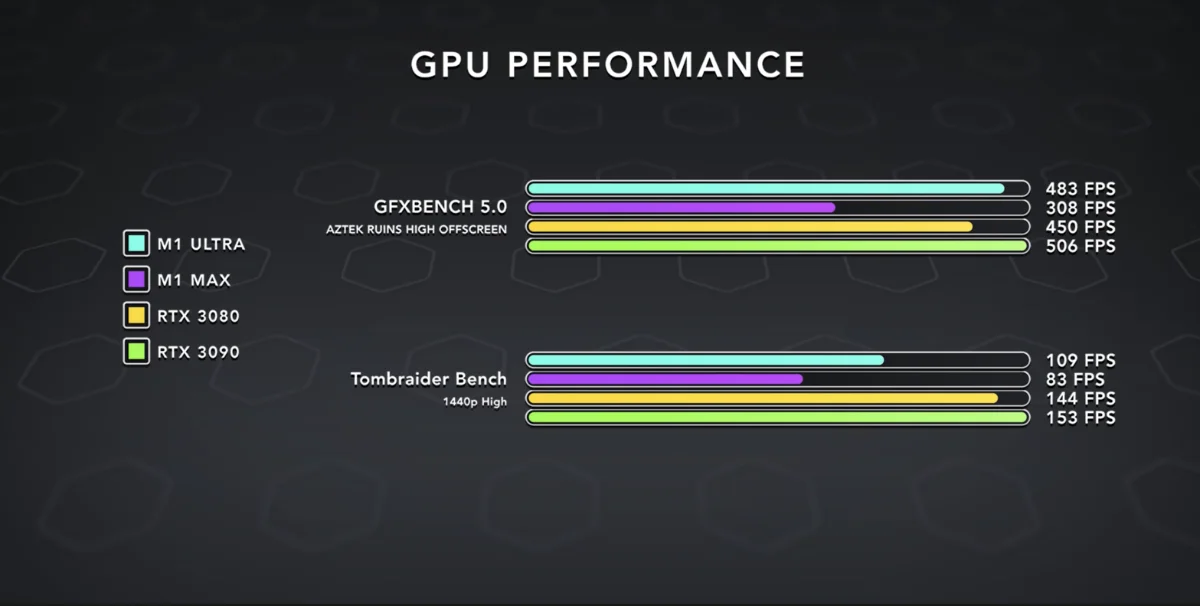
On paper, this sounds amazing. Like "out of sci-fi books" amazing. The caveat, though? I very much doubt Google has the capacity to execute this properly. And we'll get another half-baked attempt at reskinning Chromium and/or Android.
reply